What Is India Syndrome?
Why do some Western travelers come to India seeking spiritual transformation, only to vanish, sometimes without a trace?
Some say these disappearances are the result of “India Syndrome.”
Don’t be mistaken. “India Syndrome” isn’t a medical diagnosis. The phrase was coined by French psychiatrist Régis Airault, who worked with embassy staff treating foreigners in India suffering sudden psychological breakdowns. Symptoms are said to include disorientation, delusion, spiritual obsession, and the urge to detach from society, often triggered, Airault suggested, by travel in the subcontinent.
The phrase raises all kinds of red flags for me. It feels too vague, even too condescending. Is it a genuine phenomenon, or just an Orientalist label slapped onto culture shock and untreated mental illness in an unfamiliar culture?
The Disappearance of Justin Shetler
I had read about India Syndrome in a Guardian article titled ‘Travelers who were lost forever’: why tourists experience ‘India syndrome,’ but most of those written about made it out of their psychological breaks just fine. I didn’t realize how serious these experiences could be until I read about Justin Alexander Shetler.
He was an American adventurer, young and smart, who had traveled widely and documented his spiritual journey with real thoughtfulness. In 2016, he vanished in the Parvati Valley after setting off on a pilgrimage with a sadhu. His final Instagram post read:
If I don’t come back, don’t look for me.
He had come to India seeking something: transcendence, transformation, detachment from the self. And then he disappeared, leaving behind a swirl of grief and speculation. Was it a tragic accident? A spiritual quest gone too far? Or was he consumed by the story of India he was already writing?
Stories like his collide with a country already carrying centuries of other people’s projections. To talk about India Syndrome without talking about that projection, about Orientalism, is to miss the bigger picture.
The Shadow Of Orientalism
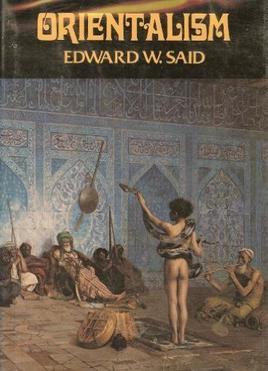
India Syndrome isn’t new. It’s the latest chapter in a story Edward Said called Orientalism: the West’s longstanding habit of casting “the East” as its mystical opposite. India, in this fantasy, is no longer a country; it’s a metaphor. A place to lose yourself, find yourself, or (in Shetler’s case) vanish trying.
And so the idea of India that travelers bring is often already mythic. It’s been passed down through yoga studios, self‑help books, and colonial literature: India as a spiritual testing ground, a mirror, a maze. But when reality refuses to match the fantasy, the fallout can be intense.
A Certain Privilege
Who, exactly, gets to “lose themselves” in India?
More often than not, it’s white, educated Westerners with the freedom and the resources to wander. The ones who can afford to drop out for a few months, go on retreat, or disappear into the mountains. Choosing India as the backdrop for personal transformation is, in many ways, a consumer decision.
Of course, not every traveler arrives clutching a copy of Eat, Pray, Love, but it’s rare to meet a foreigner completely free of those expectations. The “spiritual East” is so deeply embedded in Western imagination that even those who reject the clichés still bring crumbs of it with them.
There’s a certain privilege in being able to fall apart and then be found. When travelers go missing, embassies get involved. Families launch global searches. Articles are written.
It’s clear to see: When a Western traveler vanishes, it’s a mystery. When an Indian pilgrim goes missing, it’s a statistic. The heartbreak is equal, but the news coverage is not.
Meanwhile, most local voices, such as guides, sadhus, neighbors, police, and even Indian spiritual seekers, rarely appear in the narrative except as background figures. India becomes a stage, not a speaking role.
That raises uncomfortable questions: Where’s the line between spiritual curiosity and exoticism? Between seeking meaning and expecting a place to hand it to you? And what does it mean that so many of these stories treat Indian traditions as if they exist solely for foreigners?
I don’t have neat answers. But I have crossed paths with travelers who seemed to be drifting far from reality.
Not a Mirror, Not a Maze, Just a Country
One early morning, at the front gate of the Dhikala zone in Jim Corbett National Park, Uttarakhand, I noticed a white man leaning against a tree.
At first, I thought he might be a tourist from a nearby resort. But the closer I looked, the less sense that made. His cycle was old and battered. A plastic jug of murky liquid hung from one handlebar. A grimy plastic bag swung from the other. He wasn’t wearing a shirt or shoes.
He spoke to the guards for several minutes, then got his cycle and rode off toward town.
“What’s that about?” I asked my husband.
“That guy wants to ride his cycle through the park,” he said. “He’s riding it all the way to Rishikesh.”
The guards laughed. Not cruelly, but with the familiarity of people who had seen something like this before. I don’t know if he was a regular, a wanderer, or simply someone too deep in his own creation of India. The kind of figure whose story would be recounted as a quest, while a local doing the same might be dismissed as desperate or unwell.

But that’s the thing about India Syndrome: it’s never about the person who’s actually unwell. It’s about the stories we tell to explain them. A local man cycling barefoot through tiger territory would be called mad or poor. A white man doing the same becomes a seeker, a mystic, or a cautionary tale.
India itself doesn’t cause these breakdowns. But something else does: ages of Western fantasies that have whispered to generations of seekers:
Welcome to India: the cure for whatever you think is missing in your soul.
Up Next: Part 2 – Who wrote that mythical script, and why do we keep performing it?

 An American in Kerala
Hi Brittany – I chanced upon your blog on Blogchatter.
India through Western eyes is not easy to decipher. It’s complex. The colonial legacy, in all its hues, only complicates perceptions. For a long time, sadhus, mysticism, yoga, etc., formed the image of India.
Of course, that image has changed significantly in recent decades and continues to evolve. Now, not all Westerners come to India chasing these mythical notions. But some still do, and they reinforce that stereotypical picture of this land and its people.
It’s true, as you mentioned a missing Westerner makes bigger news than a missing Indian. That, I think, reflects another stereotype: the way India itself tends to view the West and Westerners. For example, a Western endorsement of something in India is often regarded as more valuable than an Indian one.
(My latest post: Real-world lessons from younger folks)
Hi Pradeep. Thanks for your thoughtful comment. I agree with all of what you have written here. I have lived in Kerala for 13 years so far, and I have observed and experienced a lot with regard to all this. I think what you have written in your last sentence is unfortunately a piece of colonial India that hasn’t loosened its grasp yet.
I have explored this idea further in part 2 here.
I am also drafting a part 3, so hope you can check that out as well.
Thanks again for reading.