Haunted Tales: Folklore from India to America

We have built civilizations between us, but we have never been able to build a wall high enough to keep out the dark.


A Darkness You Can Feel

A few weeks ago, we went for a night drive along the shadowy roads near our campus. When I say it’s dark, I mean a darkness so complete it’s difficult for most Americans to imagine. The thick canopy of trees swallows every fragment of ambient light.

In that thickness, I noticed something, something that appeared enormous. A pair of glowing eyes and the outline of a huge antler rack floated among the tree trunks.

Surprisingly, my first thought wasn’t “sambar deer,” though that’s what the creature turned out to be. They roam the roads at dusk and into the night; I’ve seen them plenty of times before. But this time, a chill twisted in my gut, and the word “Wendigo” surfaced in my mind instead.

And this got me thinking. What legends, spirits, and spooks reside in these mountains and forests? Are they too different from the ones I have read about and heard among the Appalachian forests and beyond?

So, this Halloween, let’s wander a little, through the misty mountains and red clay roads of the world, to meet these tales who speak in different languages, but murmur the same human fears.

Let’s meet these tales, one by one…

The Woman Who Walks at Night

In northern India, there is the Churel, a woman wronged in life who returns after death, often seeking vengeance. Her appearance is hideous: backward-facing feet, a black tongue, rough lips, and long, lank hair. But don’t be fooled: she can shapeshift into a beautiful young woman, luring men from lonely roads, then draining them of blood or life. By dawn, her victims are found aged and gray.

Sketch of a Churel

Their eternal sorrow becomes a weapon, a force of nature that refuses to be ignored.

If that sounds familiar, it should. Across the world, Mexican and Southwestern communities tell of La Llorona, the “Weeping Woman” who searches for her drowned children by the riverside, calling out to travelers who stray too close. Just hearing La Llorona’s cries means misfortune or death for the unlucky person.

Statue in Mexico of La Llorona

These stories echo the pain of women betrayed and silenced by those who failed them. Their eternal sorrow becomes a weapon, a force of nature that refuses to be ignored.

But the night isn’t the only thing to fear. There are also the hungry…

The Hungry Dead

In Buddhist and Hindu belief, there are the Pretas, which are hungry ghosts, cursed with throats too narrow and stomachs too large to ever be filled. They wander unseen among the living, forever searching and eternally unfulfilled.
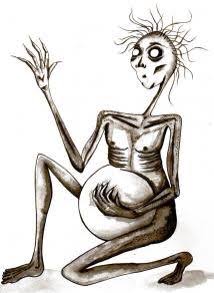
Depiction of a Preta

…when insatiable greed consumes a person, they are transformed into the very monster they once feared.

Half a world away, among Algonquian peoples of North America, there’s the Wendigo, a spirit consumed by hunger, forever craving human flesh. It roams through the deep winter and forests, possessing unsuspecting humans, including the gluttonous and the starving, and turning them into cannibals.

The Wendigo

The lesson is the same across seas and continents: when insatiable greed consumes a person, they are transformed into the very monster they once feared. It is a cautionary tale written in the pangs of an empty stomach.

And then there are the monsters born not from hunger, but from desire…

The Lover’s Curse

The Yakshi from Kerala folklore

In Kerala, the coastal state at India’s southern tip, they tell of the Yakshi, a beautiful woman with jasmine-scented hair and a smile that hides her true nature. She appears at night under palm trees, asking lonely men for company, then drinks their blood.

…these are women who have been made monstrous through the fears and transgressions of men.

Let’s travel to the American South where they have their own deadly spirits. There’s the Boo Hag of Gullah folklore, who slips into sleeping bodies to ride them through the night, draining the person’s life force and causing them to feel exhausted. And then, we’ll find the Deer Woman, told across many Native American nations (and later found in Appalachian lore), who has dual roles as both protector of women and children and terrorizer of men, luring them to their deaths.
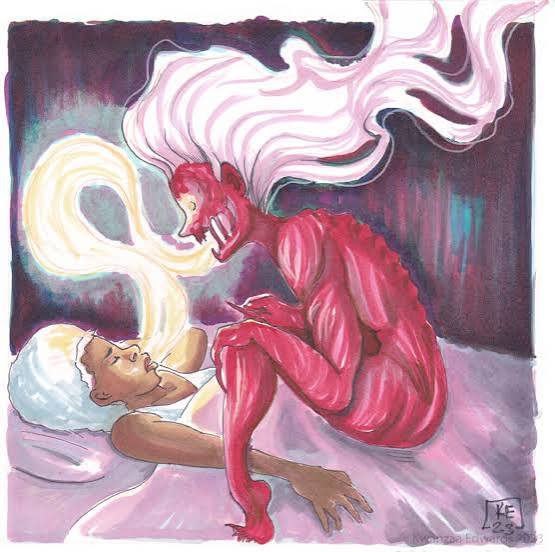
Each is a story where beauty and danger wrap around each other; a lesson (or warning) that desire can be as perilous as fear.

But beneath this surface lies a more ancient, predictable truth: these are women who have been made monstrous through the fears and transgressions of men. They are the reflections of patriarchal anxieties, where female power and sexuality become deadly.

But we don’t always have to travel so far into the past to find things that terrify us…

The Ghost Who Knocks
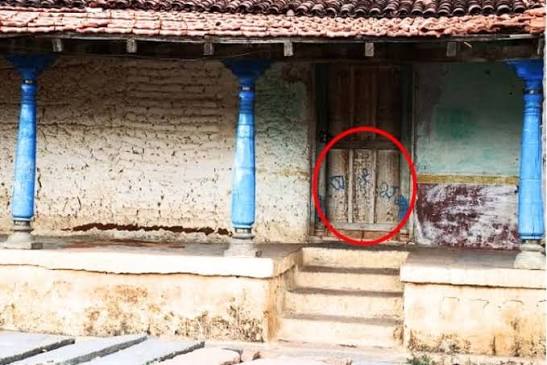
A door with “Nale Ba” scrawled across it

In the 1990s, a strange panic gripped Bangalore, India. People began to say a witch roamed the streets, knocking on doors at night. She could sound like your mother, your friend, anyone you trusted. If an unlucky soul answered the door, they would be found deceased soon after. The only way to keep her out was to write Nale Ba (“Come Tomorrow”) on your door.

The ancient fears that haunted our ancestors in the forest have learned to knock on our urban doors.

It’s eerily close to the more modern American legends like Bloody Mary, whispered at sleepovers, or the Mothman who appeared before disasters. Every age invents its own ghost, and the city’s concrete replaces the forest, but the uneasiness stays the same.

The Mothman

The Nale Ba legend is a terrifying reminder that our modern world is a thin facade. The ancient fears that haunted our ancestors in the forest have learned to knock on our urban doors.

But it’s not only spooks and spirits that can scare us. There are beings that can shapeshift into or imitate humans…

The Shapeshifter’s Secret

From the tomes of Hindu mythology is the Ichchhadhari Nagin. It is a serpent that can become a woman, taking human form mostly to seek revenge if her lover is harmed. She is ancient, divine, and deadly.

Depiction of a Nagin

…this illuminates the fear of crossing lines between human and animal, good and evil.

To the west, in Navajo tradition, tales of Skinwalkers describe witches who take animal form through forbidden ritual. Misrepresented often in pop culture, they remain one of the most secretive and feared figures in Native belief. They are said to also mimic the voice of loved ones and are even able to possess a human.

Depiction of a Skinwalker

Both of these spirits terrify through transformation, and this illuminates the fear of crossing lines between human and animal, good and evil. But they’re also stories about identity and justice: who gets to decide what form is “pure,” and what happens when that line is crossed.

The Universal Language of Fear

Ghost stories are rarely just about ghosts. They’re about the things a culture struggles to name: grief, injustice, hunger, desire, guilt.

That’s why Indian and American folklore can look so alike.

When we tell these stories respectfully, we’re recognizing that all people haunt and are haunted. Every culture gives its dead a voice, and every voice has something to teach the living.

So this Halloween, maybe the scariest thing isn’t what goes bump in the night. Maybe it’s realizing how alike we all are when the lights go out.

We have built civilizations between us, but we have never been able to build a wall high enough to keep out the dark. And in that primordial dark, we all tell the same stories to make sense of what we cannot see.


Dragonflies: A Reflection on Nature and Survival

Dragonflies

A dragonfly shimmering in the morning light,
bright hues of red across its body,
paused in front of me on the footpath.
And then another stopped by. 
They didn’t stay long,
enough to appreciate their precision
and to notice several dragonflies
soaring overhead and around me. 

Dragonflies rest in tall grass.
And when there isn’t any,
they cannot rest and frantically fly overhead
in droves, searching for a place to land
their worn bodies.
I learned this the last time the grass was cut short
and there were hordes of dragonflies in the air.
Here I thought I was witnessing 
a miracle of nature.
But it was only that their beds were destroyed.

I don’t want to compare insects to humans
who have lost their homes
to war or savagery from their fellow man. 
But when entire cities are flattened,
razed like the tall grass,
I can see why people behave like these dragonflies.
Circling, swirling, racing
to find a new place to rest.
Except the shimmers are their tears,
and the bright red hues are
streaks of
blood.

A Touch of Humanity: The Man and His Dogs

On my way home one day, I saw a man stop his cycle to feed some street dogs. The scene felt simple, but not quite.

A Few Coins

A man stopped on his cycle
along a road not yet
flooded with traffic.
Thin, well-worn legs.
Hands all hard labour:
callouses, thick veins, and scars.
Yet he cradled a plastic bag,
looped around the handlebar.

His guests bounded,
all tails and tongues.
A welcome only they could give.
With a rare tender palm,
he patted each head.
No rush to the next.
From the bag came
folded banana leaves,
patiently unwrapped.
Tails thrashing so wildly,
I thought they might lift off
toward the mountains.

Then a lantern lit from within.
His fingertips shone like
torches through dark trees.
His eyes burned with
a glow that made the world shimmer.
A glow I wanted to hold.
Here was a parted veil,
allowing me a glimpse
of what it means to be human.
But then I blinked,
and he was just a man again,
gently portioning a meal
for his loyal friends.
It wasn’t much
but it was all.

Image from Pexels.

Tadka: Learning to Name the World

Opening Note:
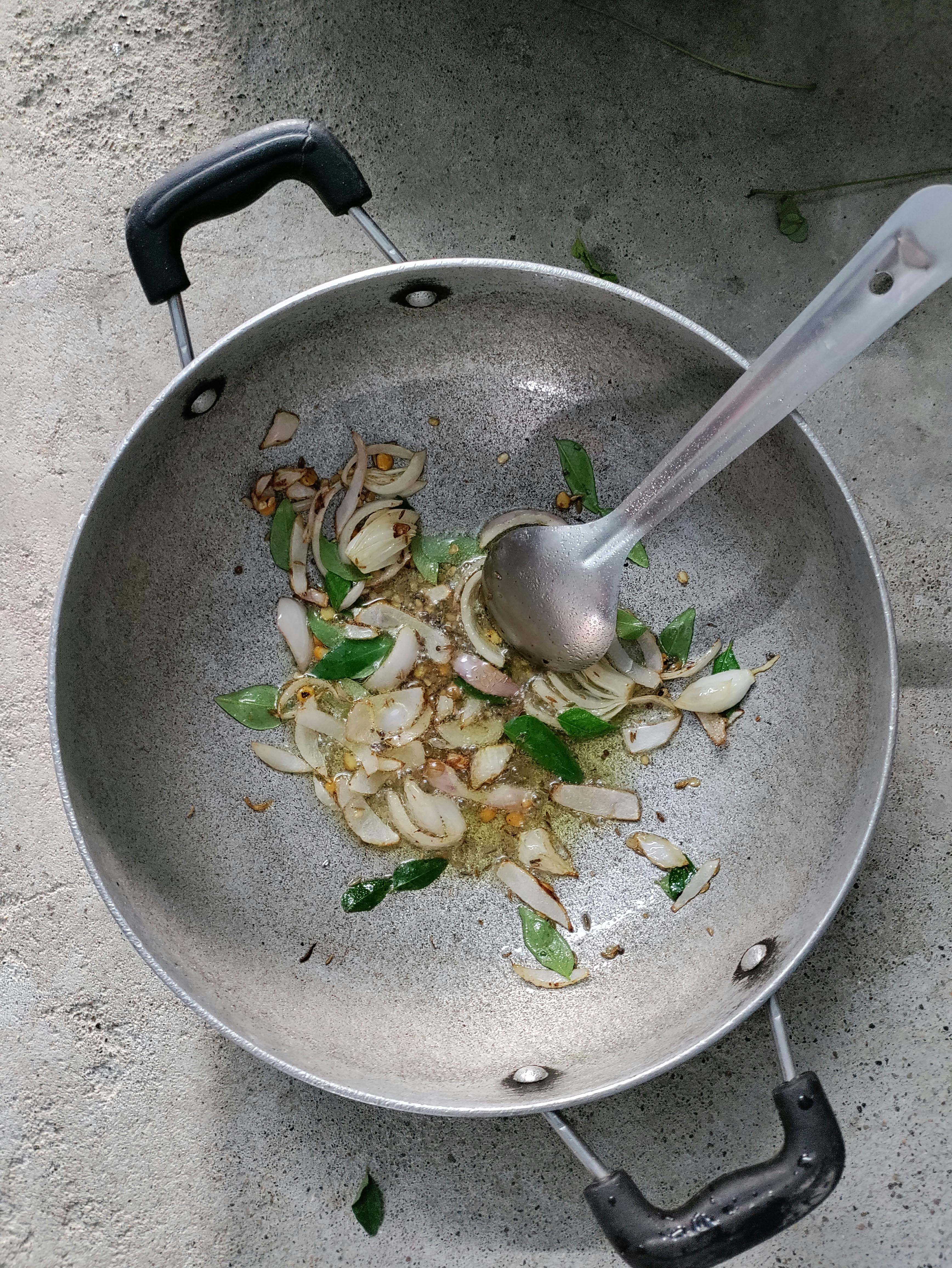
One of the first things I learned in Kerala was that food speaks to you. When mustard seeds splutter in hot oil, it’s a signal: add the curry leaves, the shallots, the chillies. Over time, I realized language works the same way. It teaches me when to pause, when to listen, and how to name the world with new words.

Tadka (To My Younger Self)

When the mustard seeds splutter,
that’s when you add the curry leaves, shallots, and chillies.
Call them by their names: kaduk, kariveppila, ulli, mulak.
Repeat them, ketto?
They will be your anchors later.

You will learn the names of vegetables, fruits, grains first,
by accident.
Your ears will be covered in scales until they aren’t,
and rice, fish, turmeric will become chor, meen, manjalpodi.

Hold on to the astonishment of learning them,
tracing the seas they’ve crossed,
the shores they’ve touched.
Remember, Babel wasn’t a punishment.
It was a gift:
a doubling, trebling of names
for tomato, onion, wheat.

You will want to tell someone about this wonder,
but you will feel alone.
In India, they will shrug,
we know these things only.
At home, eyes will glaze over.
You’re allowed to marvel anyway,
maanasilaayo?

You will still want to shrink into a corner,
fear and self-doubt strangling you.
But you’ll press forward anyway,
shoulders tight, breath shallow, heart pounding.

It’s the same acceptance of terror that gets you
through airports, onto planes
to your mother, father, and brother,
not to relive the old days, but to
build new ones–
good times, now,
with their granddaughter.
You learn to do what must be done. 

On these visits, you will pass your grandparents’ house.
You’ll see black trash bags slumped on the porch,
weeds swallowing the yard.
Look away if you must.

When you walk inside for the last time,
you’ll search for their scent in the damp,
unheated walls of late winter.
It won’t be there.
You will realize:
loss doesn’t wait for your return. 

And still, the seeds will pop
when oil meets flame.
The crackle is now, never then.
It will not pause for a house
that now belongs to someone else.

Fragrance will rise, sharp, insistent.
The present will announce itself
in smoke and spice.

So listen, mol:
you don’t need to live inside what is gone.
Stir the heat into what is here.
Add the zest.
Name things as they are.
Find beauty in words for what’s to come.
Eat while it’s hot.

Memory will cool soon enough
on your tongue.

Closing Note:
The crackle of mustard seeds hasn’t stopped surprising me. It’s a small sound, but it reminds me that life is always beginning again, in kitchens, in words, in the ways we honor our pasts.

Image from Pexels.

Lessons from a Scorpion Encounter

Sometimes life’s smallest moments can carry the biggest lessons. On a routine evening walk a few years ago, a simple run-in with a scorpion taught me about restraint, mercy, and the power of choosing kindness over retaliation.

This poem reflects on that moment, and the ripple effect that can follow when we hold back our sharpest stings.

Dear Scorpion

Evening is the best time to walk, 
the sun retires from scorching;
my shirt feels a little less sticky.
My dog scuffs along, sniffing,
his own form of social media.
I scuff along in my well-worn chappals,
not the wisest choice,
scrolling through my phone. 

The evening in question
melted over the sky, hardening
into oranges, purples, and blues.
Scuff, scuff.
Sniff sniff, scroll. 
When something cold and hard rolled over
the soft, sensitive flesh of my foot. 

My brain tried to place the feeling:
A beetle? A plastic toy? A bottle?
I looked down.
My heart melted,
warm liquid
draining to my toes. 

A scorpion 
stood with its stinger raised.
Ready to 
duel if it met my foot again,
in the dead leaves covering our path. 
Do I run or stand my ground?
Both felt wrong. 

So we stood for hours,
seconds, really. 
The harder I stared, 
the more it looked offended 
than armed. 

I chose 
to back away, my eyes on
the insulted creature,
shrinking as I retreated
until it vanished.

It had every right to
strike me with its poison. 
I felt that path  
was my own.

But it chose not to sting me.
The opportunity was easy. 
Maybe it was luck,
or maybe it sensed my fear like its own.
Or maybe it wasn’t in the mood.

Dear scorpion,
I learned something
on that evening walk.
I can choose
not to sting another.  
Swallow the bitterness that would 
rush through blue capillaries, red arteries, 
straight to another’s heart.                                  

I can fade into the twilight,
but still stand guard.
Maybe their venom will return
to where it began,
softening the next hardened heart,
one restrained sting at a time.

Dear scorpion,
if mercy flows this way,
through veins and capillaries,
into oranges, purples, and blues,
maybe this world
needn’t sting so deep.

A Note:
I hope this poem encourages you to pause and choose mercy in your own daily encounters, softening hardened hearts one restrained sting at a time.

Top post on Blogchatter

Between Two Worlds: A Switch

Somewhere between arrival and departure, I’ve learned to speak in two voices and carry two selves. This is about what happens when neither feels entirely mine.

A Switch | സ്വിച്ച്

This plane window is a signaller.
Ready to help me
choose myself
before we fall to the earth.
I am sinking and floating at once, but
I look out the window anyway
to see
which personality to wear after landing.

Grey bypasses, skyscrapers, concrete
squares:
all holding their breath.
The switch flips to
America.

A quilt of coconut palms,
low white buildings,
the switch flips to
India.
My head wobbles before the plane
touches down.

Later, I learned there’s a word for this.
I protested: I don’t do this.
Not me.
And the man I spoke to replied,
“Oh, but I think you do.”

In India,
I’m more reserved,
yet I speak more.
Slowly. Enunciating.
I use words like:
lift – boot – lorry – brinjal – petrol.
I say Ruh-vi, not Raaah-vi.
I roll my Rs and
move na – nja – nna
through my tongue and lips.
I clench my fists in frustration
when the word is right there,
drifting, italicized, in my mind,
tucked under my tongue
when I try to speak.

And then in America,
when I’m with people
who knew me once,
but not quite.
When nostalgia rolls in
as thick as the fleece blanket
that keeps me warm in
stark Pennsylvania winds,
I’m more open,
but speak less.
I speak quickly, slurring my words:
“Didja eat yet?”
I smile hellos and how are yous to
perfect strangers, but
never pushing beneath:
“Friend, how is your heart?” or
“Is your father doing okay?”

“You kinda have an accent now,”
so I flatten my As again.
My voice shifts north
into my nose
and the words roll out:
elevator – trunk – truck – eggplant – gas.

I don’t have to worry
about chechis and chettans.
Americans like first names,
giving us a pretend closeness,
like a handshake without eye contact.

Here’s the thing:
neither one feels quite right.
In India,
I wear a mask.
I smile when I don’t want to;
swallow questions and
bite back criticisms
because my face marks me a visitor
even though I’ve rooted my hands
deep in the soil.
In America,
I wear a wool sweater
two sizes too small.
I tug at the sleeves,
sweating, itchy, chafed
but never take it off.

So, who am I?
Am I the words spoken to others,
what they see:
a woman in love,
a fool,
a brave soul?
Or am I
something deeper?
Or am I none of these?

Am I just a middle-aged woman
afraid she will always be brushing the edges,
never quite let inside?
Am I just afraid
that someday I’ll be a stranger
in a strange land
where I borrowed books
from the library
and licked ice cream
as I walked to the park?

Now, the only home
is my daughter’s voice
when she tells me 
the song she and her friends made up;
when my husband and I walk 
into the hovering emerald canopies.

If my skin were peeled away
and my chest cracked open:
The hush of the monsoon rain
washing through the ghats,
the whisper of the snow
covering the evergreens—

Would you recognize
  the language of my pulse,

 the accent
   of my blood,

forever stuttering
switching tracks
until I break the lever.

The Mango and the Map of Language

In Kerala, mango season begins quietly. A lone vendor sets out a crate of glowing yellows and blushing oranges, sometimes tinted with stripes of green, by the roadside. Then another vendor appears. And another. 

By May, mangoes seem to be everywhere: stacked in pyramids on rickety tables, carted down alleyways in woven baskets, filling the dining room with a pungent sweetness as they ripen. 

We wait to buy from a vendor near our home, who snags the best variety, the best quality. He and his wife also make a mean mutton soup. 

A non-exhaustive list of all the mangoes in India.
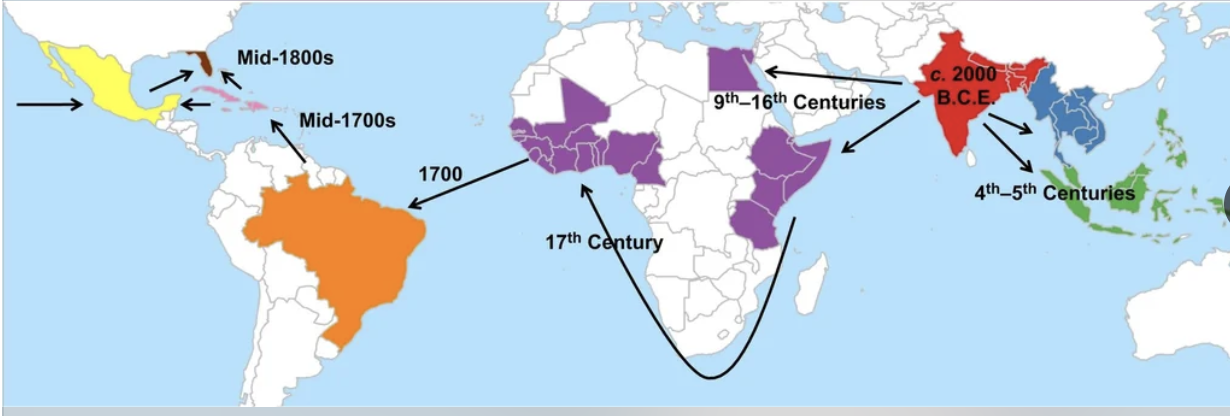
The journey of the mango through centuries.

It’s easy to take this fruit for granted. There’s mango season, and there’s the waiting season, like the steady ticking of a clock.

But too often, we separate ourselves from the journey our foods make, from the backbreaking farm labor and the heartbreak of a lost mango crop in a too-rainy summer season, to the post-workout smoothies of the privileged. 

And if the fruit itself has such a fraught journey, then what about the word mango? Where did it come from? Which cultures first used it? How did it weave its way into English?

From Malayalam to the World

The English “mango” traces its roots to māṅṅa (മാങ്ങ) in Malayalam, the language of Kerala. But the journey of a word is rarely straightforward. Some scholars suggest the Portuguese first heard it from Malayalam speakers, while others argue it came from Tamil neighbors, who called the raw fruit māṅkāy (மாங்காய்) and the ripe fruit māmpaḻam (மாம்பழம்). Since Malayalam and Tamil are both part of the Dravidian language family, it’s difficult to pinpoint which word sailed west first.

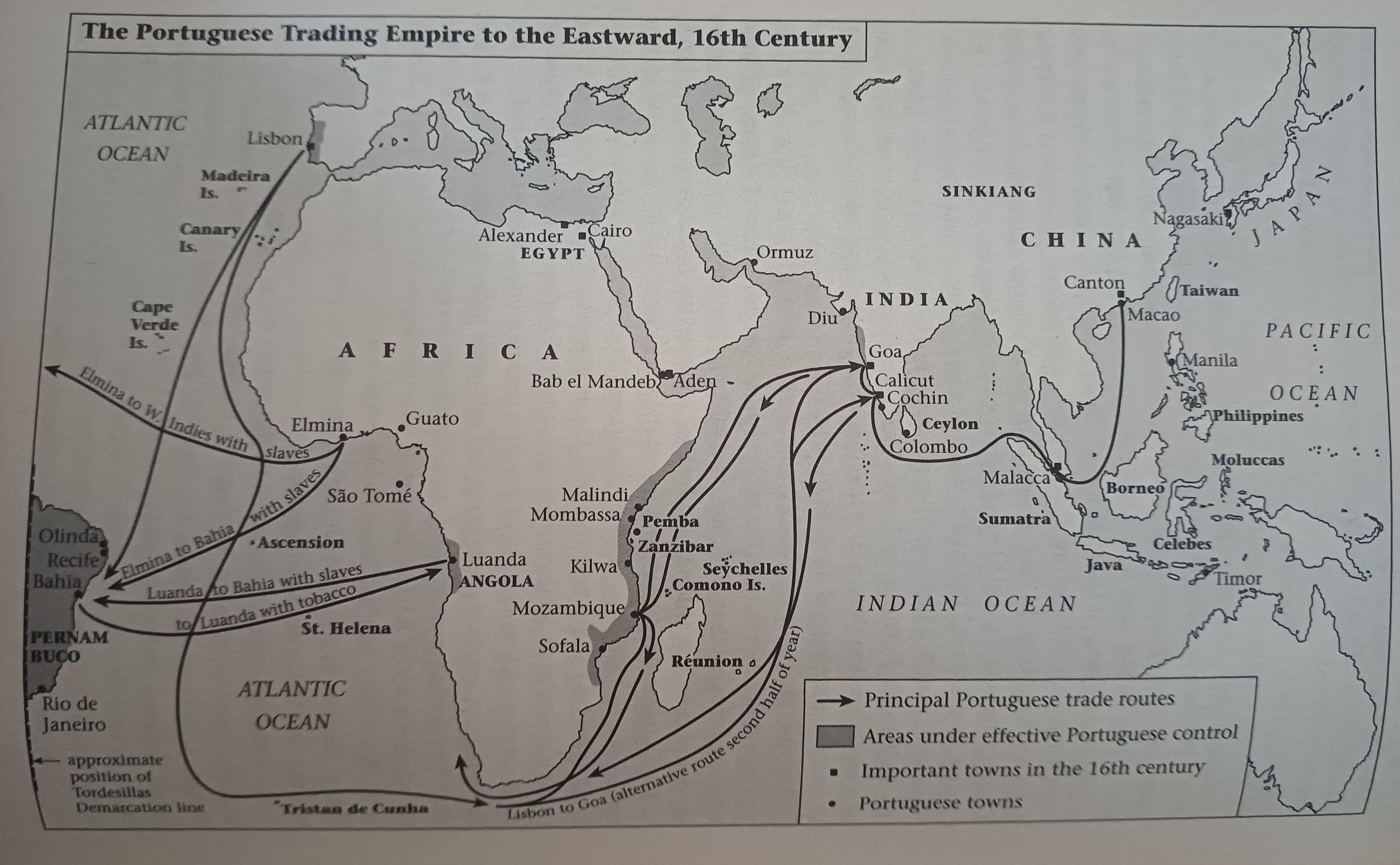
Portuguese traders adopted it as manga during their 15th-century spice voyages. By the time they established a sea route to Europe, Arab traders had already been exporting Kerala’s spices, and words like naranga (orange), for centuries.

From Ostler’s book mentioned below. The Portuguese trading empire.

In 1498, Vasco da Gama succeeded where Columbus had failed: charting a direct sea route to India and landing on the Malabar Coast. This was likely when māṅṅa first touched a Western tongue.

As with most colonial encounters, da Gama’s arrival brought more than trade. It brought upheaval; an attempt to claim, exploit, and remake a culture the Portuguese barely understood. Like every empire, they left behind a tangled legacy: trade routes that changed more than cuisines, and violence that uprooted lives.

From 1498 onwards, manga traveled into French and Italian, then into English, with the first recorded use of “mango” appearing in 1582.

For a time, “to mango” was even a verb in colonial America, meaning “to pickle” (which is why some places still call green bell peppers “mango peppers”).

Today, we’ve untangled mangoes from pickles and peppers. But the legacy of colonialism is not so easily resolved.

But there’s a truth here worth admiring: a tiny word like māṅṅa can travel across oceans and centuries, weaving itself into English. Every time someone says “mango” in London or Philadelphia, they’re unknowingly speaking a fragment of Kerala’s language.

 Language as a Recipe Book

But it isn’t just mango. Our English-speaking homes and kitchens are stocked with Indian words carried along trade routes and colonial corridors:

  • Chutney (from Hindi chaṭnī)
  • Curry (from Tamil kari)
  • Bungalow (from Hindi banglā, meaning “Bengal-style house”)
  • Shampoo (from Hindi chāmpo, “to knead”)

Each word is an artifact, if only we take a moment to wonder. They are small testaments to hands that stirred, chopped, hammered, and kneaded across centuries, reminders of the histories and people behind them.

The Journey Hidden in a Word

Now, when I bite into a mango here, I taste more than its layered sweetness. I hear the word’s journey too, spoken first by a Malayali vendor in Trivandrum, sailing across seas and empires, and scrawled on a supermarket sign in Pennsylvania.

Language carries more than meanings. It carries fragments of history and home, especially for those caught between roots.

For Further Reading (if you crave more about erstwhile empires and their legacies):

  • Empires of the Word: A Language History of the World – Nicholas Ostler.
  • Inglorious Empire – Shashi Tharoor
  • The international swap trade in useful words, BBC Magazine (2014)
  • Arrival of Portuguese in India and its Role in Shaping India – Col. (Dr.) D. P. K. Pillay (2021)
Top post on Blogchatter