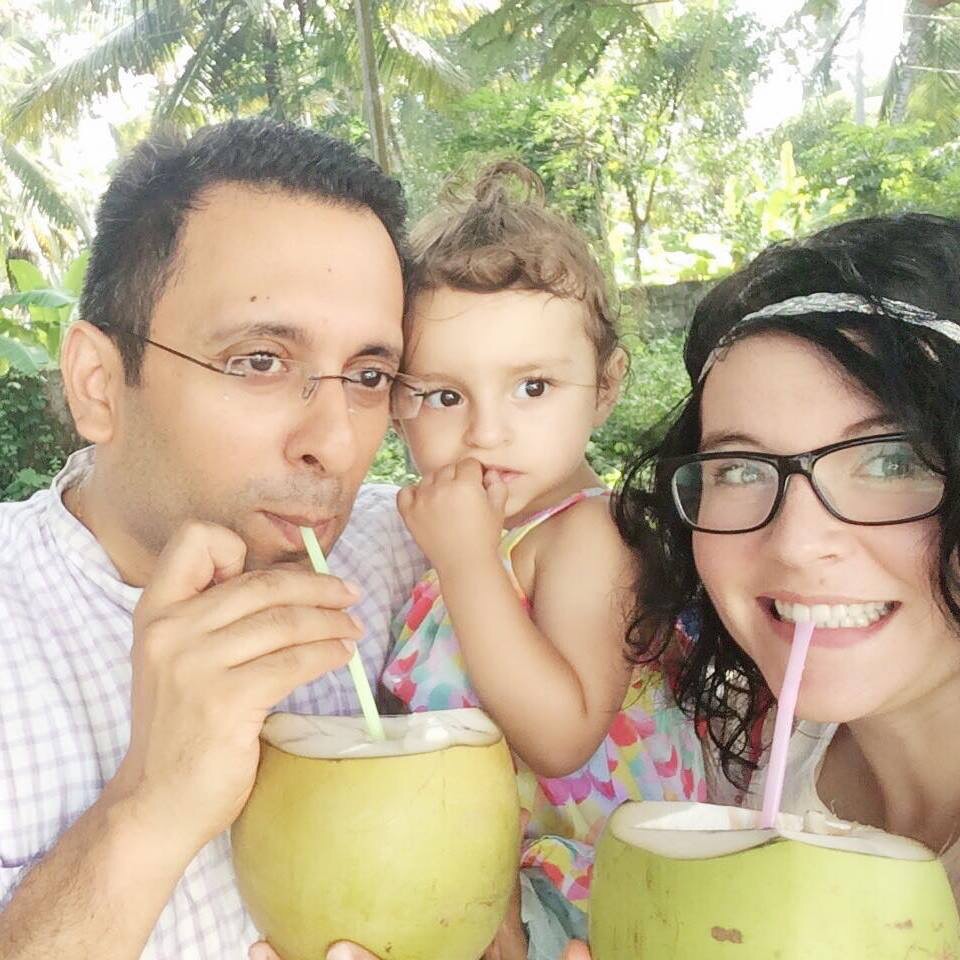
For This Women’s Day, Do Better

Note: I am completely aware that I am coming from a privileged place as I write this. I have a hired housekeeper and cook here in Kerala (but even then, as a dear friend pointed out, the task gets passed from one woman to the next), and I have a supportive husband who encourages me in everything I do. He has grown just as much as I have since we’ve been married, and it’s been a privilege to see. I have written this for women who, for whatever reason, cannot speak up.

For this entry, I feel a bit like Frank Constanza in Seinfeld’s “Festivus” episode, where, during the airing of grievances, he shouts, “I got a lotta problems with you people, and now, you’re gonna hear about it!” But if you’ve known me for my whole life, you know when I get super bothered by something, I turn into an 85-year-old man who is basically shouting at kids to get off his lawn.

Don’t get me wrong. I love International Women’s Day. We need it. We desperately need it to acknowledge all the trailblazing that’s been done, and of course, all the work which still needs to be done. My discussion, or rant if you prefer, addresses the latter.

My husband came home at lunchtime yesterday and said he’d been asked to give a short speech for Women’s Day (along with several students and other faculty). He asked, “What do you want me to say?”

And I was like, “BOY, AM I GLAD YOU ASKED”:

1. Women’s advancement starts in the home. Women can make great strides in careers, science, high-level corporate positions etc., but if, when she goes home, her husband won’t do a load of laundry, then we’re really not getting anywhere at all, are we? 

There are no “set roles” anymore. There is a household, usually with two working people. Hence, those who live within the house need to share those duties. 

Even if a woman is a SAHM, she deserves support and a chance to develop a talent or hobby she loves because, chances are, she feels totally consumed in her roles as a wife and mother. 

TL;DR: Men, don’t be lazy. Do a round of dishes. Fold laundry. Take your kids out to play for a while. Your wife deserves a chance to be a person outside of being your children’s mother and your wife.

Like, I can’t even believe, in the year of our Lord 2023, that I need to write this down?? And yet I see story after story, post after post, of men simply not pulling their weight within the household.

2. Men need to share the mental load. Women are not only tasked with doing almost all household duties by default, but we also are tasked with the mental load of remembering basically everything. Appointments, school assignments, shopping lists, meal planning, where things are kept in the house, everything falls into the woman’s lap. 

This invisible mental labor adds more stress than anything else and can make women feel completely overwhelmed and paralyzed. 

And it doesn’t help to follow your wife around and say, “Just let me know if you need help.” That ADDS to this burden. YOU look around and see what needs to be done. YOU take over helping the kids with projects and assignments. YOU take over half the shopping list or the meal planning. 

Not only are women tasked with this mental load, but we also bear the brunt of criticism, especially when it involves kids. Every critical comment a person can dream up is passed through very freely to the mother, the partner usually tasked as the primary caregiver. Believe me, we are already our own worst critics – you don’t need to add to it. 

3. Why bother getting your daughter into activities to develop her talents and academics if you’re just going to ship her off to be married in a relationship where she loses all of what she’s learned? 

There’s a reason films like The Great Indian Kitchen have been made, and that’s because it’s a reality for many women out there, not just in India, but throughout the world. 

Let me take the unpopular opinion here – don’t invest in your daughter unless you plan on standing with her if her eventual marriage is mentally, emotionally, or physically abusive (or all of the above). Don’t invest in her education if you’re just going to tell her “log kya kahenge” or “what will people say” if she wants to escape that situation, and you’re only worried about the potential stigma of divorce. Don’t invest in her talents if you’re just going to tell her to “adjust, dear” when she says her new husband expects her to do all the housework with no help.

I will shout it from the rooftops – WOMEN’S ADVANCEMENT STARTS IN THE HOME. It starts with teaching your sons how to fend for themselves in the kitchen, how to do chores, how to pick up after themselves. It starts with letting your daughters take risks, letting them show their anger and shout and scream and express discomfort, letting them interrupt people who have tried to silence them. And, for the love of everything on this green Earth, stop glamorizing the martyrdom of motherhood. Just stop it. It helps absolutely no one, least of all, women.

Happy belated International Women’s Day. We can all do better and be better.

This post is part of Blogchatter’s CauseAChatter.

5 Tips For Loving Your New Country

Well, you did it. You packed up and shipped off to another country; your dreams of wanderlust coming true. Soon enough, weeks or months have passed, and you’ve settled into a routine. But things aren’t as fun as you’d hoped.

Your bathroom looks weird, beds and pillows are too hard or soft, and the grocery store doesn’t carry anything you like. The climate is too hot or cold. It’s exhausting trying to do anything official where no one speaks your language. Everyone else’s concept of time is different from yours.

These are small problems, but small seems huge when you’re away from what’s familiar. Before you know it, homesickness creeps into your stomach.

A lot of blood, sweat, and tears goes into living overseas. You need to break down your beliefs and values, maintain your boundaries, cry a lot, and laugh more than you cry.

Believe me, I know. I’m going on a decade here in Kerala, and my physical and emotional changes careened through ups and downs. I never had any desire to live in another country. I was content to live in or near Pennsylvania for the rest of my life. Well, life had something else planned for me.

When I arrived in Calicut, I was a starry-eyed newlywed, thrilled to live with my husband. Not one thing about India bothered me. Giant cockroaches? Fine. All-day powercuts? Bring it on.

Then our daughter was born, and I ran face-first into a cultural wall. Everything I found endearing became an imposition, and I went into an “I’m here on a long vacation” mindset. Over time, I pulled away from that thought and grew to love my life. Now, I can’t imagine living anywhere else but Kerala. No matter where I am, I’ll leave a piece of my heart here. It’s my home.

But it wasn’t until recently that I figured out how I fell in love with Kerala. There are a few definitive things I did that made me feel like I now belong here. So, for the sake of anyone plunging into a new culture, I’m giving the few tips that helped me the most.

1.) Be observant.

When moving to a new country, this is the best piece of advice. Observe people. Check out their behaviors. Watch what they’re doing, but even more importantly, watch what they’re not doing. I learned so much about how to behave in India by shutting my mouth and observing.

Some things I learned: eating with my right hand and without utensils, not crossing my legs when I’m visiting someone’s home, replacing handshakes with head nods when meeting someone. These are small things, but people notice when you do them differently.

2.) Learn the language.

You knew this was coming. I’m not telling you to only learn to communicate with people. That is, of course, the biggest benefit to studying a new language. You create and deepen new connections with native speakers.

Learning the language blows your world wide-open. You can understand a new slew of music, movies, jokes, and idioms. For me, few things have been more satisfying than finally understanding Malayalam memes.

Learning a new language has a host of benefits. It stimulates the brain, stalls cognitive decline, and boosts creativity! So get signed up for a class and start your language journey!

3.) Throw yourself headfirst into the local culture.

Throwing yourself into anything when you’ve moved to a new country seems like the last thing you want to do. But please trust me on this one. It gives you an enormous appreciation for your new home. Take a dance class, a singing class, an art class. Pick something and try it, even if you’re terrible forever.

Learn the history of the art form. Attend a local performance or exhibition. You won’t regret it.

As for me, I’ve written before that I learned (and am still learning) mehndi. And right before the pandemic, I started Bharatanatyam lessons, which I love, love, love. Both have rich histories, and I gained new admiration for all mehndi artists and Bharatanatyam dancers.

4.) Cook the food. This, my friends, is what pulled me out of my cultural adjustment funk. When you cook the local cuisine, you tie yourself to much more than the food itself. You become connected to history, language, and relationships.

Recipe by recipe, I restored my self-esteem by perfecting a huge part of Malayalee culture – their food. Pride wells inside when I hear a Malayalee say, “Brittany is an expert in making biryani.”

5.) Stay humble. Over the years, I’ve lost count of how many times I’ve culturally screwed up. It’s fine to make mistakes! But when Zac would explain how to avoid issues in the future, I’d rear up and demand why I had to change my behavior. The answer is rather dissatisfying: Because I had to.

Remaining culturally humble isn’t easy. It requires daily self-reflection: wondering how I can better communicate with and listen to people, and how I can better show my respect. It’s understanding the history and dynamics of where you’re living.

There is no sensitive way to say this, but it is neither your job nor your place to change the society where you live. Instead, amplify the voices of locals and citizens who are already changing things. They have done the hard work and deserve recognition.

I hope no one has read through this and now believes I sit stiff as a board and don’t speak so that I don’t offend anyone. If that was true, I wouldn’t have written this. Around friends and family here, I am totally myself. Frankly speaking, though, I am not the same person as the one who existed a decade ago, and that’s a good thing.

And there you have it. My five main tips for adjusting to a new country. While these won’t solve many other daily frustrations (a whole other ballgame), I hope they help people appreciate their new homes.

Mehndi, Mehndi!!

422217_607087879584_1611614569_n
What started it all.

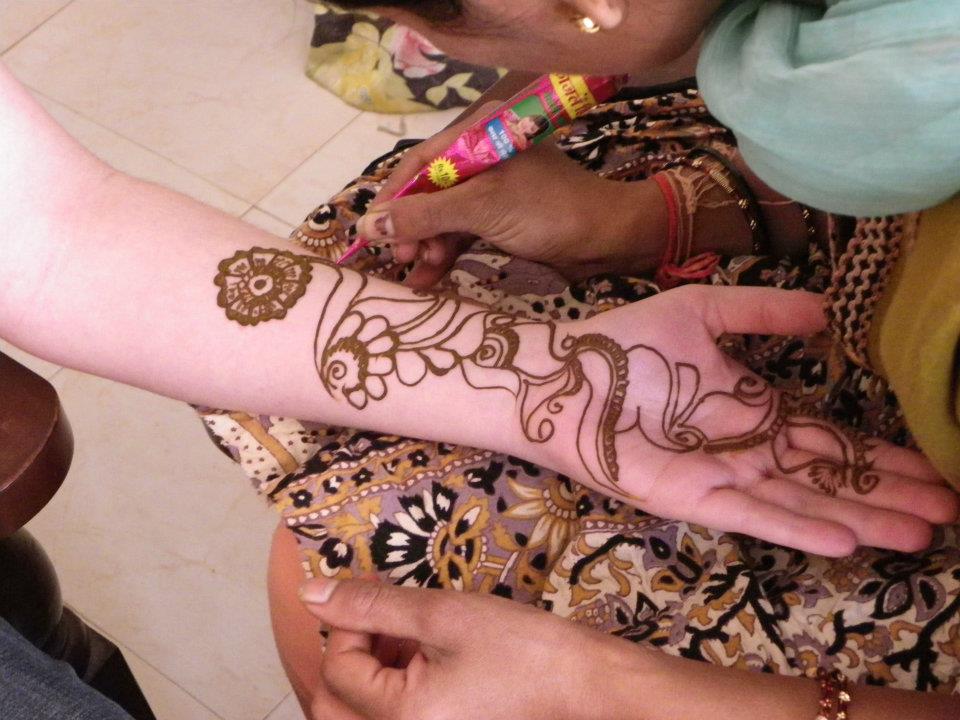
I watched the young woman with her steady hand drawn lines on my inner wrist, moving towards my palm. The dark brown paste chilled my skin, and its earthy scent wafted into my nose.

My fingers wanted to twitch, but her thin hand held my hand in place so she could complete her art. Art for the skin – that’s what mehndi is. I’d never seen anything so intricate.

The flowers and paisleys she left behind dried and crusted. When I scraped the remnants off, the design had dyed my skin a burnt orange, which darkened to a deep auburn.

In the days that followed, I caught myself bringing my hand to my nose to capture the remaining scent of the henna paste. I admired the artist’s handiwork – spirals, dots, lines, and loops all making a trail to my fingertips.

I was in love, and I wanted to learn it. That was five years ago.

Like many, I suffer from impostor syndrome, so my doubt held me in check. Was it cultural appropriation for me, a white woman, to learn mehndi? Would I even be good at it?

In India, it’s an art that’s passed through families, where people learn on their own. The street mehndi artists (the best) taught themselves all the techniques. The proper shading, the right pressure to place on the cone for dispensing, and the creativity to create large designs that cover entire arms, hands, and feet.

There was no way I’d learn it, I decided. I snuffed out my desire and moved on with my life.

I moved on until last September, when my husband, daughter, and I were milling around our local grocery store. There, crammed on the bottom shelf of the beauty section, were henna cones.

I kept glancing at them but left empty-handed, still not confident that I could learn it. Instead, I went home and searched how to do it online – is it easy or difficult? Which kind should I use? Which designs are good for beginners?

And I asked the opinions of others if I should even bother with trying (they were all encouraging).

So, the next time we were at our grocery store, I slapped three cones in front of my confused husband and said, “I want to learn.” I braced myself for his laughter because I had zero confidence in my ability. Instead, he said, “Okay,” and paid for our groceries.

My first attempt at mehndi was terrible. I cut the cone down too far, so the paste came out too thick, and I couldn’t draw much with it.

I learned that mehndi isn’t too forgiving – you cannot afford to make many mistakes with it. Still, I felt a thrill run through me that I was actually doing it, and even my husband complimented my shoddy design.

My second attempt improved a bit. I drew a peacock, which has since become my favorite, but I still had no idea how to create a motif that flowed together.

I began scrawling on paper with the paste when I ran out of room on my hands and feet. It soothed me. Squeeze the cone and watch the paste twirl into flowers, peacocks, tikkas, and geometric shapes. The more I did it, the steadier my hand became, and the easier it was to flow shapes one into another.

14409914_10100160737792694_6393383317865594523_o
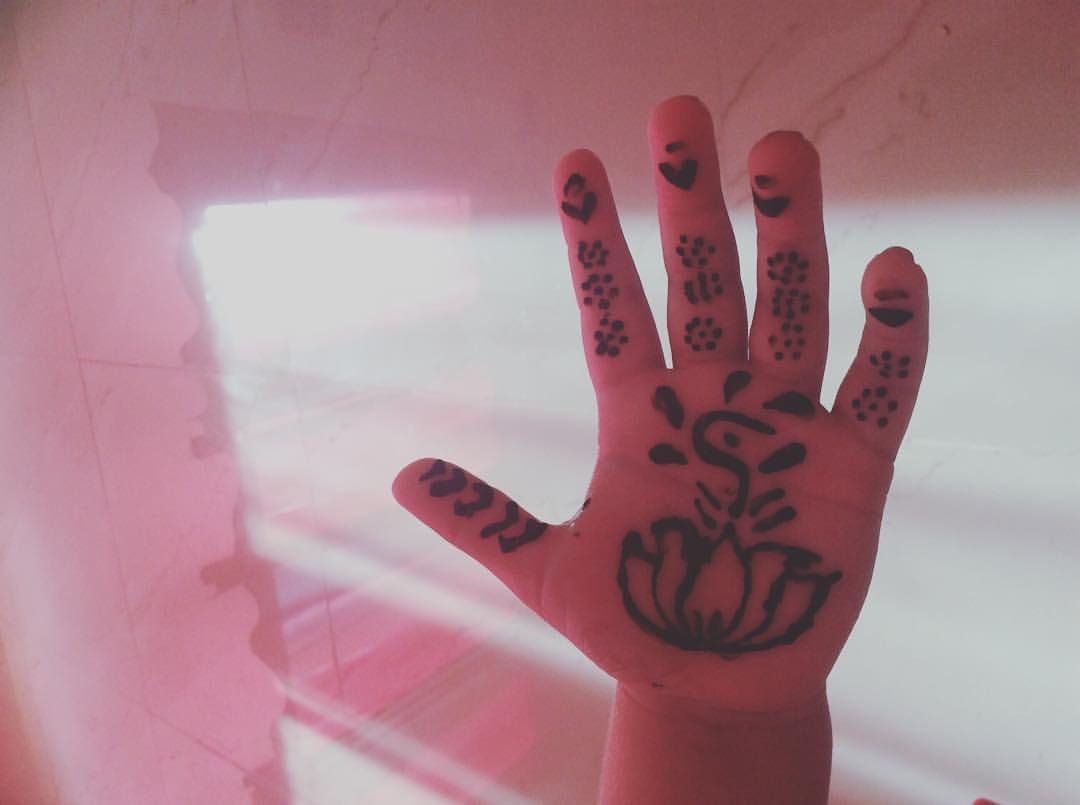
Baby mehndi!
14568191_10100165597753294_2548914229940432121_n
My first tikka design.
14915183_10100176739914314_3678420025893639935_n
I love to do these kinds!
14882320_10100175352285134_6672077399914304653_o
Tikka on the side of my wrist.
14956371_10100177894700114_1412266896920392784_n
A small motif for my mom (with my daughter’s name)!
16825837_10100225795471584_8689448362277617213_o.jpg
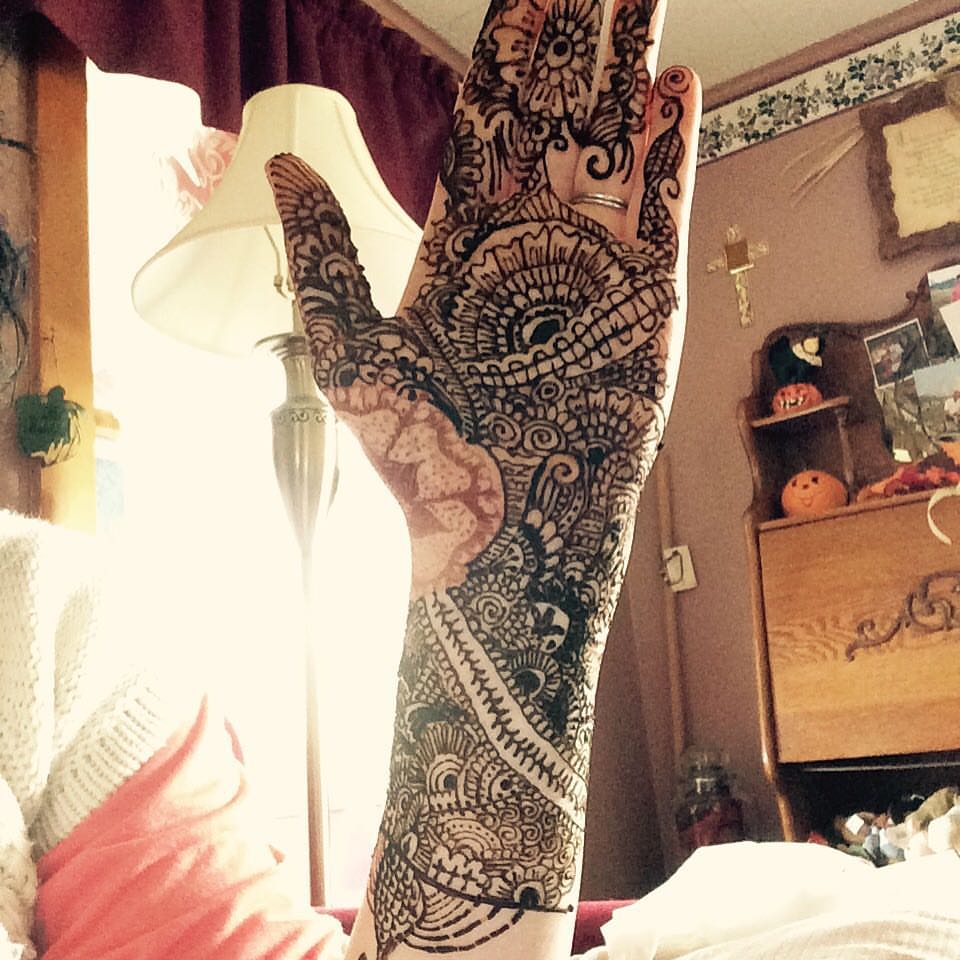
One of my more recent, and super quick, designs.

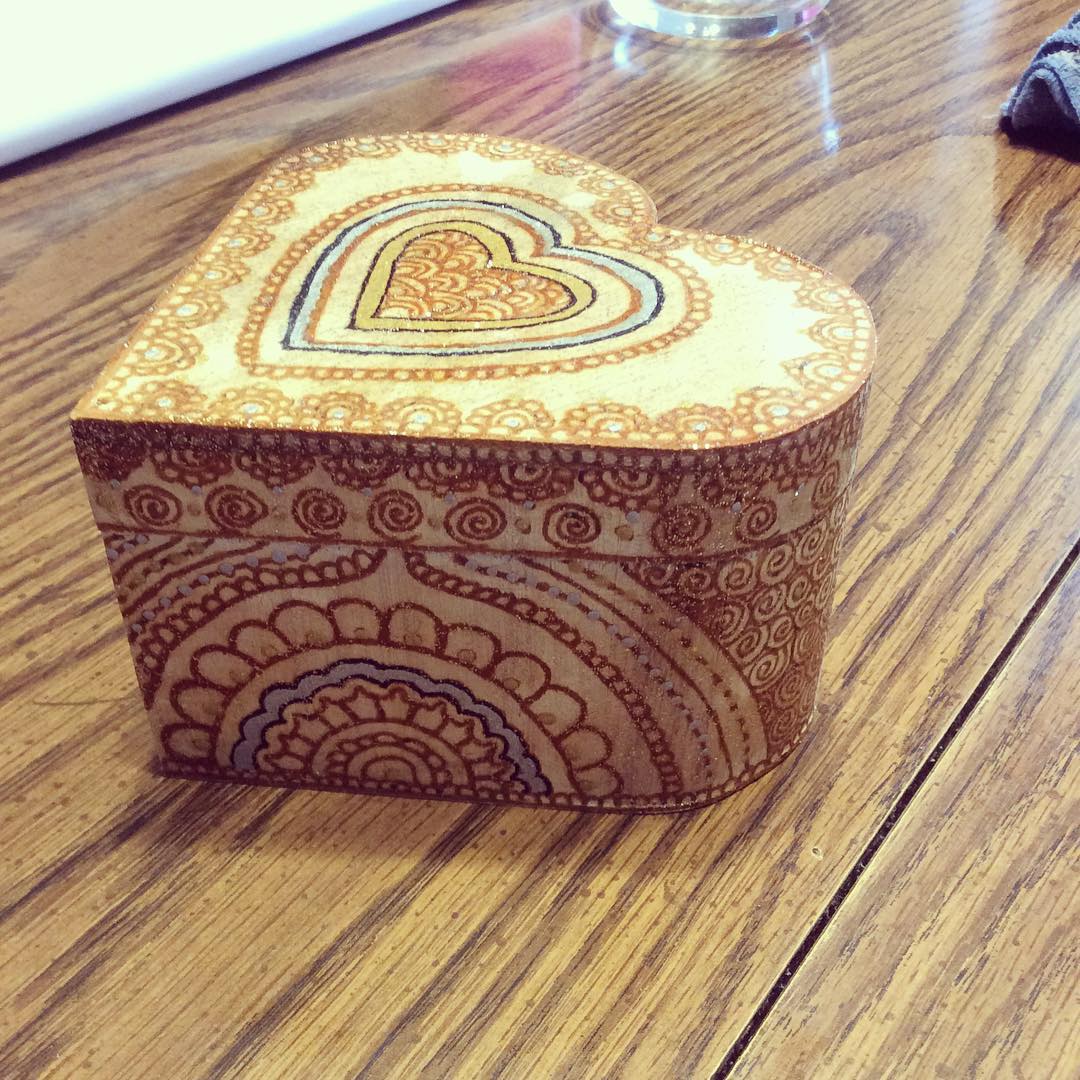
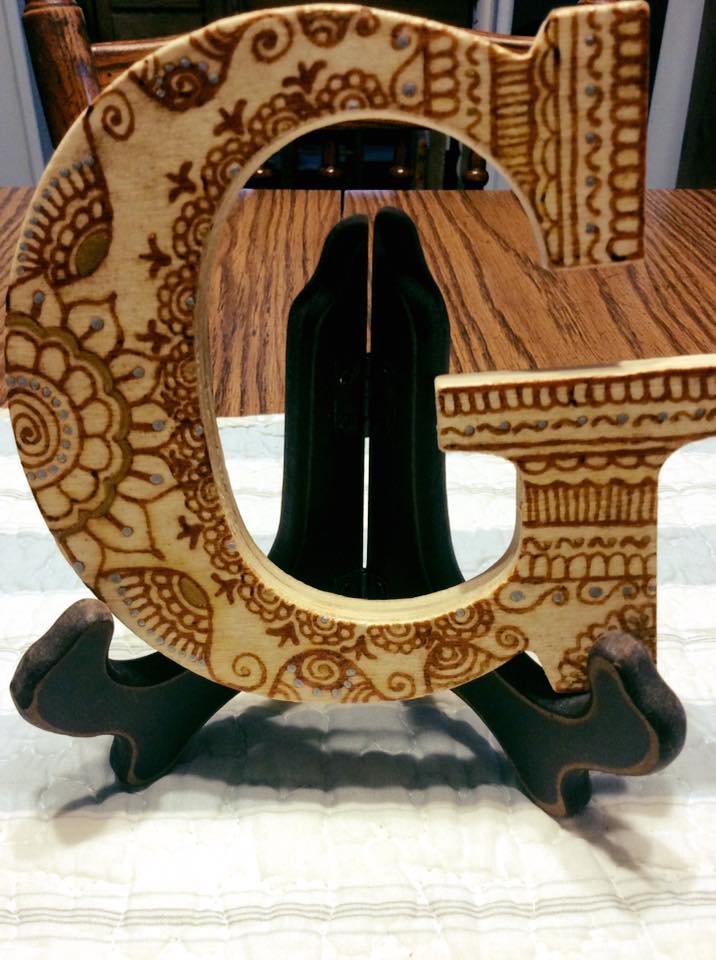
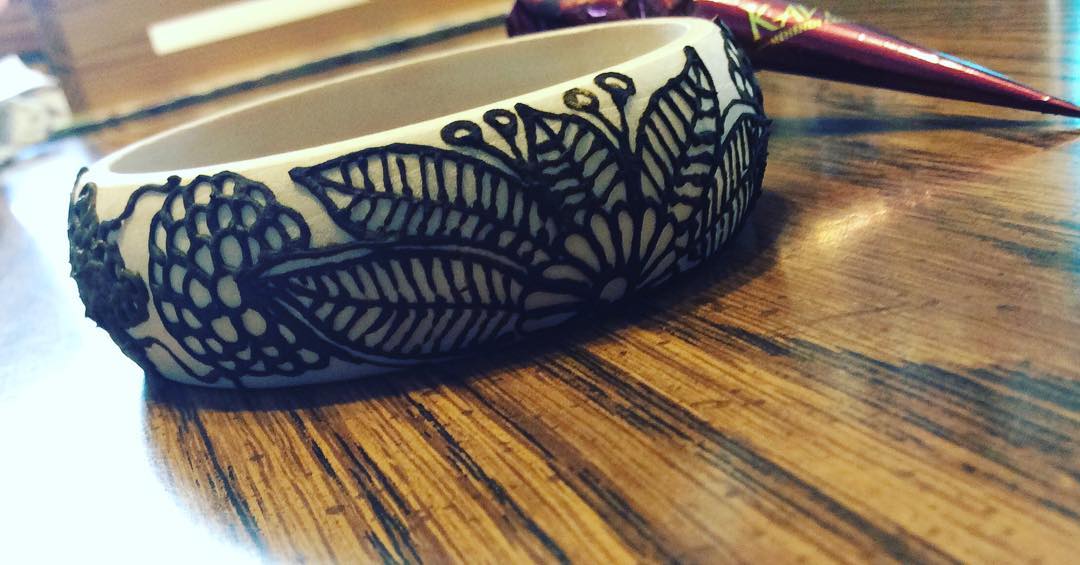
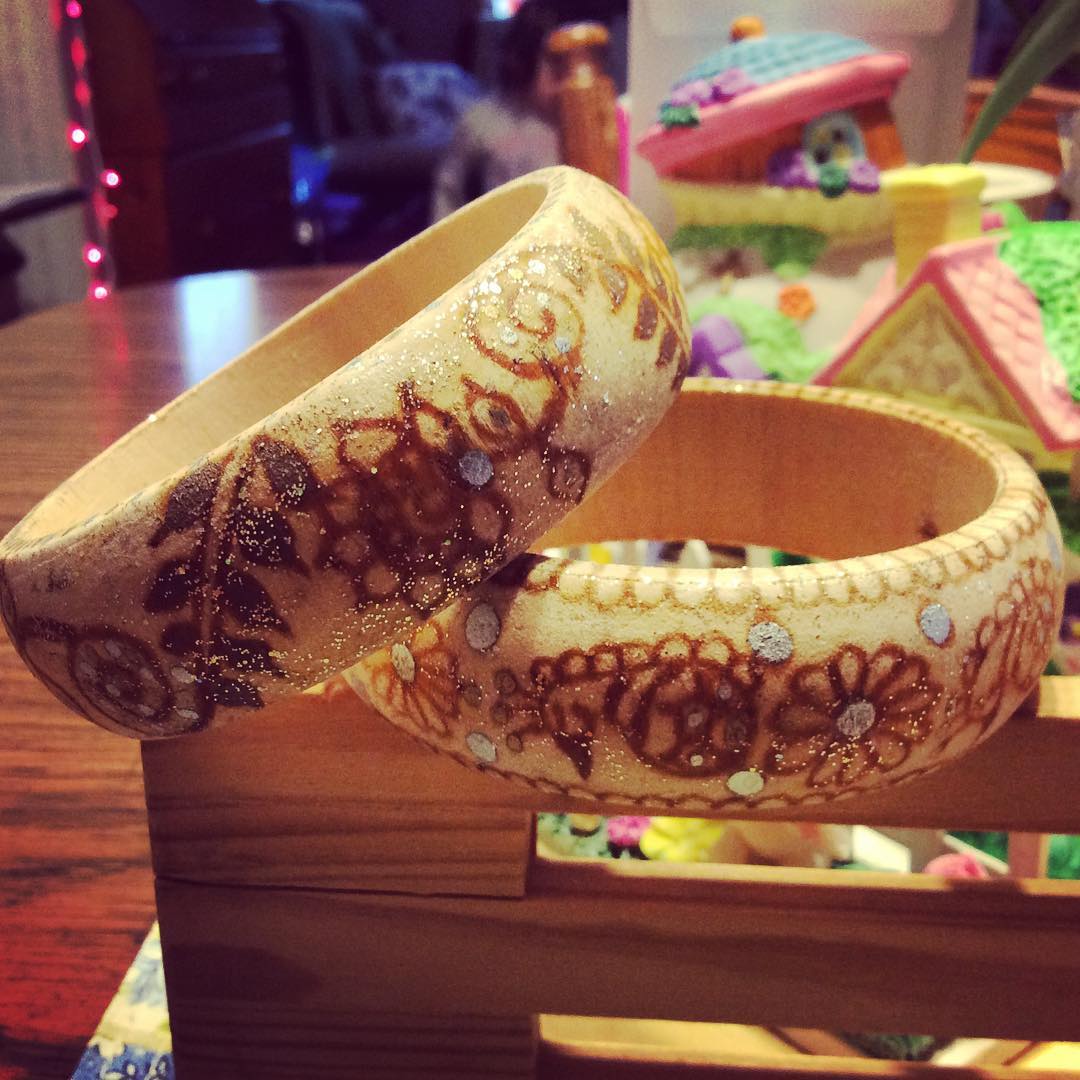
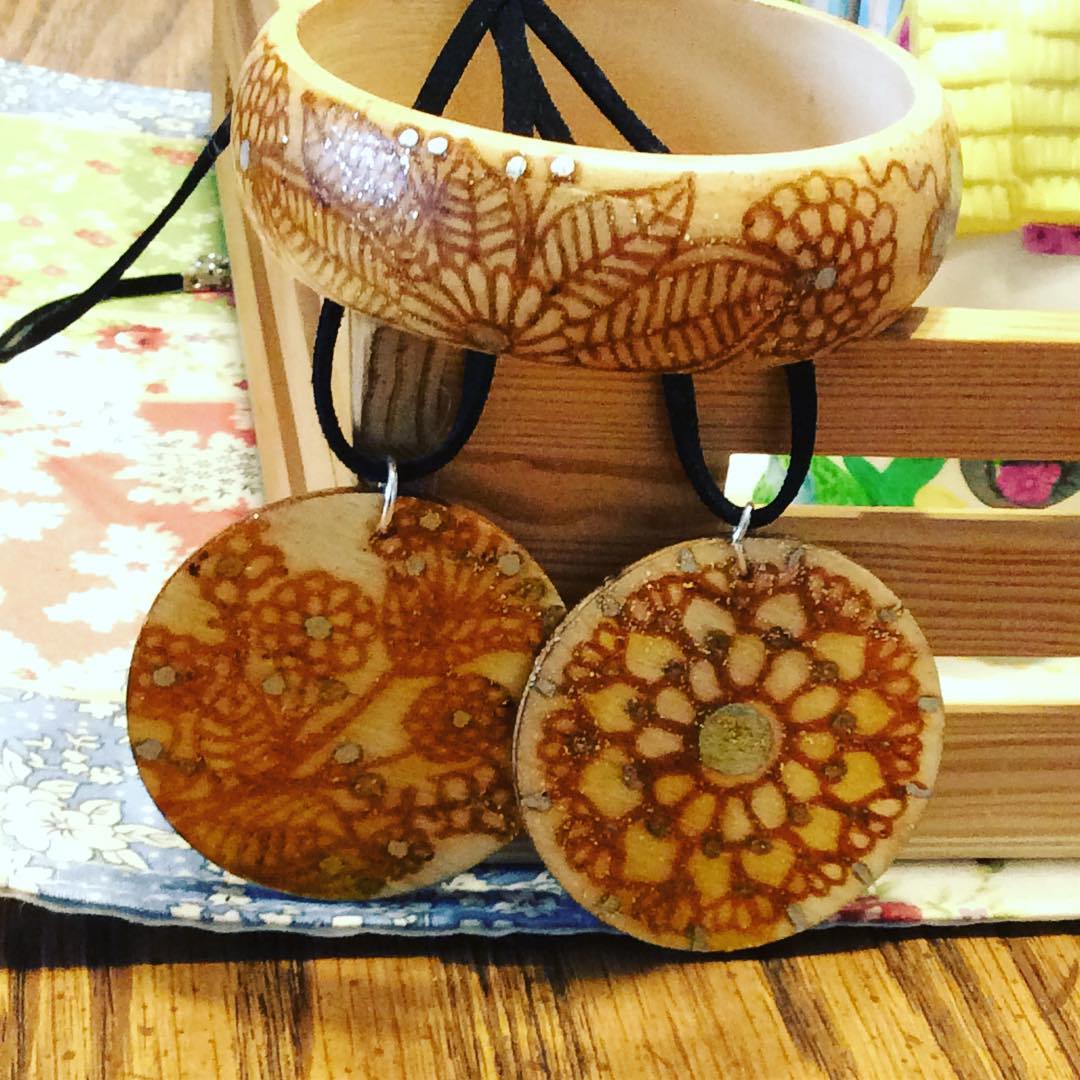
Seven months and fifty henna cones later, I now draw on hands, feet, and shoulders with ease. I create permanent designs on unfinished wood, including letters, bangles, necklace pendants, bird houses, and photo cubes.

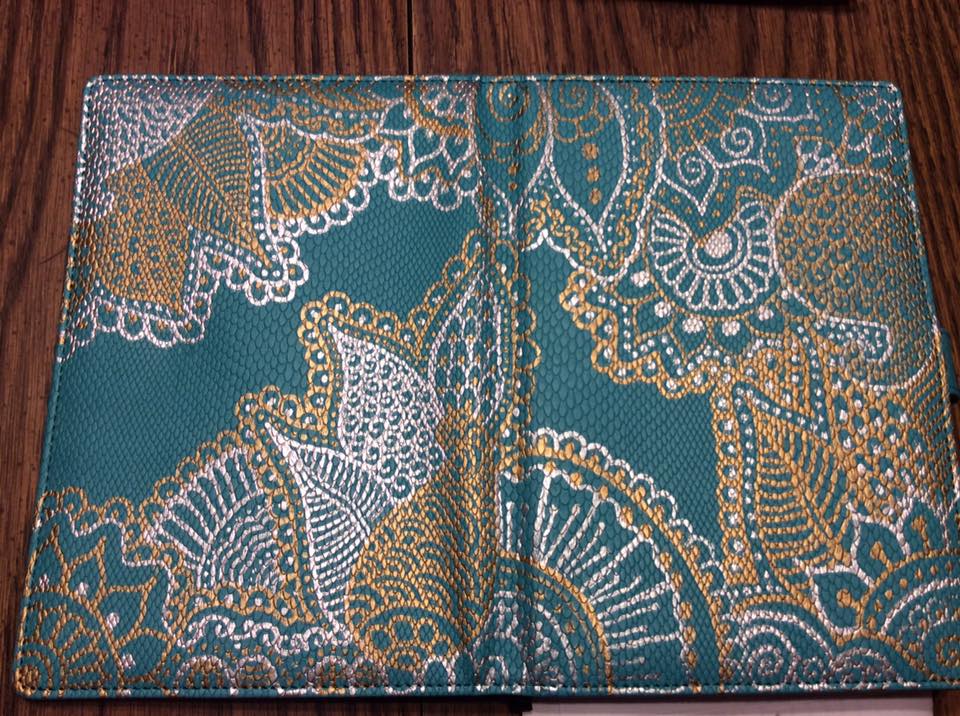
I’ve even started using acrylic paints to make designs on journals and Mason jars.

If I’m already this good after seven months of practice, I cannot wait to see where I am seven more months from now.

15995118_10100208657326564_8544057455089411986_o
My first jewelry box that has since been claimed by my three year old for storing small toys.
17017213_10100230111098034_439702342954445514_o
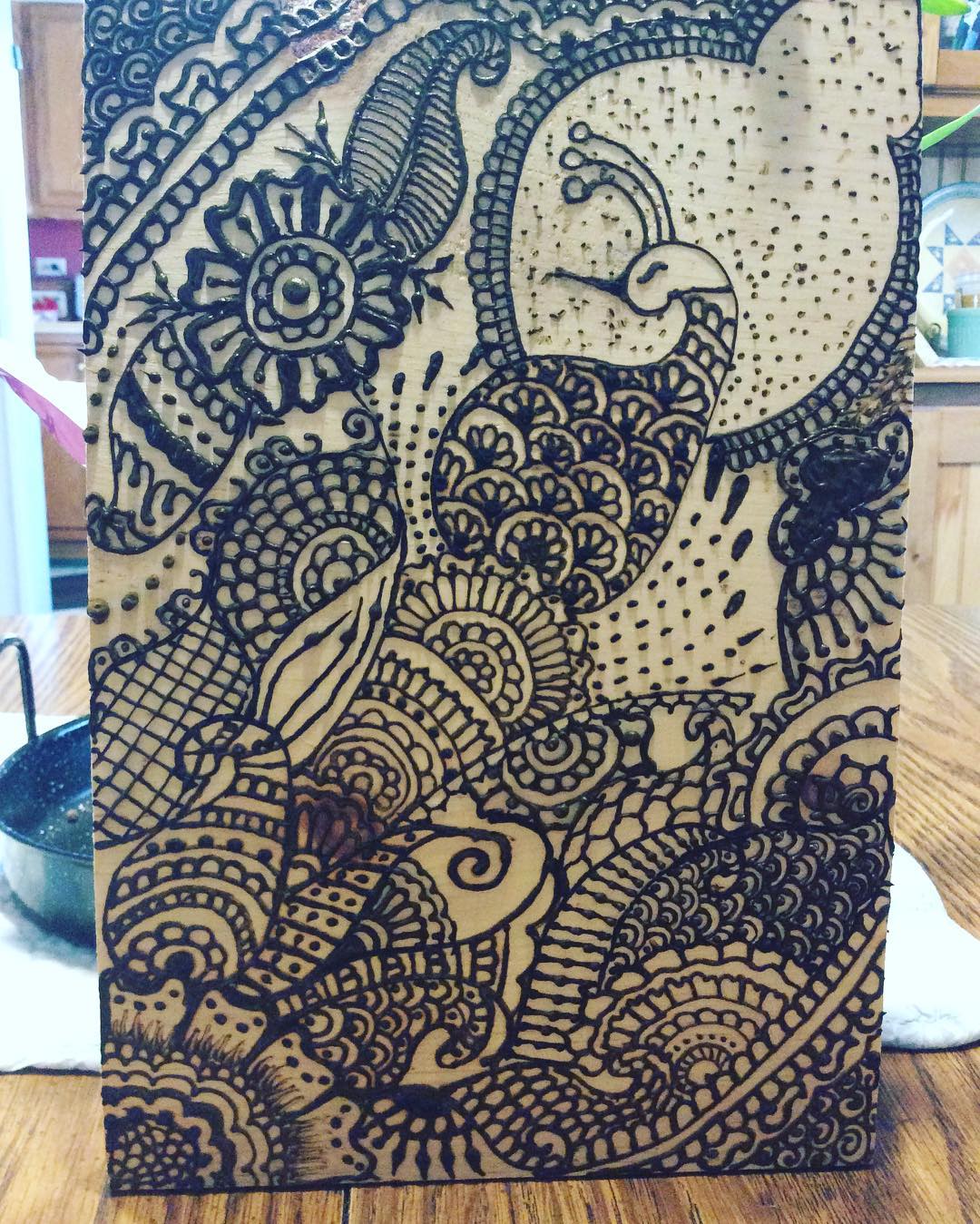
Practicing on scrap wood!
17155904_10100235373557024_3926281226315590146_n
Journal design with acrylic paint.

What It’s Like for Me

I’ve been trying extremely hard not to write an entry like this because I was never sure how people would take it. Heck, I’m not even sure how I’m really taking it. I’m so torn about writing it. Living in India is very conflicting. Some days my heart is so full of being grateful and appreciative for having this opportunity, living in such an ancient culture, seeing the historic monuments and buildings, spoiling myself with massages and such because we can afford it here, living in luxury with our three rooftop swimming pools at our apartment buildings. Other days, I find myself daydreaming about driving my own car down one of Sullivan County’s empty roads. No car horns, no temple music, just blissful silence. Or I get wistful and dreamy about the spacious and roomy parking lots at Walmart ( you will never understand how lucky you are) after a day of frustrated shopping where we can’t find a single parking space at our overly crowded grocery store. Or I wish that I don’t have to second guess what I’m wearing when we go into public, never knowing if it’s fully appropriate for the conservative culture here. Or I wish that I could heat style my hair without it protesting into a ball of frizz or that my make up wouldn’t melt off my face. These may seem like small things, for sure, but when you’re living them everyday, the pangs can get really strong. Most days I’m fine, but some days, I swing from one extreme to the other with me wanting to stomp my feet like a child and scream, “I don’t want to adapt. ANY. MORE.”

I’ve been having waves of homesickness since Christmas Eve, and it’s been getting worse and the waves have been getting a little longer since it’s coming up on a year when I went to the US. In fact, yesterday, I was listening to “California Girls” by the Beach Boys, and I was so stupidly overcome with emotion that I had to sit down at the kitchen table with my head in my hands. So, even though I feel like I’m complaining a bit with this, it just poured out of me and felt sooo therapeutic. I think that even though India overall has been kind to me, it will never accept me as Brittany, wholly American and unchanged. I’ve had to tone down my sense of humor (sarcasm, pretty much), what I wear, how I approach people, how I address people, who I make eye contact with, who I smile at, who I say hello to (which is no one unless I know them). I’ve even had comments on my hair because it’s shorter than what is considered traditional here. The “if you don’t have anything nice to say, don’t say anything at all” mindset doesn’t exist so much here. Good in some ways, and not so good in others.

I’ve been keeping tabs on this thing called the Kerala Blog Express, sponsored by Kerala Tourism, where they bring a group of foreign bloggers to see the best Kerala has to offer. And that’s just it – they’re only seeing the best. As I was reading the latest blog, cheekily titled 12 Reasons to Never Visit Kerala, I felt a huge disconnect between what the blogger had written and my own experience. It’ll be my fourth year here this October, so I’m starting to believe that my feelings and opinions about living here may actually have some clout. I have about 6 to 7 pages handwritten on this topic already, and I’m not even done yet, so I’ve decided to split up all of it in to shorter, easier entries. I’ll probably post once a week until I get it all typed.

First of all, this blogger talks about how hot and humid it is here and how you’re always covered with sweat (all true). But then he talks about how he slathered on SPF  50 when going out on the beaches and hiking, and I just…..I had to stop reading. I can’t even remember the last time I willingly went into the midday sun unless I’ve been 1) under a very large umbrella, 2) in an air conditioned car, or 3) hiding in the shade of a very tall, very broad building. Anyone who lives here knows that being outside between the hours of 10 and 6 is a huuuuge mistake. That’s why many of our beach photos are of sunsets – it’s not for romance. It’s because it’s too stinkin’ hot to go any other time of day. But we have made the mistake of going to the beach in the daytime. More than once, because we kept thinking it would improve each time we went. It didn’t. 10 am – traipsing through hot sand, hot sun, and….ugh….hot air. The beaches are all gorgeous, no doubt, but I think the sunbathers are nuts. No offense. I mean, good grief, it’s so hot outside, why did we think it would be fun? Then, in the car, on the way home, the A/C is cranked to the max, and we look at each other like, “Why did we just do that?” We’re exhausted from the sun, we’ll have to take yet another shower when we get home, and then the rest of the day is shot because we have to rest up since we have real lives to live here. So, yes, the tally – tourist in Kerala: appreciates the heat and sweat and sun and doesn’t miss out on any fulfilling activities because of this; and expat in Kerala: dives into the nearest building like some kind of vampire, counting the hours until I can go outside again. You can’t age me, Kerala sun! NO. WAY.

1519526_768615756424_1940329064_o
Never again.

The next thing on this guy’s list that struck me as odd – he writes that Indians have permanent smiles on their faces. To be honest, I have no idea what he’s talking about. With the exception of my husband, who smiles for approximately 85% of his day (not counting his sleepy time), Indians aren’t smilers. In my experience, the average Indian has a very serious, even borderline unfriendly appearance. I won’t even discuss the blatant stares I still get once in a while from people….or maybe I will, who knows where this paragraph will lead me? But appearances aside, Indians are some of the happiest, friendliest people on the planet. Don’t ask me why they’re so happy – they have lots of reasons not to be, so I’m still trying to flesh all that out.

And this friendliness and happiness leads to such unbelievable hospitality. People are so happy and so proud to have you as a guest in their home. And this, this is when Indians smile. I will never forget, on my first trip to India, we visited the Dhobi Ghat slum in Mumbai, and a young man invited our small crew to see his tiny, well kept home – I mean, it was tiny and most of his belongings were covered with the laundry that he was washing for the Mumbai residents. He just stood there with a broad smile on his face, gesturing for us to enter his home, and I’m sure he would have served us tea if we hadn’t been in such a hurry. This poor man would have given us something that he most likely struggled to earn, and he would have done it with a good, genuine heart. I can’t even fathom it – it leaves me speechless.

425322_607090045244_2070546250_n
That man is in the orange shirt.

Well, now that I’ve waxed poetic about the friendliness and hospitality of Indians, I’m going to tell you that it hasn’t been easy at all for me to make friends here. In fact, I didn’t make any friends at all until we moved to this new apartment complex in October 2015. That’s three, count ’em three, years of having no real, live friends to talk to besides my husband. But I remember the days at our old house when I would cry because I was so lonely for just one other female friend. Just one other mom friend, who could at least pretend to understand how destabilizing it can be to be a stay at home mom in a foreign country. Someone who could sympathize with me on the days when I’m feeling a bit homesick and like I’ve lost a sense of my identity – that I have no idea what I’m good at anymore. Someone who could understand why I protest keeping a maid and a cook because, while it’s extremely difficult to maintain a home here with all the dust and dirt, I didn’t like that my self-sufficiency was completely shredded. It’s taken me a long time to find those people.

And it’s not that there weren’t any women around me. I’ve had female neighbors the entire time I’ve lived here. But they were local Kerala women, at least one generation separated from me, and, I felt, an entire world away in values and interests. I vividly remember (because I felt so mortified) sitting in one woman’s home, she had made me tea, and after the initial “what are you preparing for lunch” conversation (topic of choice here), there was nothing but silence because we had no idea how to continue. And as for me, being a bit socially awkward, my brain kicked in to overdrive panic mode – What do I say? What do I say?? WHAT DO I SAY??? And that made it all much worse.

It has gotten easier. I’ve learned by the example of my husband, in those situations, it’s best to ask about family members – as many details as you can about as many members as you can think of. People love to talk about their families. This tactic has very much saved me from any more awkwardness.  The tally – Tourist in Kerala: is greeted by smiling hotel representatives and tour guides and then thinks everyone here is constantly smiling and in a good mood; Expat in Kerala: sees and experiences the real deal (which I think, despite my complaining, is the better deal).

I hope I haven’t turned anyone off from visiting India. I promise you – it changes your life in the most unexpected ways. I sound like a broken record because I know I’ve written this before. Like I said, my emotions are always in a constant battle – it’s a duality, much like India itself. The extreme good and extreme bad, extreme wealth and extreme poverty learn to co-exist with each other somehow. People say that you either love India or you hate it when you visit for the first time, and I can assuredly say that it’s possible to love and hate this place in the same breath. This is my experience and mine alone. I’ll be posting the next entry sometime next week. Stay tuned!

img_3390
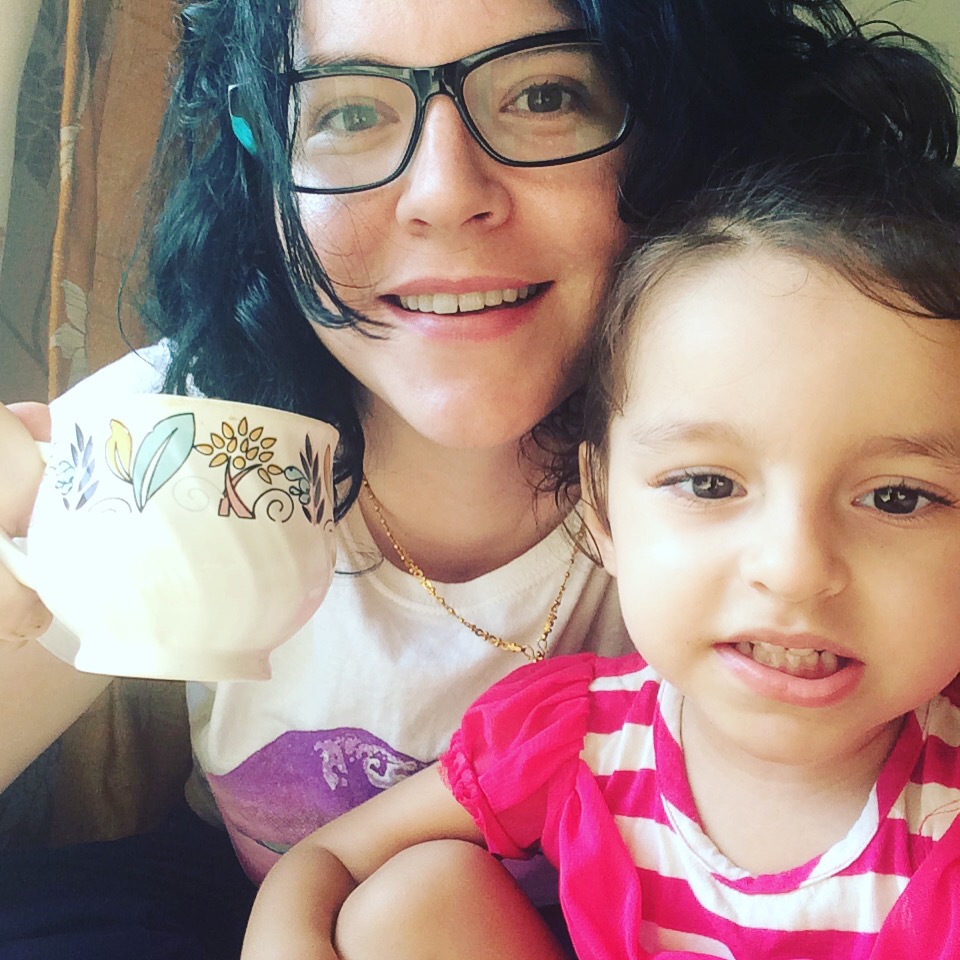
One day at a time, usually with lots of caffeine.

A Passage Back to India

I almost didn’t come back to India on July 8, 2015. The car ride to JFK International is excruciating on its own, but then to have a toddler who can’t stand to be in a car seat for more than 20 minutes and unbelievable emotional turmoil inside my stomach, I almost postponed the journey – by two weeks or three weeks or a month or two months. I didn’t know. We stopped at Long John Silvers (of all places) to eat, and I managed to gag down some fish and a hush puppie or two, but then I puked it all back up when we were 30 minutes from the airport. Stuck in traffic, of course. I was a hot mess. And I was worried that the nausea wouldn’t go away. Could I handle a 20 hour plane journey with a 1.5 year old and constant nausea? Nope. And so I decided to call Zac and tell him I wasn’t going to leave that day. I stood outside a smelly Dunkin Donuts gas station and called my husband, who said he would completely support whatever decision I made.

And so, when we reached JFK, I left my bags in the car and marched through the doors, fully intent on convincing Kuwait airways to postpone my flight without charging me an arm and a leg. But as I looked at the queues and the suitcases and huddled families, I realized I wasn’t alone, and my nausea all but disappeared. I turned to my dad, who had come with me, and asked him what to do. Here’s the thing about my dad – he hates leaving his house for any length of time. Hates it. His idea of a vacation is to stay home, run every morning, and take naps. And mow the lawn. So I thought for sure he would be supporting the postponement idea. But he didn’t. He said, “Brittany, once you get on that flight, you’ll be fine. You can do this. If you postpone it by two weeks, a month, it doesn’t matter. You’ll have to go through all of this again, all the goodbyes, the long drive, everything.” I knew he was right, and I rushed out, got my bags, and checked in to my flight. Said the hardest goodbyes to my parents, who were both sobbing while I tried to be the strong one (didn’t work). And then I left, praying with each step, “Please, God; please, God; please, God.” Please, God, what? Please, God, don’t let me barf on the plane? Please, God, don’t let Evelyn scream for the whole plane ride? Please, God, don’t let me get stuck at Kuwait International Airport? Please, God, don’t let the plane fall in the ocean? Whatever it was, He knew my heart and answered those prayers. And a short 11 hour plane journey later, I was in Kuwait, and another short 9 hours later, I was hugging my husband inside Trivandrum International Airport.

And now I’ve been back for over a month and a half, and I’ve had time to reflect on exactly why I went berserk….inside myself. And I think most of it was guilt. Guilt of taking Evelyn away from my parents and extended family. Guilt of taking Evelyn away from a place where she had SO MUCH space to roam freely. Guilt of not having an answer on when I would be back to the United States again. And, most of all, guilt for not being that sad about leaving. Oh, sure, I was sad. I love my family dearly. I would and do miss them. And I would miss lots of other things – the television shows, the food, the easy peasy traffic, the fact that there just aren’t that many people in Sullivan County, Pennsylvania. The freedom to pick up and go wherever I want at anytime. But, much more than the sadness, I was anxious. Anxious to get the goodbyes done and over, anxious to get the plane ride over, anxious to see and touch Zac again. To see him smile. Hear him laugh. To get our life back together.

Therein lies the crux of the matter, I suppose. I didn’t feel that I felt sad enough about leaving. But if I allowed myself to feel split in half like I had the first time I left for India, then I don’t think I could have ever come back. I guess you could call it a survival mechanism. Or perhaps I’ve realized that it’s not the end of the world when you move abroad. There are airplanes, Skype, Facebook, Instagram, Snapchat, and a myriad of other ways to keep in touch. It adds depth to my experience because I am forced to share the details of my everyday life here. I am forced to constantly examine how I feel about giving up the ease of my previous life and finding ways to add peacefulness and simplicity to this life in India. And I keep in better touch with my family now than I ever did when I was in the United States. I am forced to make time to chat with my parents so they can watch their granddaughter giggle. I am forced to take the extra 5 seconds and send Snapchats of my life to my brother, cousins, and aunts. You know, I was trying to find a good quote or two about to slam in here about being an expatriate, but so many of them are about wanderlust and being addicted to travel, and I don’t really think that’s me (except for going to see the Taj Mahal. My darling husband, if you’re reading this, make it happen). I am just a small town girl who happened to meet and fall in love and marry a foreigner, and then I had to move abroad. I am simply an American mom who lives in a non-American house. There is no wanderlust here. I didn’t move abroad because I wanted to be immersed in another culture or because I wanted to see the world. Those are just added perks. Anyway, I only found two quotes that I felt comfortable sharing. One by David Sedaris:

“LIFE MIGHT BE DIFFICULT FOR A WHILE, BUT I WOULD TOUGH IT OUT BECAUSE LIVING IN A FOREIGN COUNTRY IS ONE OF THOSE THINGS THAT EVERYONE SHOULD TRY AT LEAST ONCE. MY UNDERSTANDING WAS THAT IT COMPLETED A PERSON, SANDING DOWN THE ROUGH PROVINCIAL EDGES AND TRANSFORMING YOU INTO A CITIZEN OF THE WORLD. WHAT I FOUND APPEALING IN LIFE ABROAD WAS THE INEVITABLE SENSE OF HELPLESSNESS IT WOULD INSPIRE. EQUALLY EXCITING WOULD BE THE WORK INVOLVED IN OVERCOMING THAT HELPLESSNESS. THERE WOULD BE A GOAL INVOLVED, AND I LIKED HAVING GOALS.”

And one by Miriam Adeney:

“YOU WILL NEVER BE COMPLETELY AT HOME AGAIN, BECAUSE PART OF YOUR HEART ALWAYS WILL BE ELSEWHERE. THAT IS THE PRICE YOU PAY FOR THE RICHNESS OF LOVING AND KNOWING PEOPLE IN MORE THAN ONE PLACE.”

An absolute “yes” to both of these. Richness, overcoming helplessness, transformation, toughing it out. All of this has been my life so far. I would add humility to the list as well. Because nothing teaches you how very little you know about life and the world quite like living in another culture, especially a non-Western culture. Nothing teaches you better how to appreciate what you have and not be wasteful quite like seeing another human being who has absolutely nothing and nowhere to go. Nothing teaches you how to love your spouse more deeply quite like seeing headlines of young couples murdered because they fell in love and married. Nothing teaches you to hug your daughter more tightly better than knowing you’re living in country where they are still fighting to save the girl child. These, along with all the beauty of India, are part of the realities.

And, now, back to my reality. It’s been a pretty busy month and a half. The apartment was essentially a hazmat area when I arrived, and that was after Zac had hired a maid and she cleaned up a lot. So I immediately, jet lag and all, threw myself into cleaning and throwing away junk. I’ve also been packing because we’ve decided to move to a place where Evelyn and I will both have much more freedom to roam about. I have started making more Indian food – Kerala red fish curry, chicken biryani, aloo tikki, dosa, idlis, chutneys, various vegetable curries, rotis. It’s all gotten me in to a good routine, even a better one than before. I was a little worried that maybe I would be homesick or sad once I got back to India, but I haven’t been. There are things that make me rage every now and then – power cuts; the heat; our maid; the heat; cultural differences; the heat; the issue of NO ONE following traffic laws my goodness; the heat, dear Lord, THE HEAT. I sweat through every single piece of clothing I have. So, yes, there are moments and hours and even days of frustrations, but if I don’t dwell, it gets better. If I dwell, it gets worse. Anyway, I can assuredly say that I haven’t been been sad or depressed. How could I be? Our little family has been reunited. My physical home may be the United States of America, but my real home is wherever Zac and Evelyn are. I love them both so dearly. Plus, we live like 5 minutes from the beach. For real, how could I be sad? I get to watch Evelyn chase baby goats when we go for evening walks. I get to listen to Evelyn try to string together words and then hear Zac laugh at whatever she is trying to say. A few days ago, I ate the traditional Onam meal that is served on a banana leaf. I ate a meal on a banana leaf, people. How cool is that? Even if we’re just sitting at home, eating dinner and watching “Indiana Jones and The Last Crusade,” I am super aware of how much joy is in my life. I remember Zac telling me one time that he didn’t know what he did right in his life for God to be so gracious and give him such wonderful gifts (Evelyn and me). Well, I don’t know what I’ve done right either. But I am so grateful.

I am hoping to start blogging more now, but with a toddler who likes to make demands as soon as she sees mommy get comfortable, I’m not sure if it’s going to be possible. Hopefully, you guys will stick with on this chapter of our journey.