Tadka: Learning to Name the World

Opening Note:
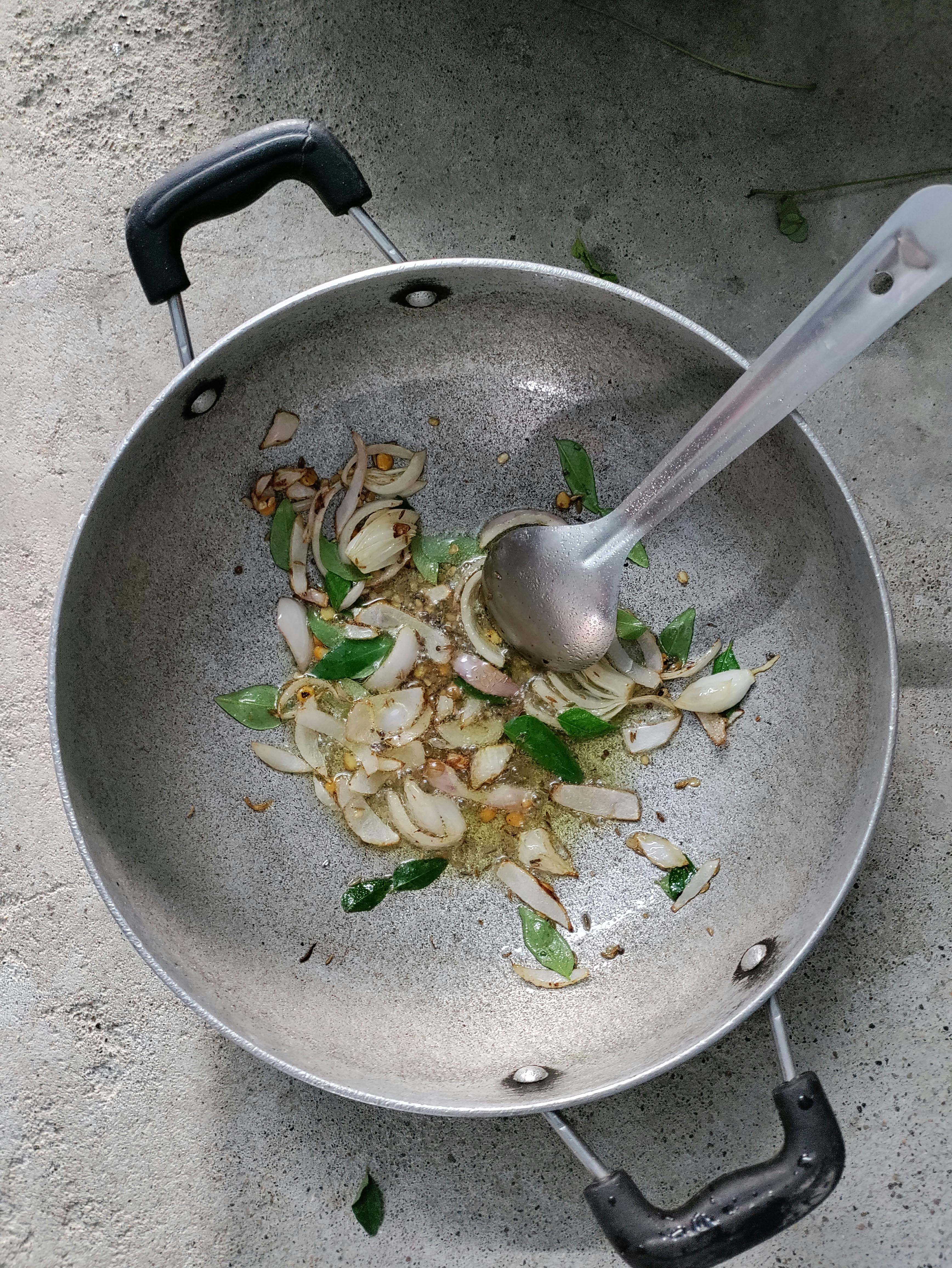
One of the first things I learned in Kerala was that food speaks to you. When mustard seeds splutter in hot oil, it’s a signal: add the curry leaves, the shallots, the chillies. Over time, I realized language works the same way. It teaches me when to pause, when to listen, and how to name the world with new words.

Tadka (To My Younger Self)

When the mustard seeds splutter,
that’s when you add the curry leaves, shallots, and chillies.
Call them by their names: kaduk, kariveppila, ulli, mulak.
Repeat them, ketto?
They will be your anchors later.

You will learn the names of vegetables, fruits, grains first,
by accident.
Your ears will be covered in scales until they aren’t,
and rice, fish, turmeric will become chor, meen, manjalpodi.

Hold on to the astonishment of learning them,
tracing the seas they’ve crossed,
the shores they’ve touched.
Remember, Babel wasn’t a punishment.
It was a gift:
a doubling, trebling of names
for tomato, onion, wheat.

You will want to tell someone about this wonder,
but you will feel alone.
In India, they will shrug,
we know these things only.
At home, eyes will glaze over.
You’re allowed to marvel anyway,
maanasilaayo?

You will still want to shrink into a corner,
fear and self-doubt strangling you.
But you’ll press forward anyway,
shoulders tight, breath shallow, heart pounding.

It’s the same acceptance of terror that gets you
through airports, onto planes
to your mother, father, and brother,
not to relive the old days, but to
build new ones–
good times, now,
with their granddaughter.
You learn to do what must be done. 

On these visits, you will pass your grandparents’ house.
You’ll see black trash bags slumped on the porch,
weeds swallowing the yard.
Look away if you must.

When you walk inside for the last time,
you’ll search for their scent in the damp,
unheated walls of late winter.
It won’t be there.
You will realize:
loss doesn’t wait for your return. 

And still, the seeds will pop
when oil meets flame.
The crackle is now, never then.
It will not pause for a house
that now belongs to someone else.

Fragrance will rise, sharp, insistent.
The present will announce itself
in smoke and spice.

So listen, mol:
you don’t need to live inside what is gone.
Stir the heat into what is here.
Add the zest.
Name things as they are.
Find beauty in words for what’s to come.
Eat while it’s hot.

Memory will cool soon enough
on your tongue.

Closing Note:
The crackle of mustard seeds hasn’t stopped surprising me. It’s a small sound, but it reminds me that life is always beginning again, in kitchens, in words, in the ways we honor our pasts.

Image from Pexels.

5 Tips For Loving Your New Country

Well, you did it. You packed up and shipped off to another country; your dreams of wanderlust coming true. Soon enough, weeks or months have passed, and you’ve settled into a routine. But things aren’t as fun as you’d hoped.

Your bathroom looks weird, beds and pillows are too hard or soft, and the grocery store doesn’t carry anything you like. The climate is too hot or cold. It’s exhausting trying to do anything official where no one speaks your language. Everyone else’s concept of time is different from yours.

These are small problems, but small seems huge when you’re away from what’s familiar. Before you know it, homesickness creeps into your stomach.

A lot of blood, sweat, and tears goes into living overseas. You need to break down your beliefs and values, maintain your boundaries, cry a lot, and laugh more than you cry.

Believe me, I know. I’m going on a decade here in Kerala, and my physical and emotional changes careened through ups and downs. I never had any desire to live in another country. I was content to live in or near Pennsylvania for the rest of my life. Well, life had something else planned for me.

When I arrived in Calicut, I was a starry-eyed newlywed, thrilled to live with my husband. Not one thing about India bothered me. Giant cockroaches? Fine. All-day powercuts? Bring it on.

Then our daughter was born, and I ran face-first into a cultural wall. Everything I found endearing became an imposition, and I went into an “I’m here on a long vacation” mindset. Over time, I pulled away from that thought and grew to love my life. Now, I can’t imagine living anywhere else but Kerala. No matter where I am, I’ll leave a piece of my heart here. It’s my home.

But it wasn’t until recently that I figured out how I fell in love with Kerala. There are a few definitive things I did that made me feel like I now belong here. So, for the sake of anyone plunging into a new culture, I’m giving the few tips that helped me the most.

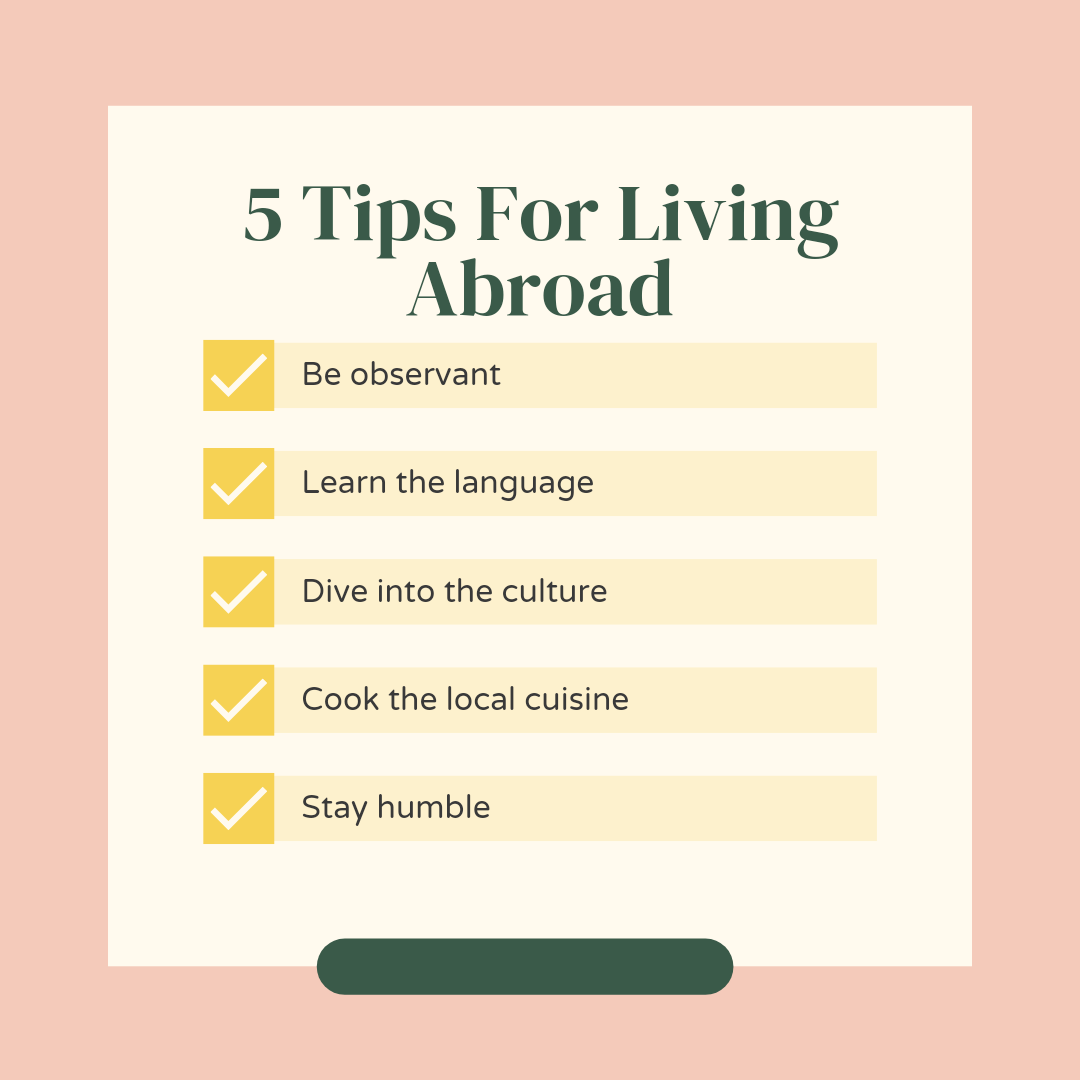
1.) Be observant.

When moving to a new country, this is the best piece of advice. Observe people. Check out their behaviors. Watch what they’re doing, but even more importantly, watch what they’re not doing. I learned so much about how to behave in India by shutting my mouth and observing.

Some things I learned: eating with my right hand and without utensils, not crossing my legs when I’m visiting someone’s home, replacing handshakes with head nods when meeting someone. These are small things, but people notice when you do them differently.

2.) Learn the language.

You knew this was coming. I’m not telling you to only learn to communicate with people. That is, of course, the biggest benefit to studying a new language. You create and deepen new connections with native speakers.

Learning the language blows your world wide-open. You can understand a new slew of music, movies, jokes, and idioms. For me, few things have been more satisfying than finally understanding Malayalam memes.

Learning a new language has a host of benefits. It stimulates the brain, stalls cognitive decline, and boosts creativity! So get signed up for a class and start your language journey!

3.) Throw yourself headfirst into the local culture.

Throwing yourself into anything when you’ve moved to a new country seems like the last thing you want to do. But please trust me on this one. It gives you an enormous appreciation for your new home. Take a dance class, a singing class, an art class. Pick something and try it, even if you’re terrible forever.

Learn the history of the art form. Attend a local performance or exhibition. You won’t regret it.

As for me, I’ve written before that I learned (and am still learning) mehndi. And right before the pandemic, I started Bharatanatyam lessons, which I love, love, love. Both have rich histories, and I gained new admiration for all mehndi artists and Bharatanatyam dancers.

4.) Cook the food. This, my friends, is what pulled me out of my cultural adjustment funk. When you cook the local cuisine, you tie yourself to much more than the food itself. You become connected to history, language, and relationships.

Recipe by recipe, I restored my self-esteem by perfecting a huge part of Malayalee culture – their food. Pride wells inside when I hear a Malayalee say, “Brittany is an expert in making biryani.”

5.) Stay humble. Over the years, I’ve lost count of how many times I’ve culturally screwed up. It’s fine to make mistakes! But when Zac would explain how to avoid issues in the future, I’d rear up and demand why I had to change my behavior. The answer is rather dissatisfying: Because I had to.

Remaining culturally humble isn’t easy. It requires daily self-reflection: wondering how I can better communicate with and listen to people, and how I can better show my respect. It’s understanding the history and dynamics of where you’re living.

There is no sensitive way to say this, but it is neither your job nor your place to change the society where you live. Instead, amplify the voices of locals and citizens who are already changing things. They have done the hard work and deserve recognition.

I hope no one has read through this and now believes I sit stiff as a board and don’t speak so that I don’t offend anyone. If that was true, I wouldn’t have written this. Around friends and family here, I am totally myself. Frankly speaking, though, I am not the same person as the one who existed a decade ago, and that’s a good thing.

And there you have it. My five main tips for adjusting to a new country. While these won’t solve many other daily frustrations (a whole other ballgame), I hope they help people appreciate their new homes.