I got a manicure in a nice salon for my birthday. I’d promised myself I’d quit a 41-year-old habit. Then I glanced out the window.
Red Umbrella
The technician submerges my hands in the lavender water to soften my chewed-on skin. My fingers flex, the water stings the wounds. Each sore a metronome of the hum inside. Too ashamed to relax, I do everything but close my eyes. Count towels. Searching for pores, maybe a frizzy tendril on the model’s giant face beside me. I crane my neck to look out the window, and I see a red umbrella, swaying like a heartbeat in the brutal sun. The umbrella tips, and I see him, his sign, a small board cupped in his left hand: MEALS. The sunlight shifts, and my own reflection hovers in the glass. The technician massages chamomile lotion into my skin. “For relaxation.” “Is the AC temperature okay, ma’am?” I stare at the man and his red umbrella until he walks out of sight. I ask for red polish on my fingertips. I ask the technician if she gets to visit her family, so far away. I murmur another apology about my fingers. The red polish, cured under light.
On my way home one day, I saw a man stop his cycle to feed some street dogs. The scene felt simple, but not quite.
A Few Coins
A man stopped on his cycle along a road not yet flooded with traffic. Thin, well-worn legs. Hands all hard labour: callouses, thick veins, and scars. Yet he cradled a plastic bag, looped around the handlebar.
His guests bounded, all tails and tongues. A welcome only they could give. With a rare tender palm, he patted each head. No rush to the next. From the bag came folded banana leaves, patiently unwrapped. Tails thrashing so wildly, I thought they might lift off toward the mountains.
Then a lantern lit from within. His fingertips shone like torches through dark trees. His eyes burned with a glow that made the world shimmer. A glow I wanted to hold. Here was a parted veil, allowing me a glimpse of what it means to be human. But then I blinked, and he was just a man again, gently portioning a meal for his loyal friends. It wasn’t much but it was all.
Opening Note: One of the first things I learned in Kerala was that food speaks to you. When mustard seeds splutter in hot oil, it’s a signal: add the curry leaves, the shallots, the chillies. Over time, I realized language works the same way. It teaches me when to pause, when to listen, and how to name the world with new words.
Tadka (To My Younger Self)
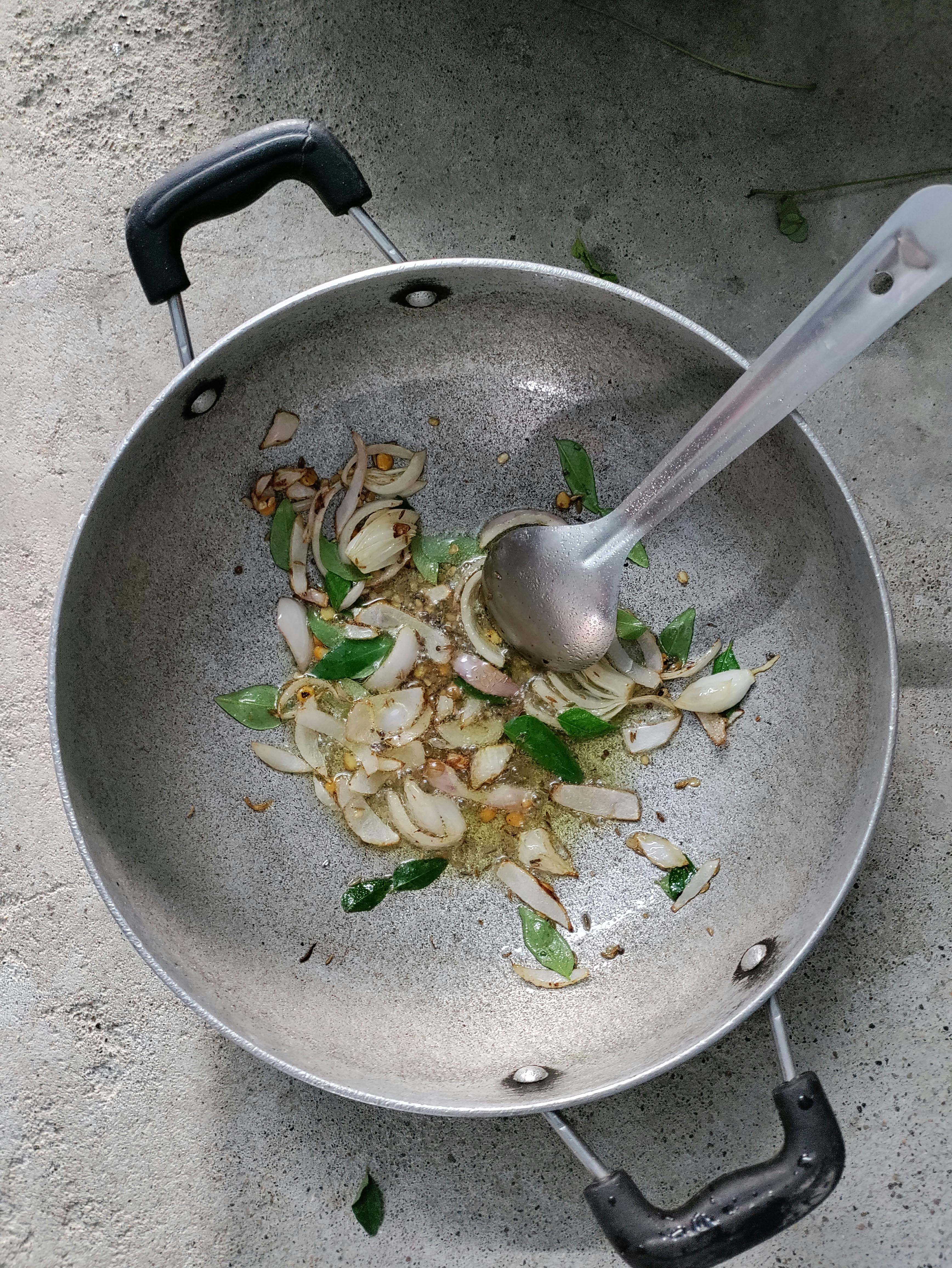
When the mustard seeds splutter, that’s when you add the curry leaves, shallots, and chillies. Call them by their names: kaduk, kariveppila, ulli, mulak. Repeat them, ketto? They will be your anchors later.
You will learn the names of vegetables, fruits, grains first, by accident. Your ears will be covered in scales until they aren’t, and rice, fish, turmeric will become chor, meen, manjalpodi.
Hold on to the astonishment of learning them, tracing the seas they’ve crossed, the shores they’ve touched. Remember, Babel wasn’t a punishment. It was a gift: a doubling, trebling of names for tomato, onion, wheat.
You will want to tell someone about this wonder, but you will feel alone. In India, they will shrug, we know these things only. At home, eyes will glaze over. You’re allowed to marvel anyway, maanasilaayo?
You will still want to shrink into a corner, fear and self-doubt strangling you. But you’ll press forward anyway, shoulders tight, breath shallow, heart pounding.
It’s the same acceptance of terror that gets you through airports, onto planes to your mother, father, and brother, not to relive the old days, but to build new ones– good times, now, with their granddaughter. You learn to do what must be done.
On these visits, you will pass your grandparents’ house. You’ll see black trash bags slumped on the porch, weeds swallowing the yard. Look away if you must.
When you walk inside for the last time, you’ll search for their scent in the damp, unheated walls of late winter. It won’t be there. You will realize: loss doesn’t wait for your return.
And still, the seeds will pop when oil meets flame. The crackle is now, never then. It will not pause for a house that now belongs to someone else.
Fragrance will rise, sharp, insistent. The present will announce itself in smoke and spice.
So listen, mol: you don’t need to live inside what is gone. Stir the heat into what is here. Add the zest. Name things as they are. Find beauty in words for what’s to come. Eat while it’s hot.
Memory will cool soon enough on your tongue.
Closing Note: The crackle of mustard seeds hasn’t stopped surprising me. It’s a small sound, but it reminds me that life is always beginning again, in kitchens, in words, in the ways we honor our pasts.
Sometimes life’s smallest moments can carry the biggest lessons. On a routine evening walk a few years ago, a simple run-in with a scorpion taught me about restraint, mercy, and the power of choosing kindness over retaliation.
This poem reflects on that moment, and the ripple effect that can follow when we hold back our sharpest stings.
Dear Scorpion
Evening is the best time to walk, the sun retires from scorching; my shirt feels a little less sticky. My dog scuffs along, sniffing, his own form of social media. I scuff along in my well-worn chappals, not the wisest choice, scrolling through my phone.
The evening in question melted over the sky, hardening into oranges, purples, and blues. Scuff, scuff. Sniff sniff, scroll. When something cold and hard rolled over the soft, sensitive flesh of my foot.
My brain tried to place the feeling: A beetle? A plastic toy? A bottle? I looked down. My heart melted, warm liquid, draining to my toes.
A scorpion stood with its stinger raised. Ready to duel if it met my foot again, in the dead leaves covering our path. Do I run or stand my ground? Both felt wrong.
So we stood for hours, seconds, really. The harder I stared, the more it looked offended than armed.
I chose to back away, my eyes on the insulted creature, shrinking as I retreated until it vanished.
It had every right to strike me with its poison. I felt that path was my own.
But it chose not to sting me. The opportunity was easy. Maybe it was luck, or maybe it sensed my fear like its own. Or maybe it wasn’t in the mood.
Dear scorpion, I learned something on that evening walk. I can choose not to sting another. Swallow the bitterness that would rush through blue capillaries, red arteries, straight to another’s heart.
I can fade into the twilight, but still stand guard. Maybe their venom will return to where it began, softening the next hardened heart, one restrained sting at a time.
Dear scorpion, if mercy flows this way, through veins and capillaries, into oranges, purples, and blues, maybe this world needn’t sting so deep.
A Note: I hope this poem encourages you to pause and choose mercy in your own daily encounters, softening hardened hearts one restrained sting at a time.
Somewhere between arrival and departure, I’ve learned to speak in two voices and carry two selves. This is about what happens when neither feels entirely mine.
A Switch | സ്വിച്ച്
This plane window is a signaller. Ready to help me choose myself before we fall to the earth. I am sinking and floating at once, but I look out the window anyway to see which personality to wear after landing.
Grey bypasses, skyscrapers, concrete squares: all holding their breath. The switch flips to America.
A quilt of coconut palms, low white buildings, the switch flips to India. My head wobbles before the plane touches down.
Later, I learned there’s a word for this. I protested: I don’t do this. Not me. And the man I spoke to replied, “Oh, but I think you do.”
In India, I’m more reserved, yet I speak more. Slowly. Enunciating. I use words like: lift – boot – lorry – brinjal – petrol. I say Ruh-vi, not Raaah-vi. I roll my Rs and move na – nja – nna through my tongue and lips. I clench my fists in frustration when the word is right there, drifting, italicized, in my mind, tucked under my tongue when I try to speak.
And then in America, when I’m with people who knew me once, but not quite. When nostalgia rolls in as thick as the fleece blanket that keeps me warm in stark Pennsylvania winds, I’m more open, but speak less. I speak quickly, slurring my words: “Didja eat yet?” I smile hellos and how are yous to perfect strangers, but never pushing beneath: “Friend, how is your heart?” or “Is your father doing okay?”
“You kinda have an accent now,” so I flatten my As again. My voice shifts north into my nose and the words roll out: elevator – trunk – truck – eggplant – gas.
I don’t have to worry about chechis and chettans. Americans like first names, giving us a pretend closeness, like a handshake without eye contact.
Here’s the thing: neither one feels quite right. In India, I wear a mask. I smile when I don’t want to; swallow questions and bite back criticisms because my face marks me a visitor even though I’ve rooted my hands deep in the soil. In America, I wear a wool sweater two sizes too small. I tug at the sleeves, sweating, itchy, chafed but never take it off.
So, who am I? Am I the words spoken to others, what they see: a woman in love, a fool, a brave soul? Or am I something deeper? Or am I none of these?
Am I just a middle-aged woman afraid she will always be brushing the edges, never quite let inside? Am I just afraid that someday I’ll be a stranger in a strange land where I borrowed books from the library and licked ice cream as I walked to the park?
Now, the only home is my daughter’s voice when she tells me the song she and her friends made up; when my husband and I walk into the hovering emerald canopies.
If my skin were peeled away and my chest cracked open: The hush of the monsoon rain washing through the ghats, the whisper of the snow covering the evergreens—
Would you recognize the language of my pulse,
the accent of my blood,
forever stuttering switching tracks until I break the lever.
Note: I am completely aware that I am coming from a privileged place as I write this. I have a hired housekeeper and cook here in Kerala (but even then, as a dear friend pointed out, the task gets passed from one woman to the next), and I have a supportive husband who encourages me in everything I do. He has grown just as much as I have since we’ve been married, and it’s been a privilege to see. I have written this for women who, for whatever reason, cannot speak up.
For this entry, I feel a bit like Frank Constanza in Seinfeld’s “Festivus” episode, where, during the airing of grievances, he shouts, “I got a lotta problems with you people, and now, you’re gonna hear about it!” But if you’ve known me for my whole life, you know when I get super bothered by something, I turn into an 85-year-old man who is basically shouting at kids to get off his lawn.
Don’t get me wrong. I love International Women’s Day. We need it. We desperately need it to acknowledge all the trailblazing that’s been done, and of course, all the work which still needs to be done. My discussion, or rant if you prefer, addresses the latter.
My husband came home at lunchtime yesterday and said he’d been asked to give a short speech for Women’s Day (along with several students and other faculty). He asked, “What do you want me to say?”
And I was like, “BOY, AM I GLAD YOU ASKED”:
1. Women’s advancement starts in the home. Women can make great strides in careers, science, high-level corporate positions etc., but if, when she goes home, her husband won’t do a load of laundry, then we’re really not getting anywhere at all, are we?
There are no “set roles” anymore. There is a household, usually with two working people. Hence, those who live within the house need to share those duties.
Even if a woman is a SAHM, she deserves support and a chance to develop a talent or hobby she loves because, chances are, she feels totally consumed in her roles as a wife and mother.
TL;DR: Men, don’t be lazy. Do a round of dishes. Fold laundry. Take your kids out to play for a while. Your wife deserves a chance to be a person outside of being your children’s mother and your wife.
Like, I can’t even believe, in the year of our Lord 2023, that I need to write this down?? And yet I see story after story, post after post, of men simply not pulling their weight within the household.
2. Men need to share the mental load. Women are not only tasked with doing almost all household duties by default, but we also are tasked with the mental load of remembering basically everything. Appointments, school assignments, shopping lists, meal planning, where things are kept in the house, everything falls into the woman’s lap.
This invisible mental labor adds more stress than anything else and can make women feel completely overwhelmed and paralyzed.
And it doesn’t help to follow your wife around and say, “Just let me know if you need help.” That ADDS to this burden. YOU look around and see what needs to be done. YOU take over helping the kids with projects and assignments. YOU take over half the shopping list or the meal planning.
Not only are women tasked with this mental load, but we also bear the brunt of criticism, especially when it involves kids. Every critical comment a person can dream up is passed through very freely to the mother, the partner usually tasked as the primary caregiver. Believe me, we are already our own worst critics – you don’t need to add to it.
3. Why bother getting your daughter into activities to develop her talents and academics if you’re just going to ship her off to be married in a relationship where she loses all of what she’s learned?
There’s a reason films like The Great Indian Kitchenhave been made, and that’s because it’s a reality for many women out there, not just in India, but throughout the world.
Let me take the unpopular opinion here – don’t invest in your daughter unless you plan on standing with her if her eventual marriage is mentally, emotionally, or physically abusive (or all of the above). Don’t invest in her education if you’re just going to tell her “log kya kahenge” or “what will people say” if she wants to escape that situation, and you’re only worried about the potential stigma of divorce. Don’t invest in her talents if you’re just going to tell her to “adjust, dear” when she says her new husband expects her to do all the housework with no help.
I will shout it from the rooftops – WOMEN’S ADVANCEMENT STARTS IN THE HOME. It starts with teaching your sons how to fend for themselves in the kitchen, how to do chores, how to pick up after themselves. It starts with letting your daughters take risks, letting them show their anger and shout and scream and express discomfort, letting them interrupt people who have tried to silence them. And, for the love of everything on this green Earth, stop glamorizing the martyrdom of motherhood. Just stop it. It helps absolutely no one, least of all, women.
Happy belated International Women’s Day. We can all do better and be better.
When I first moved to Kerala, the one question people asked most was, “Do you like the food?” I didn’t know the importance of food for Malayalees at the time, so I felt confused why people asked that so often. I guess they thought the taste would be super alien to me since I grew up in the States. White rice is too spicy for us, know what I mean?
Of course I loved the food. The aromatic spices, the heat, the tang – it was heaven for my tastebuds. But I was always the odd duck in my immediate family. I liked seafood; no one else did. I liked jalapeños and black olives; no one else did. So it didn’t surprise me that I started enjoying Kerala food right away.
Kerala cuisine is, in general, based around three staples – rice, fish, and coconut. All meals will use at least one of these, if not all. It makes sense these would be staples because Kerala is a tropical, coastal state with paddy fields as far as the eye can see.
But one thing I’ve noticed is that every time I Google “best Kerala foods,” “best South Indian foods,” or any variation of the sort, the lists contain the following: idli, dosa, payasam, appam and stew, parotta and beef, karimeen pollichathu, and pazham pori (banana fritters). And I am always irritated because I know there are superior dishes out there. I’ve eaten them! I’ve cooked them!
Good food is endless here. So I decided to make my own list, including some unsung heroes of Kerala cuisine.
My Top 10 Fave Kerala Foods
1. Uttapam
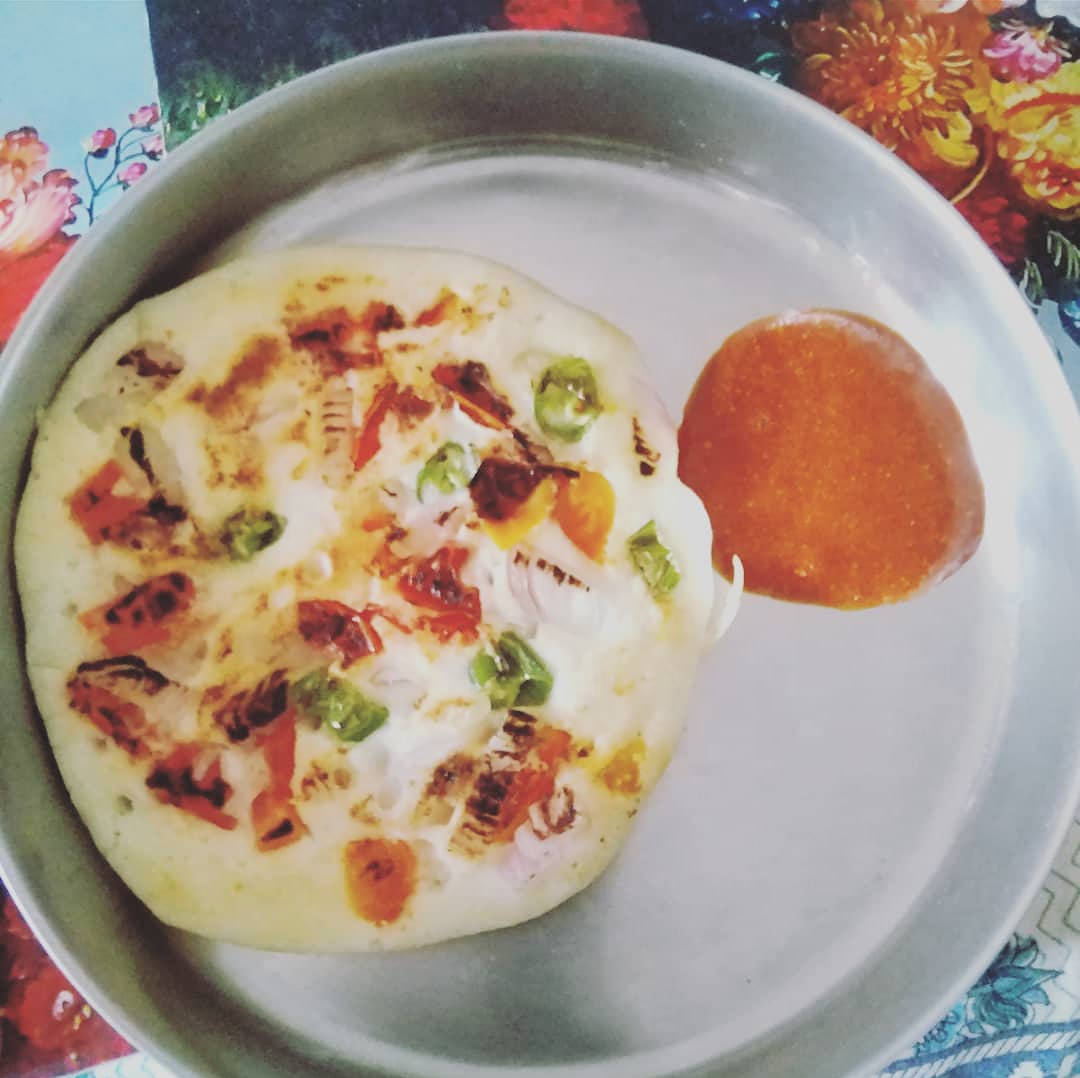
Known in Kerala as oothappam, uttapam is a close relative of the famous dosa. If you ask me (and since this is my list), I think uttapam is the superior rice-based breakfast food. Since I am the only person in this house that likes uttapam, I don’t get to eat it often.
I’ve jokingly referred to uttapam as Kerala-style pizza. It is basically a thick, soft, savory pancake topped with vegetables (mainly onion, tomato, and green chili). You can eat it with sambar and chutney, but I prefer to eat it plain. It’s delicious enough on its own.
This was my first try making it for myself.
2. Anchovy and Sardine Fry
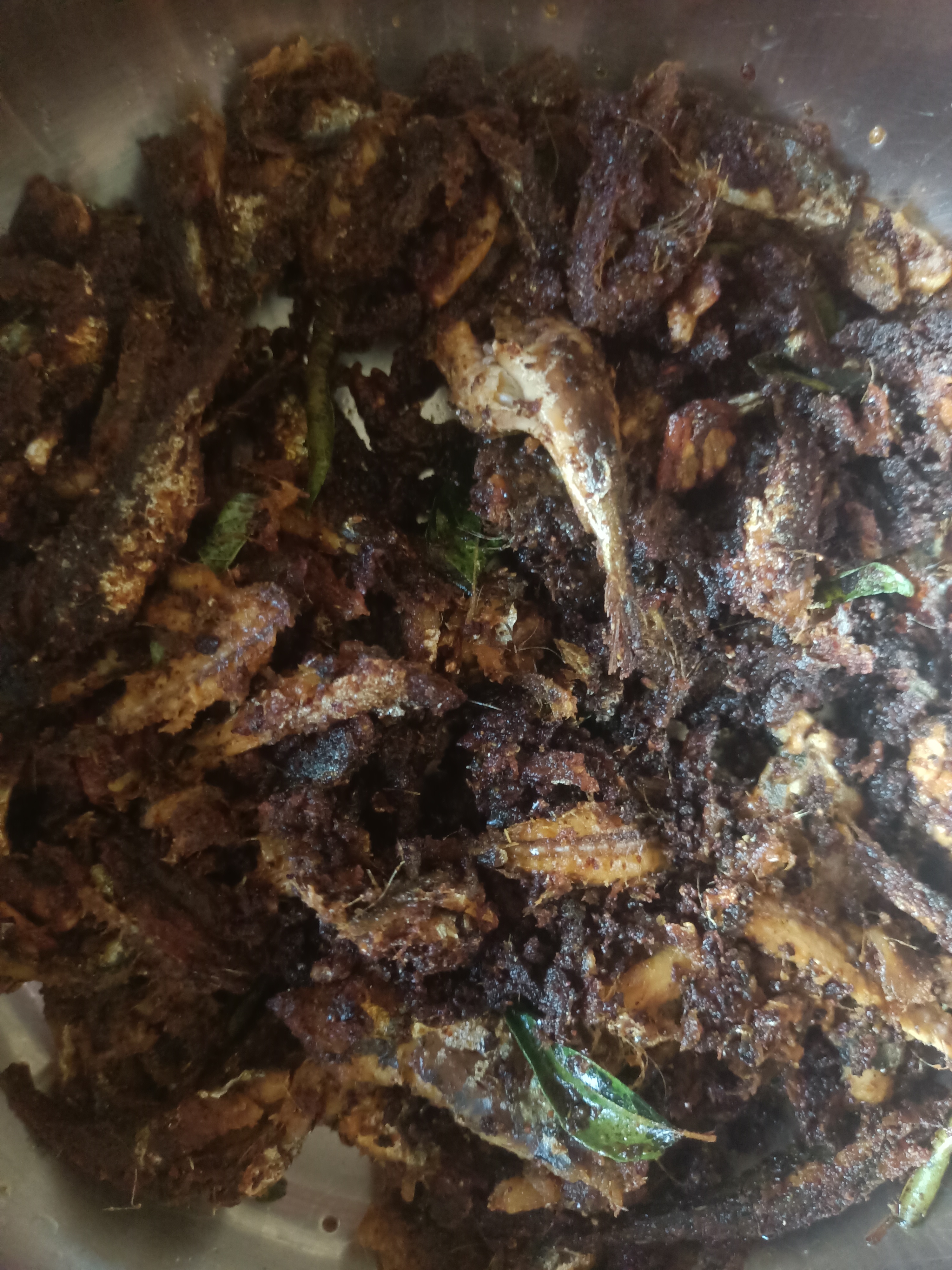
While uttapam is a rare treat for me, nettholi (anchovy) and mathi (sardine) fry are eaten at least twice per week. The fish are cleaned and marinated in a paste made from turmeric, black pepper, red chili, and salt. Then, they are fried until crisp, or if you’re me, until they are almost burnt.
I am not sure what makes these so delicious. But man oh man, couple fish fry with some Kerala red rice, pulissery, and mango pickle, and it is *chef’s kiss.* Man, I’m hungry already, and it’s not even lunchtime!
Nettholi/Anchovy fry
3. Thoran
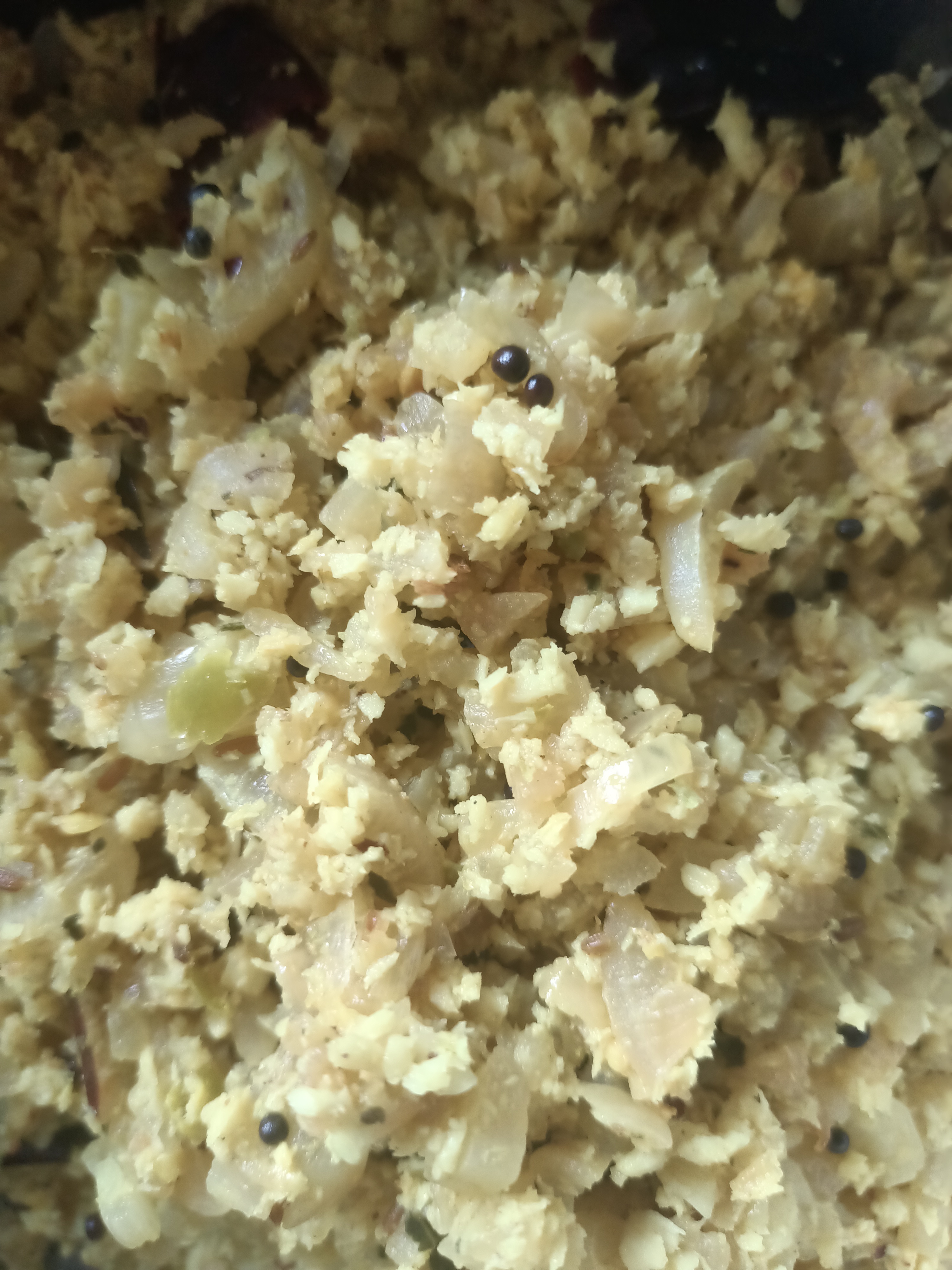
Thoran is a savory dish made from any vegetable you can think of and coconut. The vegetable is diced up, the coconut is grated, and they are both stir-fried to perfection with turmeric, cumin seed, and salt.
I have several types of thoran that I love – cheera (red spinach), beetroot, green beans, banana flower, and chakkakuru (jackfruit seed). Thoran is a dish you will find during meal time at least every other day in many households.
As ubiquitous as this dish is, I had a hard time finding it on any “best Kerala foods” lists!
This is none of my favorites. It’s radish thoran. Still delicious.
4. Ghee Rice/Neychoru
Ghee rice is self-explanatory. It’s made using a short-grained rice and ghee. However, whole spices like cinnamon, cardamom, cloves, and star anise are added for flavor, and the rice is topped with fried cashews, raisins, and onions. For me, the best part of this dish is the fried onions. Just hand me a plate of those please!
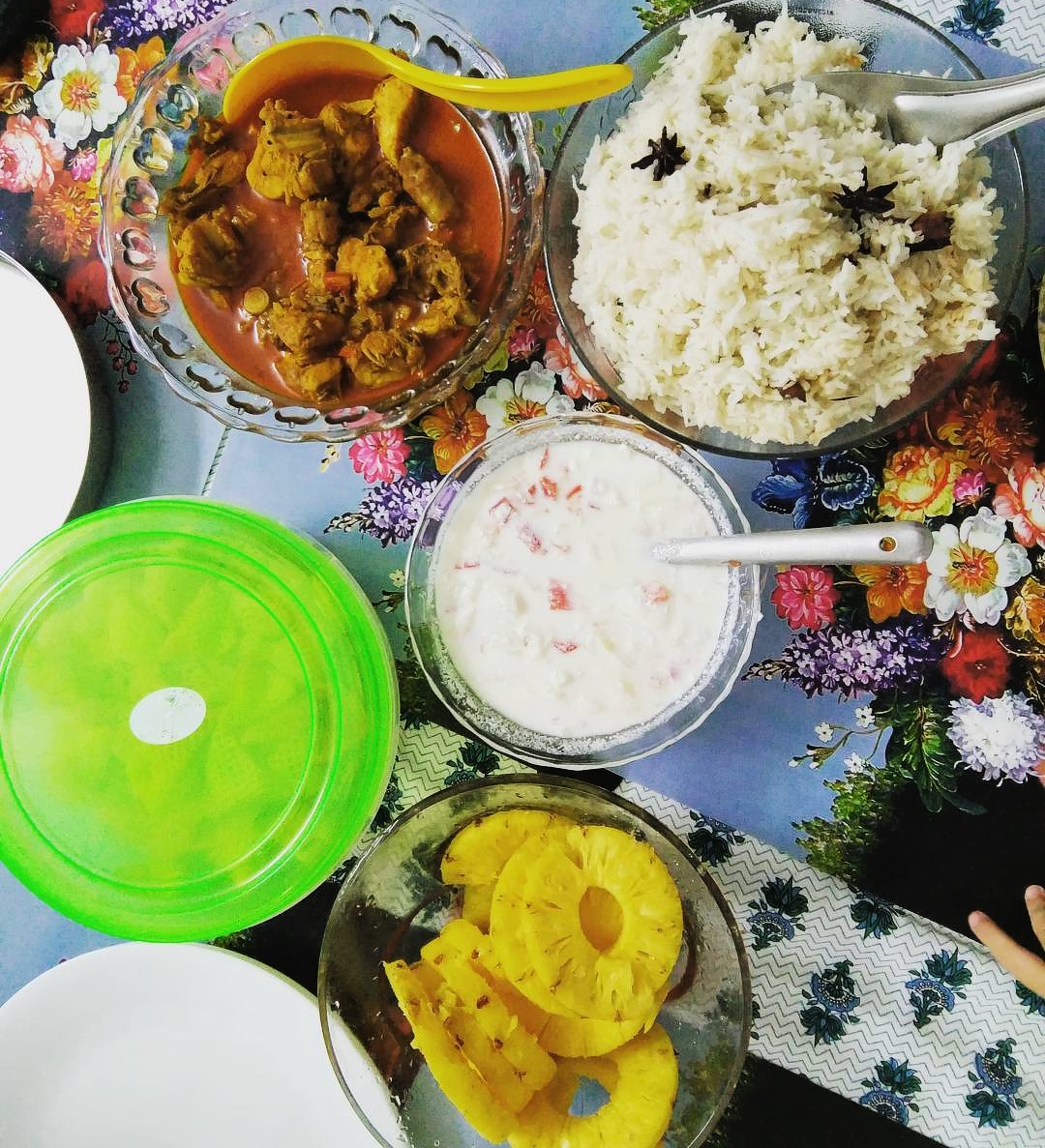
Let me pat myself on the back – I’ve perfected this dish. I received praise for my neychoru every time I make it. I serve it with chicken or mutton curry, raita, pickle, and papadum.
My famous ghee rice is in the top right corner.
5. Bitter Gourd/Pavakkai Fry
Way back when I was in my first trimester and sick as a dog, I didn’t want to eat anything within a hundred-kilometer radius of our Calicut home. Nothing sounded good, and everything smelled terrible. One day I worked up a small appetite and asked Zac to bring me a veg meal from a nearby restaurant. By some small miracle, they served pavakkai fry in my meal that day, and I ate every last bite.
Pavakka, or bitter gourd, is a contentious vegetable. People either love it or hate it. It does have a bitter taste even after it’s cooked. I can eat pavakka in any type of recipe, but this one is my favorite. Similar to the fish fry, it’s marinated in a masala paste after slicing. Then it’s fried until it’s crispy. It’s normally eaten along with rice.
My daughter, who hates most vegetables, loves this recipe.
6. Pulissery
Pulissery, also known as moru curry, is a curd-based curry. It can be made with only curd or with things like ash gourd, pineapple, cucumber or taro root. It’s usually tempered with mustard and fenugreek seeds, dry red chilis, shallots, curry leaves, and turmeric.
This is one of my favorite accompaniments for rice. But I could drink pulissery on its own. It’s that good.
7. Brinjal Fry, South Indian Style
I’m not entirely convinced this is a pure Kerala dish, but I’m including it. Brinjal, or eggplant, is much smaller here than in the US. I find it tastes better, but I’m unsure if it’s the vegetable itself that’s better or if it’s the preparations.
Anyway, this dish is made by slicing the brinjal, and then marinating it in a masala paste (see a theme yet?). It’s then fried until the edges are crisp, and the centers are soft. This is one dish I don’t make often because I eat them until they’re gone. Even if it’s in one meal. I have no shame.
8. Kappa and Meen Curry
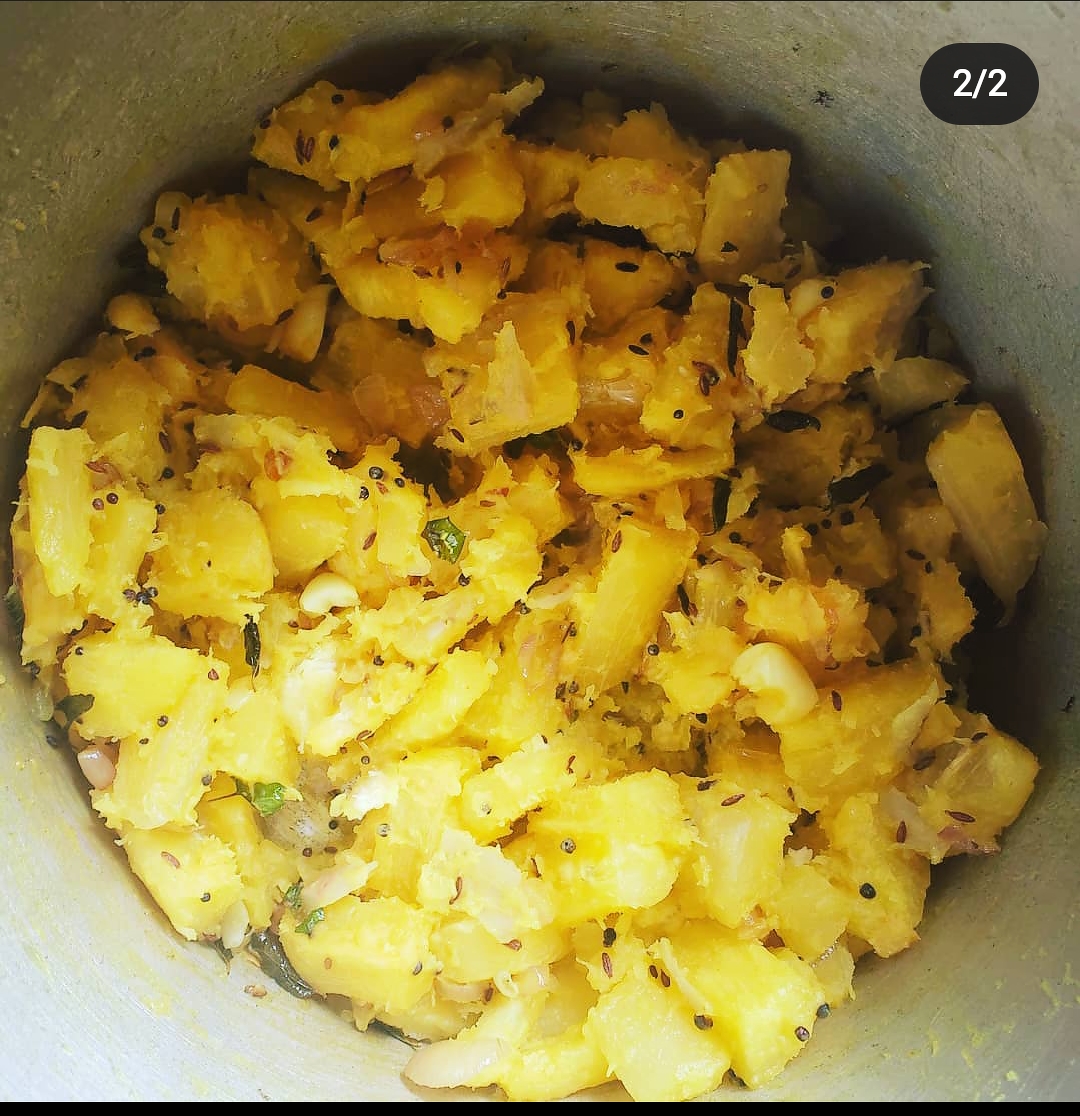
Okay, THIS is a popular dish, and one you will see on the “popular Kerala foods” lists. Many years ago, kappa, also called cassava, was considered a poor man’s food, but you’ll now find it in almost every five-star buffet! The cassava is boiled, mashed, and cooked along with coconut, mustard seeds, dry red chilies, and curry leaves.
Kappa is served with all kinds of curries, but I think the best combo is with red fish curry. It’s another one of those tangy, sour, and spicy curries that I adore, and I go back for seconds, thirds, or fourths of this delicacy!
Kappa and meen curryKappa on its own
9. Rasam
For sure, this dish didn’t originate in Kerala, but it’s consumed so widely in the state that I consider it part of local cuisine. I remember drinking rasam for the first time in a dingy Calicut canteen. I watched the locals throw their heads back and down the liquid, so I thought, “Hey, why not?” I lifted my steel cup and chugged the rasam, and my body went into brief shock. How could a soup pack so much flavor?
Like many recipes here, there are a few variations of rasam, but it almost always includes tamarind, black pepper, cumin seed, garlic, and coriander leaves.
Even though it’s more of a winter dish, I’ll down glasses of rasam on a hot summer day. I power through the sweating that comes post-drinking. I can’t get enough of the spicy, sour curries!
10. Thalassery Biryani
I love all kinds of biryani, so I had to put this on the list. Thalassery biryani is a special type of rice dish from Thalassery town in north Kerala.
Unlike most biryanis, which are made using basmati rice or another fragrant long-grained rice, Thalassery biryani is made with a short-grained rice called Jeerakasala.
Similar to neychoru, this biryani is cooked with lots of ghee, but then the rice is layered with cooked meat (chicken, fish, mutton, beef, etc.) and masala, and sealed so the flavors of the rice, meat, and masala blend together. It’s then topped with my faves – fried onions, cashews, and raisins.
One of the best biryanis I’ve ever had was from a little Thalassery biryani shack in Trivandrum. I tried a fish biryani that time. Everything aligned for that meal – the spices were just right, the amount of ghee was perfect, and the rice was neither too dry nor greasy.
One Dish That I Hate:
1. Puttu
I never felt more validated than when I read a story in March 2022 about a boy who wrote an essay on how much he hates puttu. Same, buddy, same. While the boy says it “breaks relationships” (I can only imagine!), I won’t go quite that far.
Puttu is always found on those “must try Kerala foods” lists, and I don’t get it. I have tried it in every possible way, and it’s not for me. It’s dry. The texture is gritty. And it tastes like paper. Sorry, Malayalees, please don’t kick me out (I also hate jackfruit)!
What are your favorite foods, whether they are from Kerala or elsewhere? What foods do you hate so much you want to toss them out the window when you see them? Let me know!
Well, you did it. You packed up and shipped off to another country; your dreams of wanderlust coming true. Soon enough, weeks or months have passed, and you’ve settled into a routine. But things aren’t as fun as you’d hoped.
Your bathroom looks weird, beds and pillows are too hard or soft, and the grocery store doesn’t carry anything you like. The climate is too hot or cold. It’s exhausting trying to do anything official where no one speaks your language. Everyone else’s concept of time is different from yours.
These are small problems, but small seems huge when you’re away from what’s familiar. Before you know it, homesickness creeps into your stomach.
A lot of blood, sweat, and tears goes into living overseas. You need to break down your beliefs and values, maintain your boundaries, cry a lot, and laugh more than you cry.
Believe me, I know. I’m going on a decade here in Kerala, and my physical and emotional changes careened through ups and downs. I never had any desire to live in another country. I was content to live in or near Pennsylvania for the rest of my life. Well, life had something else planned for me.
When I arrived in Calicut, I was a starry-eyed newlywed, thrilled to live with my husband. Not one thing about India bothered me. Giant cockroaches? Fine. All-day powercuts? Bring it on.
Then our daughter was born, and I ran face-first into a cultural wall. Everything I found endearing became an imposition, and I went into an “I’m here on a long vacation” mindset. Over time, I pulled away from that thought and grew to love my life. Now, I can’t imagine living anywhere else but Kerala. No matter where I am, I’ll leave a piece of my heart here. It’s my home.
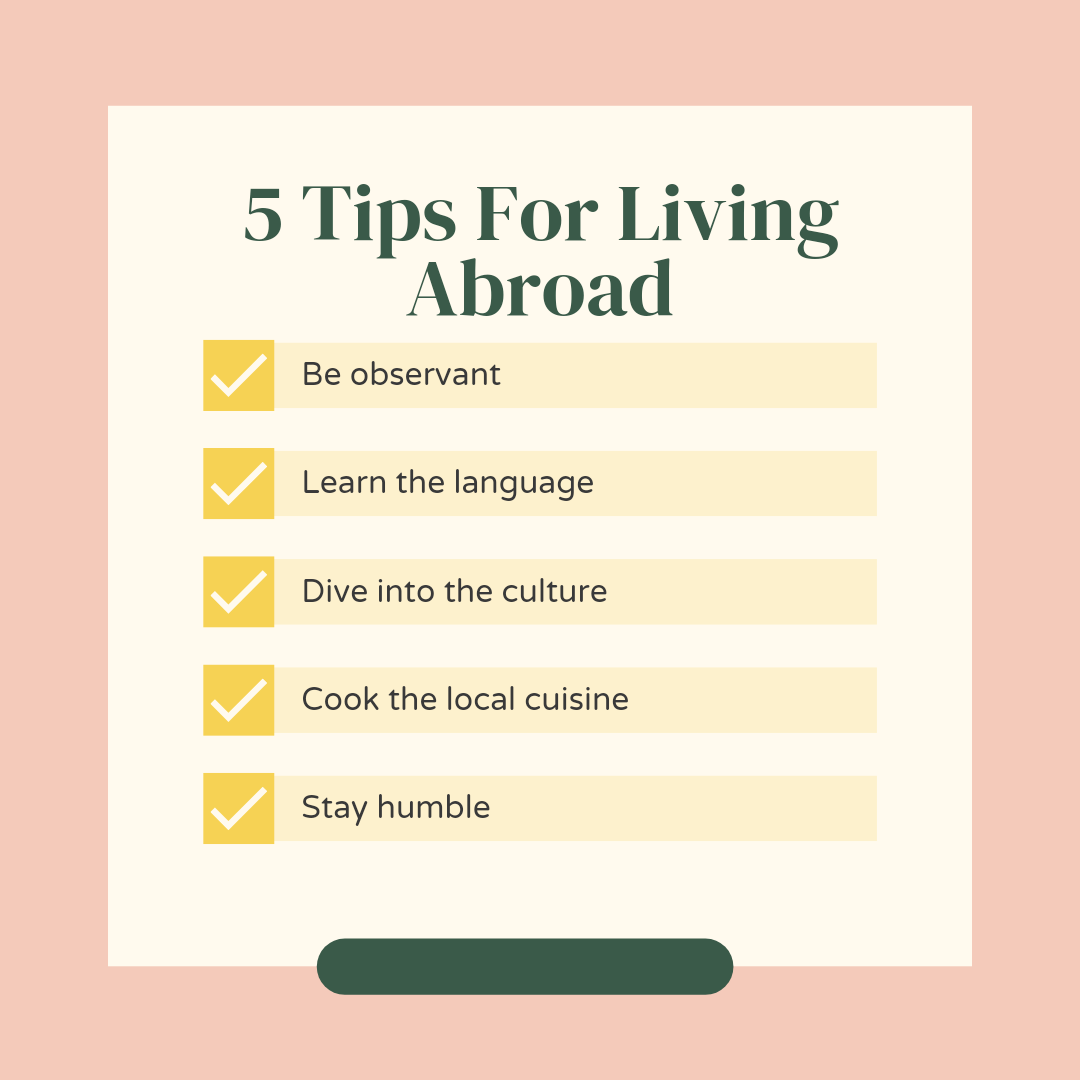
But it wasn’t until recently that I figured out how I fell in love with Kerala. There are a few definitive things I did that made me feel like I now belong here. So, for the sake of anyone plunging into a new culture, I’m giving the few tips that helped me the most.
1.) Be observant.
When moving to a new country, this is the best piece of advice. Observe people. Check out their behaviors. Watch what they’re doing, but even more importantly, watch what they’re not doing. I learned so much about how to behave in India by shutting my mouth and observing.
Some things I learned: eating with my right hand and without utensils, not crossing my legs when I’m visiting someone’s home, replacing handshakes with head nods when meeting someone. These are small things, but people notice when you do them differently.
2.) Learn the language.
You knew this was coming. I’m not telling you to only learn to communicate with people. That is, of course, the biggest benefit to studying a new language. You create and deepen new connections with native speakers.
Learning the language blows your world wide-open. You can understand a new slew of music, movies, jokes, and idioms. For me, few things have been more satisfying than finally understanding Malayalam memes.
Learning a new language has a host of benefits. It stimulates the brain, stalls cognitive decline, and boosts creativity! So get signed up for a class and start your language journey!
3.) Throw yourself headfirst into the local culture.
Throwing yourself into anything when you’ve moved to a new country seems like the last thing you want to do. But please trust me on this one. It gives you an enormous appreciation for your new home. Take a dance class, a singing class, an art class. Pick something and try it, even if you’re terrible forever.
Learn the history of the art form. Attend a local performance or exhibition. You won’t regret it.
As for me, I’ve written before that I learned (and am still learning) mehndi. And right before the pandemic, I started Bharatanatyam lessons, which I love, love, love. Both have rich histories, and I gained new admiration for all mehndi artists and Bharatanatyam dancers.
4.) Cook the food. This, my friends, is what pulled me out of my cultural adjustment funk. When you cook the local cuisine, you tie yourself to much more than the food itself. You become connected to history, language, and relationships.
Recipe by recipe, I restored my self-esteem by perfecting a huge part of Malayalee culture – their food. Pride wells inside when I hear a Malayalee say, “Brittany is an expert in making biryani.”
5.) Stay humble. Over the years, I’ve lost count of how many times I’ve culturally screwed up. It’s fine to make mistakes! But when Zac would explain how to avoid issues in the future, I’d rear up and demand why I had to change my behavior. The answer is rather dissatisfying: Because I had to.
Remaining culturally humble isn’t easy. It requires daily self-reflection: wondering how I can better communicate with and listen to people, and how I can better show my respect. It’s understanding the history and dynamics of where you’re living.
There is no sensitive way to say this, but it is neither your job nor your place to change the society where you live. Instead, amplify the voices of locals and citizens who are already changing things. They have done the hard work and deserve recognition.
I hope no one has read through this and now believes I sit stiff as a board and don’t speak so that I don’t offend anyone. If that was true, I wouldn’t have written this. Around friends and family here, I am totally myself. Frankly speaking, though, I am not the same person as the one who existed a decade ago, and that’s a good thing.
And there you have it. My five main tips for adjusting to a new country. While these won’t solve many other daily frustrations (a whole other ballgame), I hope they help people appreciate their new homes.
Long time, huh? I’ve been MIA on here for four years.
No excuse for it other than life happened, and I found it difficult to sit down to write.
I’ve been working on resurrecting this blog for a while, but couldn’t find the “right thing” to post about. All the Google results for “restarting my defunct blog” said to make a big comeback post! Tell everyone what you’ve been up to! I’m uncomfortable with rehashing the past two years and, before that, we weren’t even in India for an entire year (Cleveland is a lovely place to live, by the way).
Instead, I’ll go down a different path – a language path, more precisely. For the past two years, my daughter, like many, was stuck in online classes. Getting her to do schoolwork was like pulling teeth. Especially for her least favorite subject – Malayalam. I’m not going to lie, it was my least favorite too. The texts used in Central Board of Secondary Education (CBSE) schools here are like trudging through waist-high mud. Walls of Malayalam text, preachy stories, and absolutely zero translations for those of us who are not native speakers. Evelyn suffered through, writing page after page of words she didn’t understand. By the end of her first and second grades, Malayalam had us burnt out. I had no idea how to make it fun or interesting when her school text was trying its best to be neither of those things.
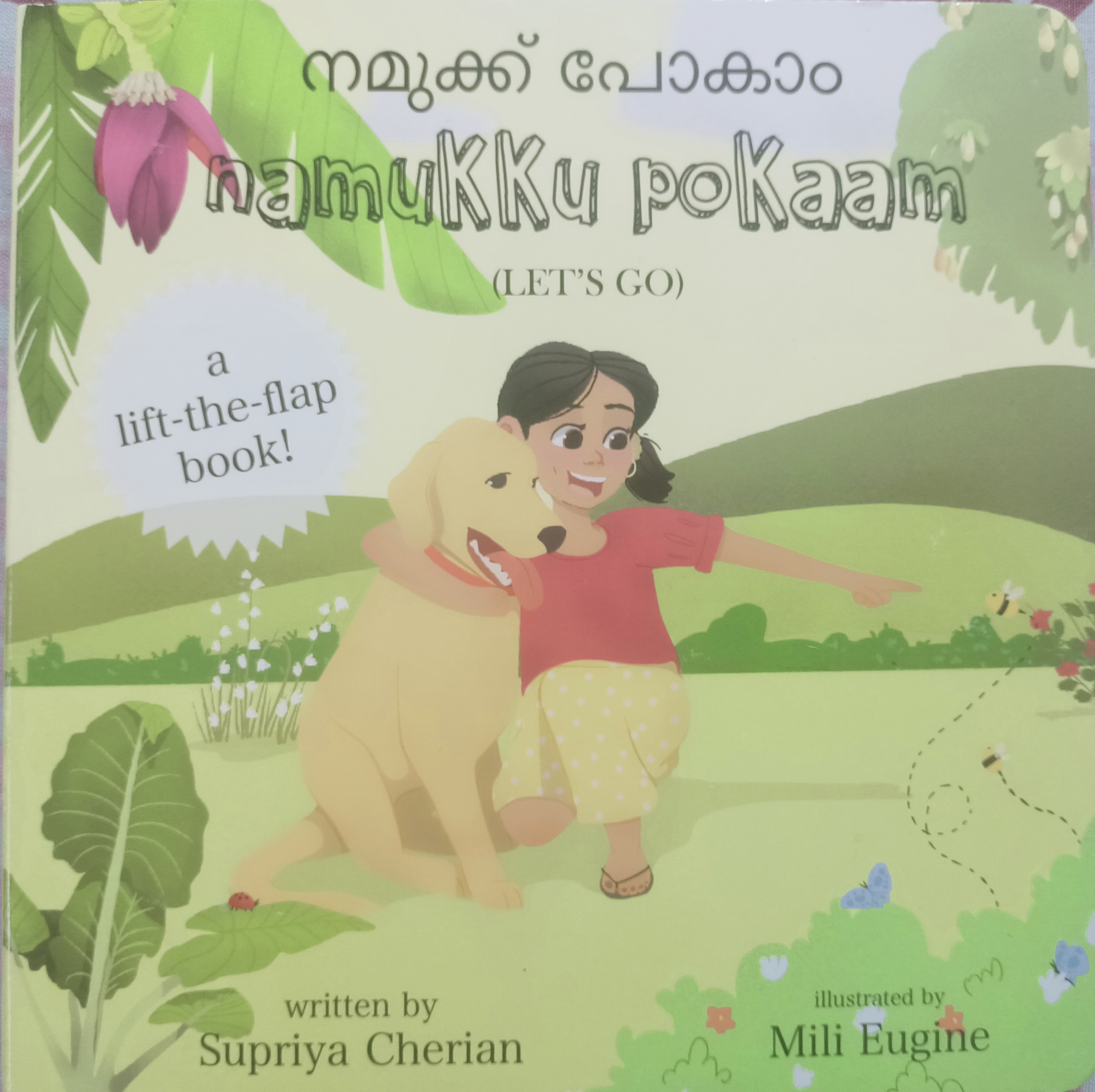
Enter BhashaKids – a small business that curates and creates bilingual learning products in South Asian languages, including Malayalam, Tamil, and Hindi. BhashaKids is run by Anitha, a US-born Malayalee, who didn’t want her children to lose out on learning their heritage language like she did. She runs a super engaging Instagram page, promotes new authors who write bilingual books, and coaches families and language schools on bilingualism. Her goal is to make learning Malayalam FUN. This was how I learned about the book “Namukku Pokaam,” a Malayalam/English book. Desperate to show my daughter learning a new language can be fun and painless, I ordered it right away.
“Namukku Pokaam,” written by Supriya Cherian and illustrated by Mili Eugine, tells us a charming story of Rosy, a young girl, and Rocky, her dog, as they journey through some common backdrops of Kerala. Together, they explore everything from mango trees to oru vazhathoppu (a banana farm). Rosy, her hair adorned with mullappu (jasmine flowers) and in her cheripukkal (slippers), runs with Rocky through a hill station, and then they chase poombatta (butterflies) through a field. Finally, ending their day with a ball game and feeling the breeze on the oonjaal (swing), Rosy and Rocky go to bed and sleep under the starry sky.
I love the story. It’s simple and innocent, and the illustrations remind me of the stories my husband narrates about his childhood visits to Kerala. Spending all day outside, in nature, with animals, and then collapsing into bed at night, exhausted from the day’s activities.
My daughter loved the book because she could relate it to it far more than any other Malayalam story she has read. Rosy looks about the same age as my daughter, and she has a dog just like we do. This did exactly what I hoped for her – she wants to read it, and she wants to learn the words and phrases.
The book’s focus is on teaching some basic Malayalam vocabulary and phrases to beginners, and it does a great job of that. Short, complete sentences are at the top of each page, showing the reader the fundamental building blocks of Malayalam sentences – “Let’s go to the pond” is “Namukku pokaam kulakkarayil.”
I love that Cherian wrote everything in this book in proper Malayalam script, Manglish (Malayalam using the English alphabet), and English. I think it’s vital to have Malayalam script because it helps not only with learning the Malayalam alphabet, but it assists in proper pronunciation of words. Believe me when I say, if you only learn to read or speak the Manglish words, you’re probably not pronouncing them correctly. Malayalam and English are worlds apart in some ways, and it’s why so many of us English-only speakers royally decimate pronunciation…and vice versa, let’s be honest.
Cherian wrote a delightful and educational book, and I recommend it to everyone who wishes to start their Malayalam journey. Yes, even if you’re a grown-up! It’s a great way to start learning how to create simple sentences in Malayalam and to add some words to your vocabulary. If you wish to buy a copy, visit BhashaKids or Gaps & Letters.
If you’re interested in finding out more about bilingual merchandise in Malayalam, Tamil, or Hindi, do visit BhashaKids and see all the fun products available.









 An American in Kerala