Tadka: Learning to Name the World

Opening Note:
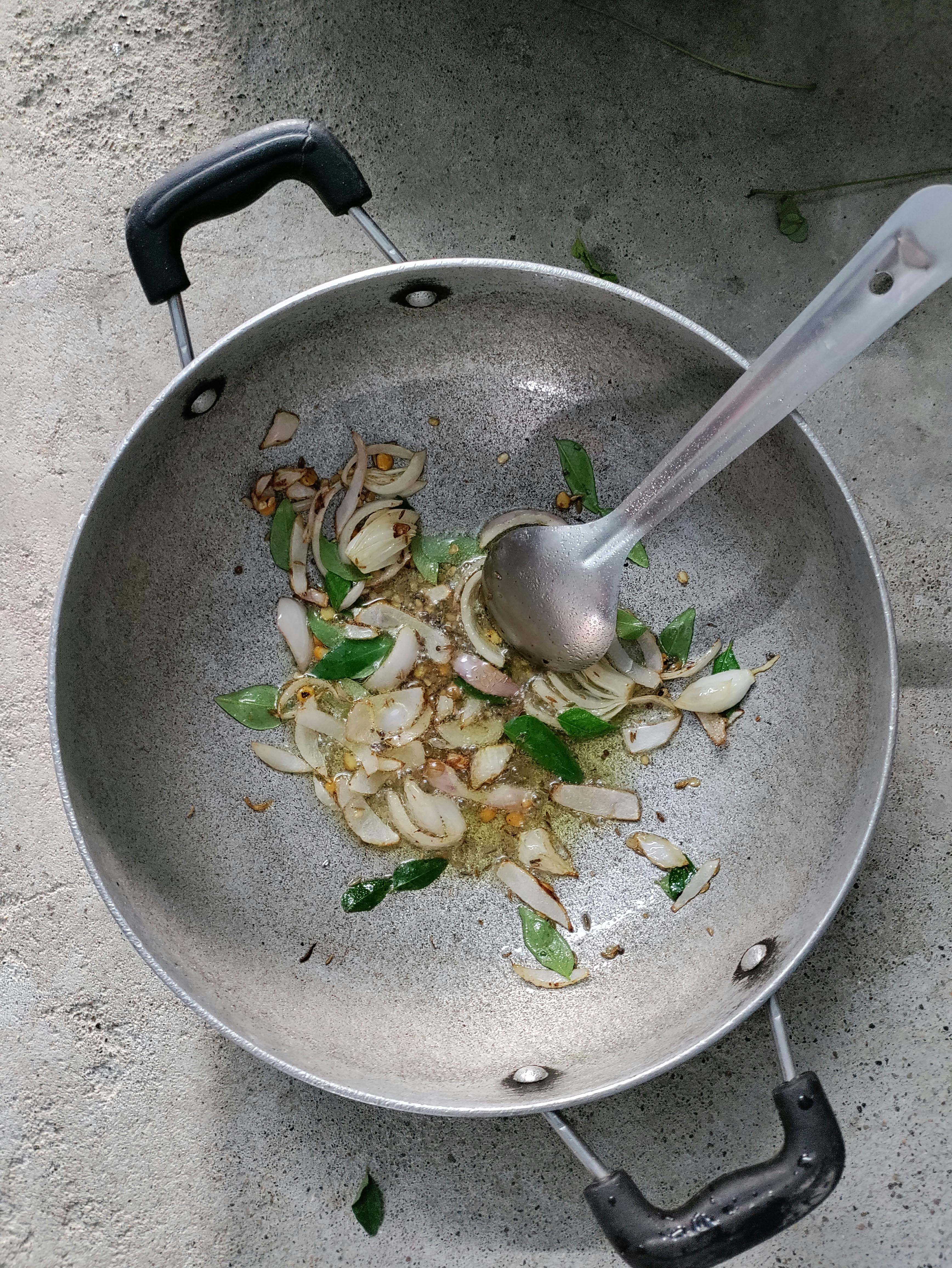
One of the first things I learned in Kerala was that food speaks to you. When mustard seeds splutter in hot oil, it’s a signal: add the curry leaves, the shallots, the chillies. Over time, I realized language works the same way. It teaches me when to pause, when to listen, and how to name the world with new words.

Tadka (To My Younger Self)

When the mustard seeds splutter,
that’s when you add the curry leaves, shallots, and chillies.
Call them by their names: kaduk, kariveppila, ulli, mulak.
Repeat them, ketto?
They will be your anchors later.

You will learn the names of vegetables, fruits, grains first,
by accident.
Your ears will be covered in scales until they aren’t,
and rice, fish, turmeric will become chor, meen, manjalpodi.

Hold on to the astonishment of learning them,
tracing the seas they’ve crossed,
the shores they’ve touched.
Remember, Babel wasn’t a punishment.
It was a gift:
a doubling, trebling of names
for tomato, onion, wheat.

You will want to tell someone about this wonder,
but you will feel alone.
In India, they will shrug,
we know these things only.
At home, eyes will glaze over.
You’re allowed to marvel anyway,
maanasilaayo?

You will still want to shrink into a corner,
fear and self-doubt strangling you.
But you’ll press forward anyway,
shoulders tight, breath shallow, heart pounding.

It’s the same acceptance of terror that gets you
through airports, onto planes
to your mother, father, and brother,
not to relive the old days, but to
build new ones–
good times, now,
with their granddaughter.
You learn to do what must be done. 

On these visits, you will pass your grandparents’ house.
You’ll see black trash bags slumped on the porch,
weeds swallowing the yard.
Look away if you must.

When you walk inside for the last time,
you’ll search for their scent in the damp,
unheated walls of late winter.
It won’t be there.
You will realize:
loss doesn’t wait for your return. 

And still, the seeds will pop
when oil meets flame.
The crackle is now, never then.
It will not pause for a house
that now belongs to someone else.

Fragrance will rise, sharp, insistent.
The present will announce itself
in smoke and spice.

So listen, mol:
you don’t need to live inside what is gone.
Stir the heat into what is here.
Add the zest.
Name things as they are.
Find beauty in words for what’s to come.
Eat while it’s hot.

Memory will cool soon enough
on your tongue.

Closing Note:
The crackle of mustard seeds hasn’t stopped surprising me. It’s a small sound, but it reminds me that life is always beginning again, in kitchens, in words, in the ways we honor our pasts.

Image from Pexels.

Between Two Worlds: A Switch

Somewhere between arrival and departure, I’ve learned to speak in two voices and carry two selves. This is about what happens when neither feels entirely mine.

A Switch | സ്വിച്ച്

This plane window is a signaller.
Ready to help me
choose myself
before we fall to the earth.
I am sinking and floating at once, but
I look out the window anyway
to see
which personality to wear after landing.

Grey bypasses, skyscrapers, concrete
squares:
all holding their breath.
The switch flips to
America.

A quilt of coconut palms,
low white buildings,
the switch flips to
India.
My head wobbles before the plane
touches down.

Later, I learned there’s a word for this.
I protested: I don’t do this.
Not me.
And the man I spoke to replied,
“Oh, but I think you do.”

In India,
I’m more reserved,
yet I speak more.
Slowly. Enunciating.
I use words like:
lift – boot – lorry – brinjal – petrol.
I say Ruh-vi, not Raaah-vi.
I roll my Rs and
move na – nja – nna
through my tongue and lips.
I clench my fists in frustration
when the word is right there,
drifting, italicized, in my mind,
tucked under my tongue
when I try to speak.

And then in America,
when I’m with people
who knew me once,
but not quite.
When nostalgia rolls in
as thick as the fleece blanket
that keeps me warm in
stark Pennsylvania winds,
I’m more open,
but speak less.
I speak quickly, slurring my words:
“Didja eat yet?”
I smile hellos and how are yous to
perfect strangers, but
never pushing beneath:
“Friend, how is your heart?” or
“Is your father doing okay?”

“You kinda have an accent now,”
so I flatten my As again.
My voice shifts north
into my nose
and the words roll out:
elevator – trunk – truck – eggplant – gas.

I don’t have to worry
about chechis and chettans.
Americans like first names,
giving us a pretend closeness,
like a handshake without eye contact.

Here’s the thing:
neither one feels quite right.
In India,
I wear a mask.
I smile when I don’t want to;
swallow questions and
bite back criticisms
because my face marks me a visitor
even though I’ve rooted my hands
deep in the soil.
In America,
I wear a wool sweater
two sizes too small.
I tug at the sleeves,
sweating, itchy, chafed
but never take it off.

So, who am I?
Am I the words spoken to others,
what they see:
a woman in love,
a fool,
a brave soul?
Or am I
something deeper?
Or am I none of these?

Am I just a middle-aged woman
afraid she will always be brushing the edges,
never quite let inside?
Am I just afraid
that someday I’ll be a stranger
in a strange land
where I borrowed books
from the library
and licked ice cream
as I walked to the park?

Now, the only home
is my daughter’s voice
when she tells me 
the song she and her friends made up;
when my husband and I walk 
into the hovering emerald canopies.

If my skin were peeled away
and my chest cracked open:
The hush of the monsoon rain
washing through the ghats,
the whisper of the snow
covering the evergreens—

Would you recognize
  the language of my pulse,

 the accent
   of my blood,

forever stuttering
switching tracks
until I break the lever.

Even So, I Don’t Deserve My Mattress

I don’t deserve the soft
mattress I sprawl across each morning. 
Letting my 40-year joints stitch themselves back together.
But most nights,
it’s what I’ve said wrong that keeps me awake. 

In fact, I would say
none of us who have
soft mattresses deserve them. 
We didn’t earn them.
Just luck.

We are born lucky. 
A devoted family, a country not
torn to shreds by war.
Food in the kitchen;
no bloated bellies except when 
we eat too much junk. 
So why does sorrow still
creep in?

I find the wrong in small, small things,
and they sour like curd left to set too 
long in the heat.
They blister my nerves.
I become a pulsing mass,
pushing past the ammoomma
parked sideways in the cereal aisle.
Why didn’t I give her any grace?

Why am I so weary all the time?
I doomscroll on my phone;
cracked tempered glass like
everything else I don’t take care of. 
Doomscroll, what a word. 
Cakes. Vacations. Drunk weddings.
A mother holding her child.

But the child wears black plastic 
for a diaper. 
I wonder why I am so weary, weary. 
The child is all bones and angles, and the face—
that same look the Somali children had in the ads 
on TV when I was small.

And there is nothing more in that moment
that I want than to trade places
or scream or sledgehammer a car or
anything, but not nothing. I want to hold this mother.

Her child will soon die. 

And who will comfort her in
Gaza, where
soft mattresses and full bellies write,
“But October 7th, what about that?” 
“She doesn’t look as starved as her kid?”
“Even so, come, Lord Jesus!”

Even so, 
mercy is a funny thing. 
We want it for ourselves but not others. 
I wish my chest didn’t feel like it can no longer
cage my heart. 
Growing, stretching, pulling until it bursts,
and I vanish into the rains that 
flow down the mountains.

But then I blink:
back in my living room.
My daughter dances,
her belly full. 
Her wobbly arabesque cuts
through the thickness in my throat.
I don’t deserve this.
Even so.
I tell her it’s time for bed.

A Note

I’ve been having a love/hate relationship with social media. Mostly hate.

Yet I still find myself checking each app; the colonization of algorithms digging deeper in my brain.

Yesterday, I saw the photo that I believe will be looked at 50 years from now, and people will ask, “Why didn’t anyone do anything?”

And while there are many out there on the front lines doing the right things and the hard things, just as many, if not more, of us are just too comfortable.

Myself included.

Unfortunately, I made the universal mistake of checking the comments on the photo.

The absolute least I can do as a human being right now is not leave comments whatabouting a woman whose child is near death. Or questioning her appearance. Or praying for the end of the world.

When I saw the photo, I immediately thought of La Pietà.

A lamentation of an innocent.
A mother mourning alone.

I don’t have any answers or advice other than to say this:

There is no justification for starving and bombing children.

For Further Reading

The Guardian
CNN
Unicef
International Rescue Committee
World Food Programme

5 Tips For Loving Your New Country

Well, you did it. You packed up and shipped off to another country; your dreams of wanderlust coming true. Soon enough, weeks or months have passed, and you’ve settled into a routine. But things aren’t as fun as you’d hoped.

Your bathroom looks weird, beds and pillows are too hard or soft, and the grocery store doesn’t carry anything you like. The climate is too hot or cold. It’s exhausting trying to do anything official where no one speaks your language. Everyone else’s concept of time is different from yours.

These are small problems, but small seems huge when you’re away from what’s familiar. Before you know it, homesickness creeps into your stomach.

A lot of blood, sweat, and tears goes into living overseas. You need to break down your beliefs and values, maintain your boundaries, cry a lot, and laugh more than you cry.

Believe me, I know. I’m going on a decade here in Kerala, and my physical and emotional changes careened through ups and downs. I never had any desire to live in another country. I was content to live in or near Pennsylvania for the rest of my life. Well, life had something else planned for me.

When I arrived in Calicut, I was a starry-eyed newlywed, thrilled to live with my husband. Not one thing about India bothered me. Giant cockroaches? Fine. All-day powercuts? Bring it on.

Then our daughter was born, and I ran face-first into a cultural wall. Everything I found endearing became an imposition, and I went into an “I’m here on a long vacation” mindset. Over time, I pulled away from that thought and grew to love my life. Now, I can’t imagine living anywhere else but Kerala. No matter where I am, I’ll leave a piece of my heart here. It’s my home.

But it wasn’t until recently that I figured out how I fell in love with Kerala. There are a few definitive things I did that made me feel like I now belong here. So, for the sake of anyone plunging into a new culture, I’m giving the few tips that helped me the most.

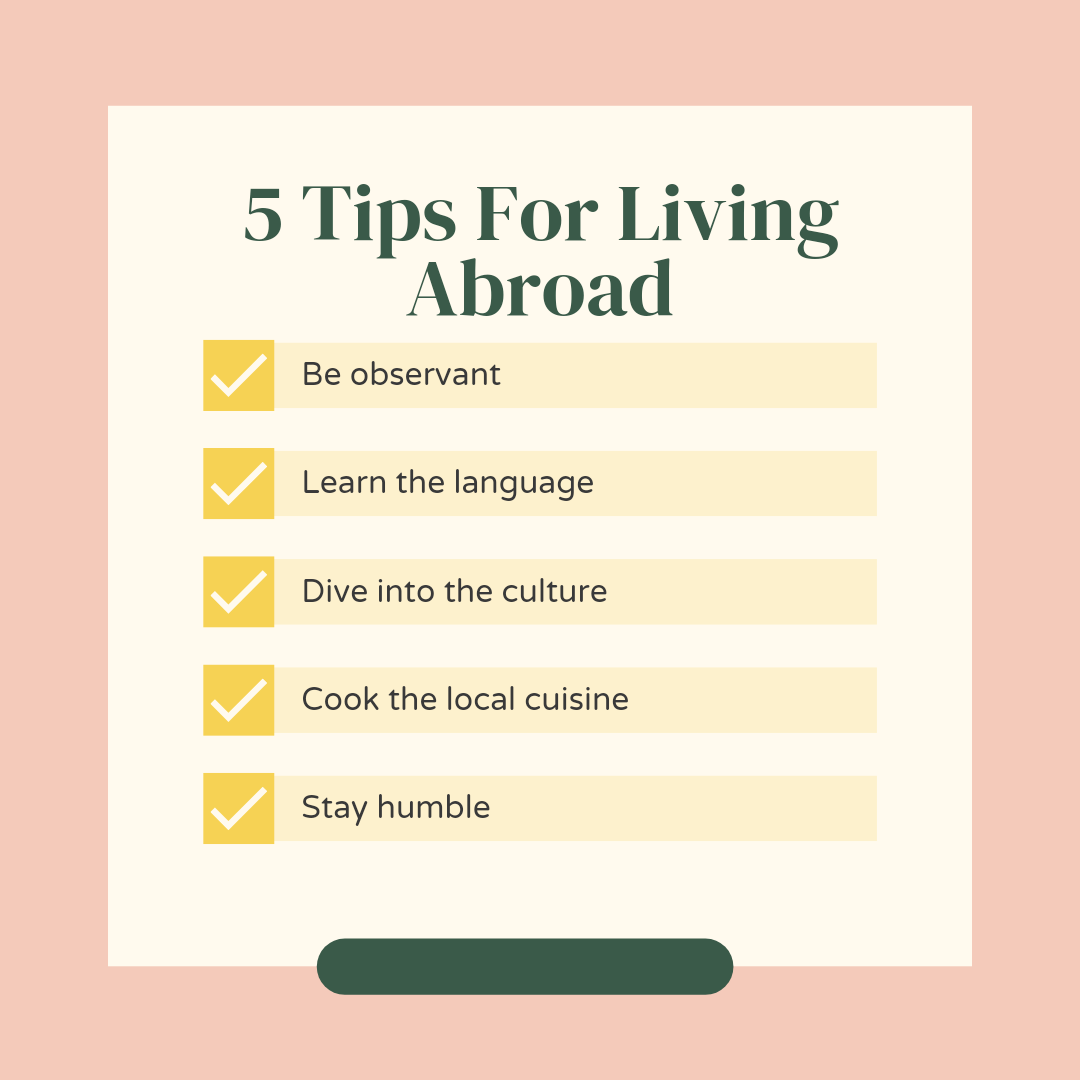
1.) Be observant.

When moving to a new country, this is the best piece of advice. Observe people. Check out their behaviors. Watch what they’re doing, but even more importantly, watch what they’re not doing. I learned so much about how to behave in India by shutting my mouth and observing.

Some things I learned: eating with my right hand and without utensils, not crossing my legs when I’m visiting someone’s home, replacing handshakes with head nods when meeting someone. These are small things, but people notice when you do them differently.

2.) Learn the language.

You knew this was coming. I’m not telling you to only learn to communicate with people. That is, of course, the biggest benefit to studying a new language. You create and deepen new connections with native speakers.

Learning the language blows your world wide-open. You can understand a new slew of music, movies, jokes, and idioms. For me, few things have been more satisfying than finally understanding Malayalam memes.

Learning a new language has a host of benefits. It stimulates the brain, stalls cognitive decline, and boosts creativity! So get signed up for a class and start your language journey!

3.) Throw yourself headfirst into the local culture.

Throwing yourself into anything when you’ve moved to a new country seems like the last thing you want to do. But please trust me on this one. It gives you an enormous appreciation for your new home. Take a dance class, a singing class, an art class. Pick something and try it, even if you’re terrible forever.

Learn the history of the art form. Attend a local performance or exhibition. You won’t regret it.

As for me, I’ve written before that I learned (and am still learning) mehndi. And right before the pandemic, I started Bharatanatyam lessons, which I love, love, love. Both have rich histories, and I gained new admiration for all mehndi artists and Bharatanatyam dancers.

4.) Cook the food. This, my friends, is what pulled me out of my cultural adjustment funk. When you cook the local cuisine, you tie yourself to much more than the food itself. You become connected to history, language, and relationships.

Recipe by recipe, I restored my self-esteem by perfecting a huge part of Malayalee culture – their food. Pride wells inside when I hear a Malayalee say, “Brittany is an expert in making biryani.”

5.) Stay humble. Over the years, I’ve lost count of how many times I’ve culturally screwed up. It’s fine to make mistakes! But when Zac would explain how to avoid issues in the future, I’d rear up and demand why I had to change my behavior. The answer is rather dissatisfying: Because I had to.

Remaining culturally humble isn’t easy. It requires daily self-reflection: wondering how I can better communicate with and listen to people, and how I can better show my respect. It’s understanding the history and dynamics of where you’re living.

There is no sensitive way to say this, but it is neither your job nor your place to change the society where you live. Instead, amplify the voices of locals and citizens who are already changing things. They have done the hard work and deserve recognition.

I hope no one has read through this and now believes I sit stiff as a board and don’t speak so that I don’t offend anyone. If that was true, I wouldn’t have written this. Around friends and family here, I am totally myself. Frankly speaking, though, I am not the same person as the one who existed a decade ago, and that’s a good thing.

And there you have it. My five main tips for adjusting to a new country. While these won’t solve many other daily frustrations (a whole other ballgame), I hope they help people appreciate their new homes.

How I Miss You Already

My grandfather kept his favorite photo of my grandmother on display for everyone to see. It’s an average photo – she’s middle-aged, large tortoise shell glasses perched on her nose, her dark hair cropped short but still voluminous, as was the style in the 1970s, but it’s her smile – brilliant and shining- that makes it understandable why he keeps it out. Her eyes still showed the spitfire, stubbornness, and conviction that quickly faded as the Alzheimer’s eventually destroyed her mind.

“She was a good girl,” he said, smiling sadly. “I miss her every day.”

xxxxxxxxxxxxxx

August 25, 2017 – 11:10 pm – India time

I logged on to Skype with a sinking feeling in my stomach. My dad said it was an emergency, and I already knew, down in the depths of my heart, what he was going to say.

“I don’t know how to tell you this, so I’m just going to come out and say it,” my dad said, his Skype image choppy and blurred, “Gramp is probably dead.”

My throat grew thick and my blood ran cold. “What do you mean  probably?”

“There’s been an accident on Red Rock Mountain. Jack called Deb and told her that Troy heard that the person who died was a Serafini, and Gramp isn’t home right now. His car isn’t there. He told Bobbi Jo he was going to get a hoagie from the shop at the bottom of the mountain.”

My vision went dark. I had just said goodbye to him a little less than two weeks earlier. I had just- I had just-

xxxxxxxxxxxxxxx

“Well, I guess I should get going,” I told Gramp as I herded my daughter towards the back door. “We’re going to Deb’s for a while too.”

“Oh, okay,” Gramp looked mildly disappointed, and it tugged at my heart. “You take care of yourself over there, okay? Tell Zac I said ‘hello.'”

“Sure thing. Love you.” I hugged him tightly and started for the door. He had never followed me before when I left. This time, he did.

“Love you too. Be careful, okay?” I paused at the kitchen door and turned to him one last time. The look on his face, it was almost mournful. “I’ll see ya when you come in May.”

My chest ached for a moment. I studied his face, feeling like it was the last time I would see him. I shook off the feeling – I’m too sentimental any way. “Of course. I love you.” And I walked out the door.

xxxxxxxxxxxxxx

“Brittany, he’s gone,” my brother told me as he leaned down to the computer screen. His voice sounded like it had gone an octave higher – full of suppressed emotion. He crumpled in front of me, sobbing, and I fell apart too – thousands of miles away.

Grief that I didn’t even fully understand enveloped me, soaked into every muscle and nerve. I wrapped my arms around my stomach and wailed. And I grew angry. So angry. “He didn’t deserve that. He was alone!” I cried, as my husband rubbed my back, trying to comfort me. Had he been afraid? Had he been in pain long? We had no answers and would not have any for a while.

After getting off the phone with the coroner, my dad finally sat down in front of the computer again, and I watched, so far away and so unable to do anything, as he cried for his father.

xxxxxxxxx

“I gotta tell you this story about Gramp – it’s my dad’s favorite. He can’t stop laughing every time he tells it,” I said to my husband, as we sat in my parents’ living room. “So, Gramp calls Dad and says he can’t find his sledgehammer, right? He uses it to smash soda cans and whatnot. And this goes on for weeks, maybe months. My dad goes up to the house and goes down to the cellar to get a soda, and there sits the sledgehammer. He goes back upstairs and asks Gramp if has found his sledgehammer yet, and Gramp says, ‘Jeez, no I haven’t. I don’t know where da hell I put that thing. Maybe someone took it.’ My dad says, ‘Well, what are you smashing your soda cans with then?’ Gramp goes, ‘JEEZ-UZ.'”

And we both burst into laughter.

xxxxxxxxxxxx

“Daddy! Daddy! Turn on the light, so I can go up the stairs,” our daughter, Evelyn, had already run to Gramp’s chair lift and was pulling herself onto the seat. “Watch me do dis by myself!”

“Evelyn, shhhhh, Gigi’s sleeping. We have to be a little quieter,” Zac chided, gently.

I smiled and handed off to Zac the sleepover bags I had been bringing every night to Gramp’s house. He was letting us stay in Gram’s old room. It was a little haunting at first, seeing how all of her pictures on the wall had not been moved in decades. The walls were still stained yellow from nicotine.

“I’ll get us some water and then I’ll be up,” I told Zac. I went to the kitchen and switched on the light, noticing a pie container on the counter. Gramp had left a note, written on a napkin, on the container. His spiky handwriting read: “There’s rhubarb pie here and ice cream in the fridge. Help yourselves to whatever you want.”

I popped open the lid of the plastic container, and sure enough, one of Gramp’s delicious rhubarb pies was inside. I cut a piece, a small sliver because I was still mindful of the carbs and sugar. I relished each bite of the flaky and sweet crust and tartness of the rhubarb. When I finished, I looked down at the note again. “Help yourselves to whatever you want.” And wasn’t that just like Gramp? He’d give anything – anything at all for his family. A lump formed in my throat with some unnamed emotion – sadness, happiness, it was a combination of many. I grabbed the pen he had left next to the napkin and wrote: “The pie was delicious. I loved it!” Such a small gesture that I knew would bring him satisfaction – someone else had enjoyed his food. Tears blurred my vision as I washed my pie plate, and then I let them flow freely as I filled up two glasses with water. I briefly wondered how many more pies he would make in his lifetime. And then I cried some more.

I breathed in and out a few times to calm myself, wiped my eyes. I didn’t want to explain to either Zac or Evelyn why I had been sobbing in the kitchen because I didn’t know how to put it into words. Gramp meant so much to me, and I felt like I was noticing it a little too late. I looked at his note one last time, drew in a shaky breath, and switched off the kitchen light.

xxxxxxxxxxx

“Yeah, Cameron and Daniel are both taking a gun of Gramp’s. Noah too, I think. Daniel wants some of Gramp’s garden tools too. Things to show eventually to John what Gramp was all about,” my dad looked at me expectantly. “Is there anything you want?”

“I- I don’t know. Let me think.” I pictured walking through his house in my mind. What did I want that would mean something to me forever? Curtains? Bedsheets? Photos? My mind took me into his kitchen, across the breakfast island scattered with photos of his great-grandchildren and his magazine and newspapers. I turned to the counter by the sink and there was the pie container.

“Does he have recipes? I want his recipes!” I blurted out.

“You mean handwritten? Or cookbooks?”

“Both. All of them. Any of them. I’ll even take copies if someone else wants the originals.” I saw him in my memory pulling into my parents’ driveway, getting out with a huge jar of pickles or a casserole dish of Swiss chard or an apple pie or a loaf of Cressia bread. Tears stung my eyes again. “I just- I want his recipes.”

“Anything else? You want some of his garden tools too?”

“Yeah. And I guess, if there’s any of his guns left, can Zac have one of his guns?”

xxxxxxxxxx

“I shook his hand and told him I’d see him again,” Zac spoke quietly, seriously. “I really thought I’d see him again.”

I paused the spoonful of biryani that was on its way to my mouth. I stared at Zac, across from me at  the dinner table, his shoulders slumped slightly and his gaze was off to the side, maybe at a spot on the wall, maybe somewhere else. I didn’t say anything at first.

“How tragic that your family has lost two people like this.” I swallowed and nodded. It was true. How tragic – for a father and daughter to die in a vehicle accident, 30 years apart.

Zac blinked and shook his head, trying to shake himself out of his trance. “He was extraordinary, you know. Your grandfather. There’s not many people like him left.”

I could feel my face scrunching up and hot tears spilling down my cheeks. Again. I had never heard Zac calling anyone extraordinary, ever. “He was,” my voice was raspy. “He was a man ahead of his time.”

“You don’t have to cry.” Zac looked troubled. “And what do you mean he was ahead of his time?”

“It’s like Deb wrote in his obituary. He had the soft heart of an Italian mother. He cooked, he cleaned, he baked, he sewed, he babysat, he gardened. Not even many men today would do those things. And he did it all while still doing masculine things too.”

“Yes.” Zac agreed firmly. “Yes, that’s true.”

xxxxxxxxx

Slowly, the facts about the accident started trickling in. He hit the back of a water tank truck. He was either already dead or unconscious when he hit it. His body was fairly in tact, except for a broken nose and bruised eyes. The fire department had to cut him out the car. He hit the truck so hard he moved it down the road 450 feet. My family’s and my fears, about him being afraid and alone in his last moments, were disproven. He was not alone – the two witnesses in the cars behind my grandfather stayed with him, stayed with his body. The one witness, a veteran himself, saluted my grandfather, an Army vet, as his body was loaded into the coroner’s vehicle.

What did not happen slowly was the outpouring of love and kindness from the community. Flags were lowered to half-staff in his honor. Phone calls, messages, emails, and food descended upon my family so quickly that they didn’t know how to handle it, except to feel grateful. Memories were shared with us – neighbors reminiscing about my grandparents’ home feeling like it their home. Men and women alike describing my grandfather in words I’d never heard before – “charming,” “so kind,” “happiest, friendliest, most uplifting guy I’ve ever known.”

As I read one post from an ambulance association, I was gobsmacked.

“I had no idea Gramp was an ambulance driver,” I said to Zac. “I feel so awful and guilty. I should have told him how great he was, how I couldn’t have had a better grandfather.”

“People like him don’t need to know those things. They’re content just doing things for people regardless,” Zac smiled a little. It eased my guilt some.

“Still, though, I wish he could have known…”

xxxxxxxxx

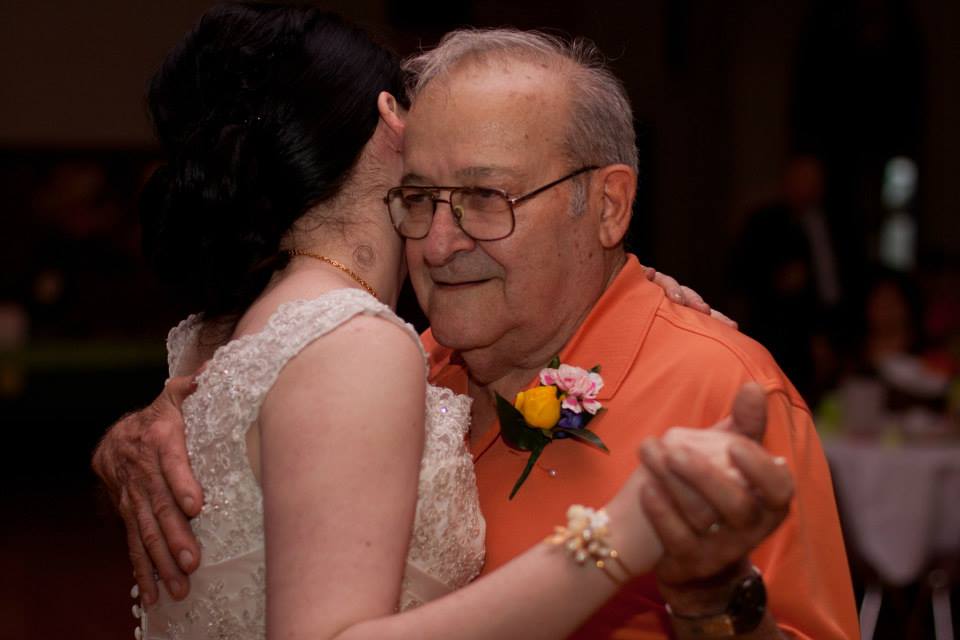
“Would the bride and her grandfather please come to the dance floor?” The DJ’s voice echoed all around St. Basil’s reception hall.

My gown swished across the dance floor as I took Gramp’s hand. “Heya, doll. You look beautiful,” he smiled and started moving to Luciano Pavarotti’s “Let It Rain.” His moves belied his age. He swung me around the dance floor like neither my husband nor father did.

The song ended far too soon, and I embraced him once more, whispering, “Love you, Gramp.”
xxxxxxxxxxxxx

It’s been three weeks since my grandfather died in a car accident, and still, many times when I close my eyes, his last moments flash behind my eyelids, even though I wasn’t there to witness them. I hide my grief better now than the first week he was gone – I don’t openly cry much anymore, but the tears threaten to overflow multiple times a day. I feel like there’s a gaping wound in my chest, but I can’t stanch it, no matter how hard I try – no matter how many Bible verses I read or how much I pray. It hurts.

Yesterday, after dinner, I aimlessly scrolled through my newsfeed, my brain grateful for the break. I jumped in shock when Deb’s profile photo (of Gramp) popped on my screen. She was video calling me.

I answered and, without speaking a word to me, she had her camera turned to my grandparents’ living room and dining room – empty. She turned the camera to her face finally and said, “Well, what do you think of that?”

“Show me again,” I replied. She got up and scanned the camera across the living room, where the kerosene heater always was; into the dining room where, I felt if I blinked fast enough, I could still see him relaxed in his recliner, watching a baseball game. She took me in the kitchen – the breakfast island no long scattered with photos, newspapers, and magazines; no pie containers, coffee pot or cutting board on the counter; the refrigerator, opened up and cleaned out. Up the stairs, she carried the phone, showing me the bathroom – the medicine cabinet that was always left half open, showing off his shaving cream and razor, emptied and shut tight. My grandmother’s room – the nicotine-stained walls repainted a brilliant white. And finally, the room he slept in last – empty and cleared out.

“Sad, isn’t it? My whole life has been here,” Deb finally said when she got back downstairs. “But what can you do?”

“It’s okay to feel sad about it,” I replied. “I heard you have to put the house on sale soon.” My grandparents’ house had a reverse mortgage on it.

“Yeah, we have 90 days to get it on the market. And then we can apply for an extension for another 90 days, so we have about a year to sell it. But everything of Gramp’s is gone already pretty much. All that’s left is this-” she showed me a wooden chest next to the sofa she was sitting on- “and this-” she showed me a box underneath the chest. “The bedsheets he slept in last are in that box. We haven’t washed them.”

“Do they still smell like him?” God, I felt a little morbid asking that.

“I don’t know, but I have his sweat rag that he slept with, and that doesn’t smell like anything now.” I felt a little less morbid after hearing that.

She wasn’t done though. “When I opened the door today and walked in the house, it still smelled like him in here. The house still smells like him.”
xxxxxxxxxxx

I sat in the white wicker chair in my grandparents’ bedroom, shifting uncomfortably. It smelled old, stale, and sickness permeated the air. A part of me didn’t want to be there. A part of me hated seeing my grandmother so withered. She sat on the bed, her legs looking atrophied beyond recognition. Her eyes would glaze over at times, but mostly she smiled and laughed at Gramp, delighting in his jokes, delighting in him. Most of our conversation that day, I don’t remember, but I remember seeing the adoration between those two – like teenagers finding a first love.

“Arno, I want some ice cream,” Gram ordered, a little tinge of her tenacity peeking through the haze of Alzheimer’s.

“Sure, Di. You want it like a sundae?”

“Yeah….yeah.”

He got up and went downstairs immediately.

“How’s college?” Gram asked me.

I looked at her. It was September 2013, I had been married for 1.5 years, lived in India and was five months pregnant…..and I had graduated in 2008.

“College is fine,” I forced a smile, trying to ignore my heartbreak.

“And Cameron’s doing okay in school?”

My brother had graduated high school in 2012. “Yeah, he’s doing great.”

None too soon, Gramp returned with her ice cream, and he spoon-fed her each bite. They laughed together when she got whipped cream on her chin. It was so clear that Gramp loved doting on Gram. He loved taking care of her. He loved her. I smiled again, only this time, it wasn’t forced.
xxxxxxxxx

April 8, 2014 – around 5 pm India time

I noticed a missed Skype call from Bobbi Jo. “Why is she calling me now?” I thought. “Isn’t it super early in the morning there?”

I called back, and she answered, her eyes puffy and red. “Gram just died about 20 minutes ago,” she told me, without ceremony.

I knew it was coming, but it still didn’t stop it from hurting. Zac took Evelyn, a mere 3 months old, from my arms, and let me cry, unabated. Gram was a shell when she died – we had mourned her long before she actually passed away, but I cried mostly for Gramp. He would be lost without her.

Much later, years later, Deb told me the most “amazing, heartbreaking-ly sad, and wonderful” thing she had seen the day Gram died was when my grandfather cradled her body and told her, “I’ve loved you my whole life. You’re so pretty. How I miss you already.”

And we miss you both, Gramp.
xxxxxxxxx

“We’re filled with the hope today, and we’re sad, of course, but we’re filled with hope because we know, deep in our souls, that we’ll all be with Arno and Diane again. And I know Jack isn’t here today, but I’d just like to acknowledge him in front of everybody because, as I understand it, we all have this hope because he shared it with us. And the hope is [that] it’s not over for [Arno] and Diane; it’s only the beginning because [Arno] has received his reward in Christ.” – my cousin, Daniel, at our grandfather’s memorial dinner on September 2, 2017.
11392955_934506649744_1395866407219326957_n

A Time for Giving Thanks

I’m not exactly sure where I’m going with this post, so bear with me. I suppose you could consider it my Thanksgiving post. I encountered a woman last week who was begging for money. This is my first time since moving to Kerala (back in October 2012) that I have had someone approach me for money. As I was closing our front gate after letting Zac out with the car, I saw this woman out of the corner of my eye, staring at me. Being stared at is nothing new for me, so I kept about my business of shutting the gate. Then, I heard her saying something to me, so I finally looked at her, noticing she had her hand extended. I did what I’ve been told to do – I shook my head, avoided eye contact, and hurried to get in the car. The reason I’m telling this story is because while this woman was asking for money, I had an awful internal reaction to her. I got angry. I assumed she was asking me for money simply because I was white. Zac thought the same thing until we looked behind us and saw her approaching another woman to ask for money. I felt awful, and I don’t think I have even told Zac how awful I felt about it.

So, I’ve been grappling with this episode ever since – I have had to “re-check my privilege,” if you will. That woman, most likely, did need money, any money. And I wish I would have given her something. But at the time I had no purse on me, no pockets, and I was hot, tired, achy, swollen and sweaty. I got angry with her for an unjustifiable reason. So, I’ve been praying that God keeps my pride reigned in and my patience more enduring. Since then, I have been hyper-aware of things I am thankful for.

Zac and I are blessed enough to be living well in India. In fact, we are living in excess. We have a beautiful apartment, a maid/cook, a washing machine, a water purifier, a brand new car, no concerns on how we will afford our monthly expenses, two laptops, wireless internet, a new camera (for lots of sleeping baby photos), and a generator, which is thanks to our electrician landlord. Our maid is awesome. I was all huffy when Zac said he was going to hire a lady to help around the house because, well, pride? But now that I am getting further along in my pregnancy in a very hot and humid climate, I am incredibly grateful for the work she does. As for our washing machine, I could hug it every single time I do a load of laundry – I washed clothes by hand for seven months in Calicut. I was pretty bad at it. I ruined quite a few pieces of clothing. Having a water purifier means that neither Zac nor I have to boil our water before drinking it, which was something else we had to do in Calicut. And the generator means that I can still sprawl under the ceiling fan when the power inevitably goes off almost every single day. I am so thankful for that because the heat and humidity here are becoming increasingly uncomfortable for me the larger I get.

That was a list of material things, I know, but I would think it is pretty obvious that I am thankful for my husband. And he is for me. He is always saying to me, “Our story is the best.” And it is pretty unbelievable. He comes from a crowded city in India, and I come from a tiny borough in Pennsylvania, and God willing, we crossed paths, so to speak, in Binghamton, New York. And now we’ve been married almost two years. He is graciously kind and considerate, a good provider, and makes me strive to be a better human all the time. He’ll be an amazing father. I am pretty sure I have said that before on here, but it’s always worth saying again.

And now I come to Little Bean, who has the hiccups as I am typing this. I consider her a miracle, not just because she’s our baby, but because we weren’t sure if or when a pregnancy would ever happen. And, lo and behold, I had already been pregnant for two weeks or so when the doctor gave me some medicine to try to get pregnant eventually. Now, every kick and punch, every hiccup is so precious to me; it’s awe-inspiring.  I am so thankful to be experiencing this. And I am thankful for the emotions that run through me about this pretty much all the time, every single day. I am both excited and terrified to be a parent. What if I don’t change her diaper often enough? How will I know when she’s hungry? What if she hates me? I ask Zac often if he is nervous about being a dad. The answer – nope. So, maybe these feelings are more of a mom thing. 🙂

I suppose that’s enough of baring my feelings to you all. I am thankful that there are enough people out there who seem to enjoy this blog. When I started it, I thought it would just be family and friends, but I can see from my number stats that it’s not. Thanks for reading this, everyone. And, if you’re in the US, have a great Thanksgiving!

From my birthday dinner at Villa Maya in Trivandrum.