Etymology of Sugar and Candy: A Sweet Journey

As we are between the festivals of Diwali and Halloween, I thought it would be appropriate to do a shorter etymology post.
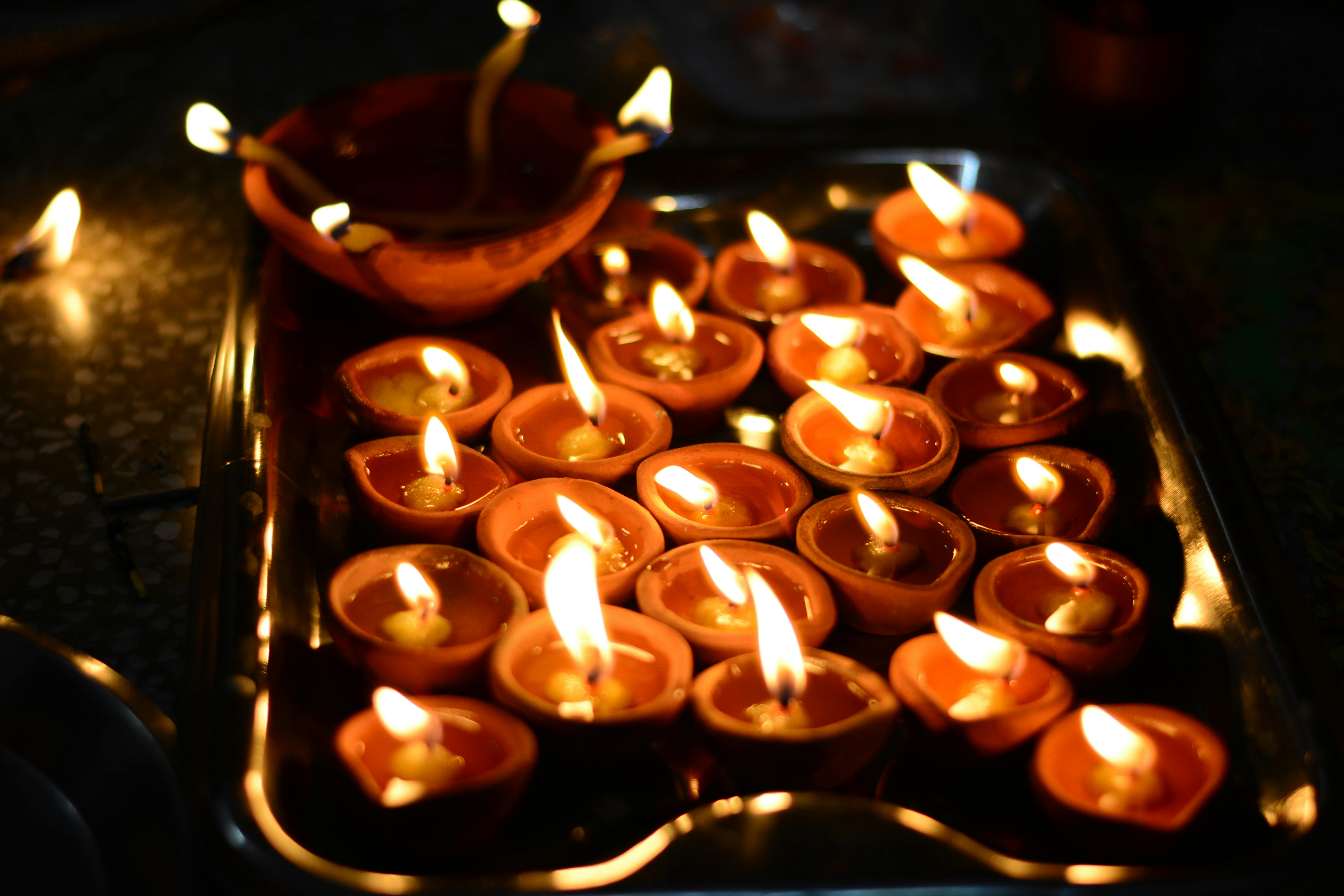
Diwali, the Festival of Lights, celebrates the triumph of good over evil and light over darkness. You’ll find homes lined with diyas and lamps, fireworks and sparklers, and lots of sweets.

Halloween, on the other hand, brings a sense of eerie mystery, with costumes, carved pumpkins, and candy capturing the season’s spookiness rather than light and renewal.

But did you notice what these holidays have in common?

Sugar and candy. But where did these sweet words come from? Hidden in the syrup of gulab jamun and beneath the wrappers of Reese’s pumpkins is a fascinating linguistic journey, one that travels across continents and millennia, from ancient India to medieval Europe, carrying the legacy of trade, language, and humanity’s desire for sweetness.


From Sanskrit to Sugar

Before candy bars or kaju katli, there was śarkarā (शर्करा), the Sanskrit word for “ground or granulated sugar.” Originally, śarkarā referred not to refined sugar but to small, gritty pebbles or crystals. As Indians began refining sugarcane juice into crystalline form (a process perfected in the Indian subcontinent over 2,000 years ago) this miraculous sweet substance took on the name śarkarā.

Through centuries of trade along the Silk Road and maritime spice routes, the word śarkarā took on new forms in new languages. In Prakrit, an ancient vernacular in North India, it became sakkarā, which Persian traders adopted as šakar (شکر). The Arabs carried it onward as sukkar (سكر), and medieval Latin scribes recorded it as succarum or zucarum.

By the time it reached medieval Europe, the word had solidified into Old French sucre and Italian zucchero. From there, English borrowed it as sugar in the 13th century.

So the next time you sprinkle sugar into your pumpkin spice latte or stir it into your kheer, remember you’re using a word that began in Sanskrit and traveled the world through trade and culinary innovation. Every grain of sugar is a speck of history, carrying both the memory of ancient India’s language and its ingenuity.

A tldr version of the history of “sugar”

śarkarā -> sakkarā -> šakar (شکر) -> sukkar (سكر) -> succarum -> sucre/zucchero -> sugar


The Story of “Candy”

If sugar is the mother of sweetness, then candy is its offspring. This word also has roots in India, from khaṇḍa (खण्ड), meaning “piece” or “fragment.” When sugar was first crystallized, it often formed into large blocks or shards, which were broken into khaṇḍas, pieces of sweetness.

Persian merchants, who became experts in the sugar trade, adopted the word as qand (قند), meaning sugar or sweet substance. Arabic then transformed it into qandī, meaning “made of sugar.”

This Arabic form found its way into European tongues through the bustling trade of the Middle Ages, first appearing as Italian candito and French candi (as in sucre candi, “crystallized sugar”). By the 14th century, English had adopted the word as candy.

The original “candied” goods were fruits or nuts preserved in sugar, luxury items fit for nobles and festivals. Over time, as sugar became more widely available, candy came to mean any sweet confection. And by the 20th century, it had taken on its modern association: the sugary bounty of Halloween night.

A tldr of “candy”

khaṇḍa (खण्ड) -> khaṇḍas -> qand (قند) -> qandī -> candito/candi -> candy


A Trick and a Treat for the Mind

So when a costumed zombie knocks on your door shouting “Trick or treat!” or your aunty sends you a package of soan papdi, remember that even the word “treat” shares roots with trade and exchange. Sugar and candy are just two of the words (and wonders) we’ve borrowed from India.

Each piece you unwrap or spoonful you dissolve in your tea carries a soft echo of its past: fragments of Sanskrit, Persian, and Arabic melted together through centuries of travel and taste. Like sugar, language preserves what it touches, crystallizing memory, meaning, and migration into something still on our tongues. Sweet, isn’t it?

The Surprising Origin of Shampoo: From Massage to Hair Wash

We think of “shampoo” today as the stuff you squirt onto your head when you want your hair to smell fresh again. But the word itself has a backstory that’s richer than an argan-oil conditioner and more surprising than finding out your “herbal blend” shampoo is mostly water.

Left: Sake Dean Mahomed, Indian entrepreneur who opened the famous Brighton “Mahomed’s Baths” in 1814; Right: A colonial “champoo,” no soap involved.

The British Raj and a Massage, Not a Rinse

The story begins in the 18th century, when Britain’s colonial presence in India was at full steam. British traders, soldiers, and administrators encountered not only a dizzying array of spices and fabrics, but also new wellness traditions, including the practice of head and body massages.

In Hindi, the verb chāmpo (चाँपो) means “press” or “knead.” It comes from the Sanskrit root capayati (“to press” or “to soothe”). When British ears caught it, they rendered it as “champoo” or “shampoo,” which referred specifically to massaging the head or body with oils.

Back then, if someone in 18th-century London offered you a shampoo, you’d be melting into a relaxing massage, not a deep scalp wash.

The First “Shampooing” in Britain

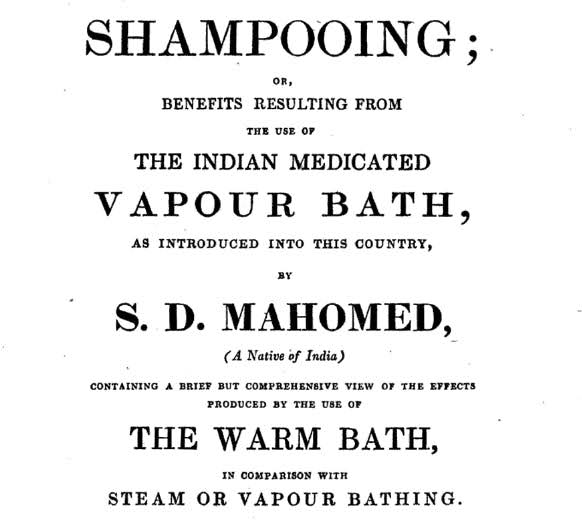
One of the earliest champions of shampooing (in the massage sense) in Britain was Sake Dean Mahomed, an Indian entrepreneur. After an earlier venture, a restaurant called the “Hindostanee Coffee House” didn’t take off, he found fame by establishing “Mahomed’s Baths” in Brighton around 1814.

There, he offered “Indian Medicated Vapour Baths” and “shampooing” services to the fashionable and health-conscious elite. These were elaborate, spa-like treatments involving steam, oils, and massage.

An advertisement for the vapour baths.

In his advertisements, Mahomed presented shampooing as both exotic and therapeutic, a kind of health cure as much as a luxury. In a way, he planted the seed that would later bloom into the shampoo we know, though it would take another century and a half for soap to join the party.

From Massage to Suds

So, how did a word about pressing muscles turn into one about scrubbing scalps? Over time, “shampoo” in English expanded to mean not just the act of massaging, but also the washing of hair, especially when that washing involved a vigorous rub. The massage aspect faded into the background, and by the mid-19th century, “to shampoo” was being used for cleaning hair in the literal, soapy sense.

Commercial shampoo as a product didn’t appear until the early 20th century, when chemists developed liquid formulas specifically for hair. Before that, people in the West often used ordinary soap or flakes, which were harsh and left hair dull, while Indians had been using herbal pastes, oils, and powders for centuries. Nevertheless, the new “shampoos” were gentler and left hair more manageable. By then, the original Indian massage meaning was almost entirely forgotten.

A Global Shampoo Family Tree

Interestingly, the word “shampoo” kept its connection to massage longer in other parts of the world. In modern Hindi, “चाँपो” (chāmpo) still means “press” or “massage,” and “चंपी” (champī) is a head massage. In some Southeast Asian countries, “shampoo” or a similar-sounding word can still mean a massage treatment.

“Discriminating” women use Watkins in this 1920s shampoo ad.

What’s in a Name? Apparently, a Whole Spa

Today, “shampoo” is almost universally associated with hair washing, complete with a variety of scents, promises, and prices. The original link to Indian wellness culture is mostly invisible to modern consumers. But the next time you lather up, you’re unwittingly borrowing from a centuries-old tradition of massage, colonial encounters, and cross-cultural word travel.

And if you’ve ever enjoyed a scalp massage at a salon before the rinse…well, that’s a tiny echo of shampoo’s origin.

Word Origin Corner

Shampoo’s journey is a neat example of semantic shift, where a word changes meaning over time. Here, it went from “massage” (no soap) → “hair massage” (maybe soap) → “hair washing” (definitely soap). A similar thing happened to “broadcast,” which once meant scattering seeds in a field and now mostly means transmitting TV or radio signals. Or my favorite: the shift of “nice” from meaning ignorant and foolish to pleasant.

Language changes not just because of cultural trends, but because people borrow words, stretch their meanings, and sometimes rinse them under warm water until they become something new entirely.

The Takeaway

Next time you shampoo your hair, you can smugly inform anyone within earshot (and I certainly don’t do this): “You know, this used to mean a massage in colonial India.” Whether or not they thank you is another matter, but at least your hair will be clean, your scalp will be happy, and your vocabulary will be a little richer.

Modern ads still promising the world to your hair.

Further Reading / Sources

The Mango and the Map of Language

In Kerala, mango season begins quietly. A lone vendor sets out a crate of glowing yellows and blushing oranges, sometimes tinted with stripes of green, by the roadside. Then another vendor appears. And another. 

By May, mangoes seem to be everywhere: stacked in pyramids on rickety tables, carted down alleyways in woven baskets, filling the dining room with a pungent sweetness as they ripen. 

We wait to buy from a vendor near our home, who snags the best variety, the best quality. He and his wife also make a mean mutton soup. 

A non-exhaustive list of all the mangoes in India.
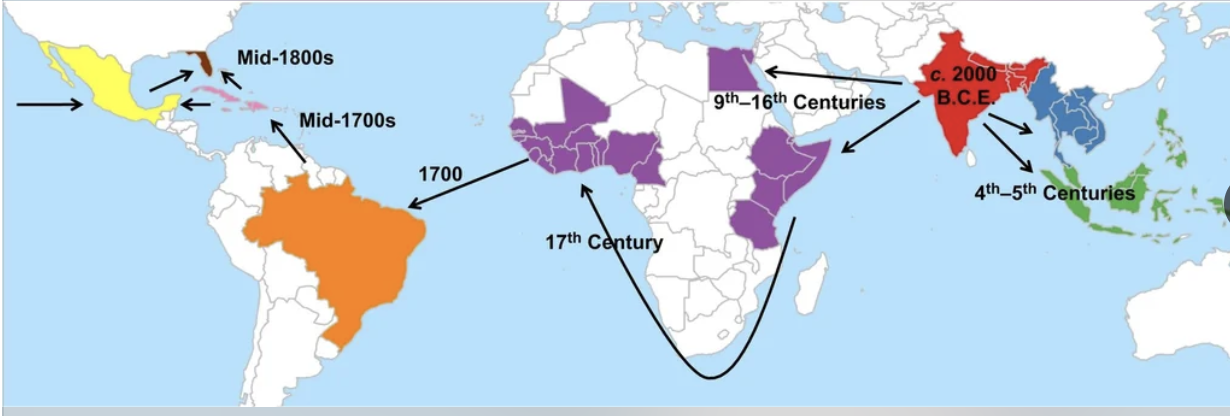
The journey of the mango through centuries.

It’s easy to take this fruit for granted. There’s mango season, and there’s the waiting season, like the steady ticking of a clock.

But too often, we separate ourselves from the journey our foods make, from the backbreaking farm labor and the heartbreak of a lost mango crop in a too-rainy summer season, to the post-workout smoothies of the privileged. 

And if the fruit itself has such a fraught journey, then what about the word mango? Where did it come from? Which cultures first used it? How did it weave its way into English?

From Malayalam to the World

The English “mango” traces its roots to māṅṅa (മാങ്ങ) in Malayalam, the language of Kerala. But the journey of a word is rarely straightforward. Some scholars suggest the Portuguese first heard it from Malayalam speakers, while others argue it came from Tamil neighbors, who called the raw fruit māṅkāy (மாங்காய்) and the ripe fruit māmpaḻam (மாம்பழம்). Since Malayalam and Tamil are both part of the Dravidian language family, it’s difficult to pinpoint which word sailed west first.

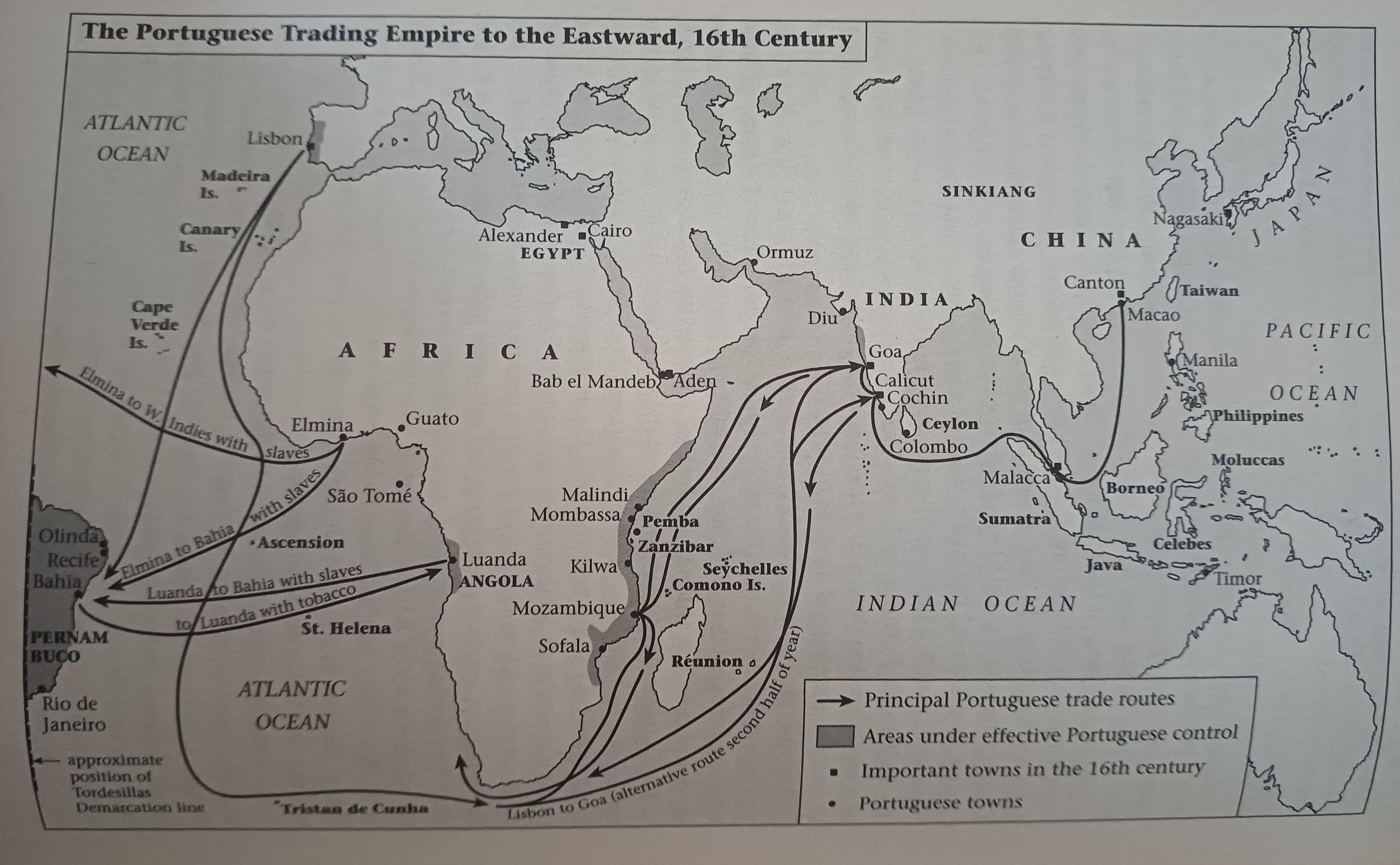
Portuguese traders adopted it as manga during their 15th-century spice voyages. By the time they established a sea route to Europe, Arab traders had already been exporting Kerala’s spices, and words like naranga (orange), for centuries.

From Ostler’s book mentioned below. The Portuguese trading empire.

In 1498, Vasco da Gama succeeded where Columbus had failed: charting a direct sea route to India and landing on the Malabar Coast. This was likely when māṅṅa first touched a Western tongue.

As with most colonial encounters, da Gama’s arrival brought more than trade. It brought upheaval; an attempt to claim, exploit, and remake a culture the Portuguese barely understood. Like every empire, they left behind a tangled legacy: trade routes that changed more than cuisines, and violence that uprooted lives.

From 1498 onwards, manga traveled into French and Italian, then into English, with the first recorded use of “mango” appearing in 1582.

For a time, “to mango” was even a verb in colonial America, meaning “to pickle” (which is why some places still call green bell peppers “mango peppers”).

Today, we’ve untangled mangoes from pickles and peppers. But the legacy of colonialism is not so easily resolved.

But there’s a truth here worth admiring: a tiny word like māṅṅa can travel across oceans and centuries, weaving itself into English. Every time someone says “mango” in London or Philadelphia, they’re unknowingly speaking a fragment of Kerala’s language.

 Language as a Recipe Book

But it isn’t just mango. Our English-speaking homes and kitchens are stocked with Indian words carried along trade routes and colonial corridors:

  • Chutney (from Hindi chaṭnī)
  • Curry (from Tamil kari)
  • Bungalow (from Hindi banglā, meaning “Bengal-style house”)
  • Shampoo (from Hindi chāmpo, “to knead”)

Each word is an artifact, if only we take a moment to wonder. They are small testaments to hands that stirred, chopped, hammered, and kneaded across centuries, reminders of the histories and people behind them.

The Journey Hidden in a Word

Now, when I bite into a mango here, I taste more than its layered sweetness. I hear the word’s journey too, spoken first by a Malayali vendor in Trivandrum, sailing across seas and empires, and scrawled on a supermarket sign in Pennsylvania.

Language carries more than meanings. It carries fragments of history and home, especially for those caught between roots.

For Further Reading (if you crave more about erstwhile empires and their legacies):

  • Empires of the Word: A Language History of the World – Nicholas Ostler.
  • Inglorious Empire – Shashi Tharoor
  • The international swap trade in useful words, BBC Magazine (2014)
  • Arrival of Portuguese in India and its Role in Shaping India – Col. (Dr.) D. P. K. Pillay (2021)
Top post on Blogchatter