I got a manicure in a nice salon for my birthday. I’d promised myself I’d quit a 41-year-old habit. Then I glanced out the window.
Red Umbrella
The technician submerges my hands in the lavender water to soften my chewed-on skin. My fingers flex, the water stings the wounds. Each sore a metronome of the hum inside. Too ashamed to relax, I do everything but close my eyes. Count towels. Searching for pores, maybe a frizzy tendril on the model’s giant face beside me. I crane my neck to look out the window, and I see a red umbrella, swaying like a heartbeat in the brutal sun. The umbrella tips, and I see him, his sign, a small board cupped in his left hand: MEALS. The sunlight shifts, and my own reflection hovers in the glass. The technician massages chamomile lotion into my skin. “For relaxation.” “Is the AC temperature okay, ma’am?” I stare at the man and his red umbrella until he walks out of sight. I ask for red polish on my fingertips. I ask the technician if she gets to visit her family, so far away. I murmur another apology about my fingers. The red polish, cured under light.
A dragonfly shimmering in the morning light, bright hues of red across its body, paused in front of me on the footpath. And then another stopped by. They didn’t stay long, enough to appreciate their precision and to notice several dragonflies soaring overhead and around me.
Dragonflies rest in tall grass. And when there isn’t any, they cannot rest and frantically fly overhead in droves, searching for a place to land their worn bodies. I learned this the last time the grass was cut short and there were hordes of dragonflies in the air. Here I thought I was witnessing a miracle of nature. But it was only that their beds were destroyed.
I don’t want to compare insects to humans who have lost their homes to war or savagery from their fellow man. But when entire cities are flattened, razed like the tall grass, I can see why people behave like these dragonflies. Circling, swirling, racing to find a new place to rest. Except the shimmers are their tears, and the bright red hues are streaks of blood.
On my way home one day, I saw a man stop his cycle to feed some street dogs. The scene felt simple, but not quite.
A Few Coins
A man stopped on his cycle along a road not yet flooded with traffic. Thin, well-worn legs. Hands all hard labour: callouses, thick veins, and scars. Yet he cradled a plastic bag, looped around the handlebar.
His guests bounded, all tails and tongues. A welcome only they could give. With a rare tender palm, he patted each head. No rush to the next. From the bag came folded banana leaves, patiently unwrapped. Tails thrashing so wildly, I thought they might lift off toward the mountains.
Then a lantern lit from within. His fingertips shone like torches through dark trees. His eyes burned with a glow that made the world shimmer. A glow I wanted to hold. Here was a parted veil, allowing me a glimpse of what it means to be human. But then I blinked, and he was just a man again, gently portioning a meal for his loyal friends. It wasn’t much but it was all.
Opening Note: One of the first things I learned in Kerala was that food speaks to you. When mustard seeds splutter in hot oil, it’s a signal: add the curry leaves, the shallots, the chillies. Over time, I realized language works the same way. It teaches me when to pause, when to listen, and how to name the world with new words.
Tadka (To My Younger Self)
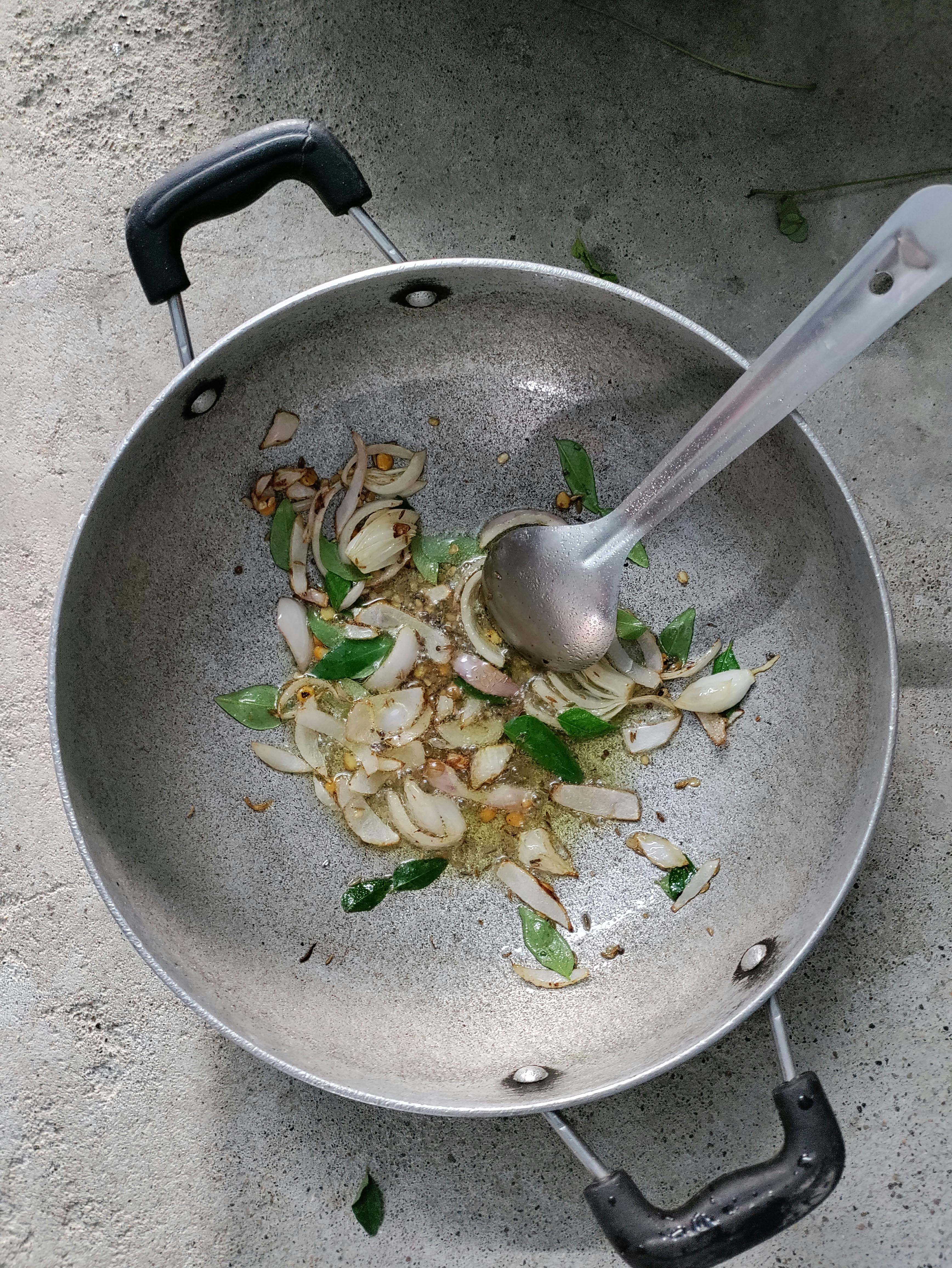
When the mustard seeds splutter, that’s when you add the curry leaves, shallots, and chillies. Call them by their names: kaduk, kariveppila, ulli, mulak. Repeat them, ketto? They will be your anchors later.
You will learn the names of vegetables, fruits, grains first, by accident. Your ears will be covered in scales until they aren’t, and rice, fish, turmeric will become chor, meen, manjalpodi.
Hold on to the astonishment of learning them, tracing the seas they’ve crossed, the shores they’ve touched. Remember, Babel wasn’t a punishment. It was a gift: a doubling, trebling of names for tomato, onion, wheat.
You will want to tell someone about this wonder, but you will feel alone. In India, they will shrug, we know these things only. At home, eyes will glaze over. You’re allowed to marvel anyway, maanasilaayo?
You will still want to shrink into a corner, fear and self-doubt strangling you. But you’ll press forward anyway, shoulders tight, breath shallow, heart pounding.
It’s the same acceptance of terror that gets you through airports, onto planes to your mother, father, and brother, not to relive the old days, but to build new ones– good times, now, with their granddaughter. You learn to do what must be done.
On these visits, you will pass your grandparents’ house. You’ll see black trash bags slumped on the porch, weeds swallowing the yard. Look away if you must.
When you walk inside for the last time, you’ll search for their scent in the damp, unheated walls of late winter. It won’t be there. You will realize: loss doesn’t wait for your return.
And still, the seeds will pop when oil meets flame. The crackle is now, never then. It will not pause for a house that now belongs to someone else.
Fragrance will rise, sharp, insistent. The present will announce itself in smoke and spice.
So listen, mol: you don’t need to live inside what is gone. Stir the heat into what is here. Add the zest. Name things as they are. Find beauty in words for what’s to come. Eat while it’s hot.
Memory will cool soon enough on your tongue.
Closing Note: The crackle of mustard seeds hasn’t stopped surprising me. It’s a small sound, but it reminds me that life is always beginning again, in kitchens, in words, in the ways we honor our pasts.
Sometimes life’s smallest moments can carry the biggest lessons. On a routine evening walk a few years ago, a simple run-in with a scorpion taught me about restraint, mercy, and the power of choosing kindness over retaliation.
This poem reflects on that moment, and the ripple effect that can follow when we hold back our sharpest stings.
Dear Scorpion
Evening is the best time to walk, the sun retires from scorching; my shirt feels a little less sticky. My dog scuffs along, sniffing, his own form of social media. I scuff along in my well-worn chappals, not the wisest choice, scrolling through my phone.
The evening in question melted over the sky, hardening into oranges, purples, and blues. Scuff, scuff. Sniff sniff, scroll. When something cold and hard rolled over the soft, sensitive flesh of my foot.
My brain tried to place the feeling: A beetle? A plastic toy? A bottle? I looked down. My heart melted, warm liquid, draining to my toes.
A scorpion stood with its stinger raised. Ready to duel if it met my foot again, in the dead leaves covering our path. Do I run or stand my ground? Both felt wrong.
So we stood for hours, seconds, really. The harder I stared, the more it looked offended than armed.
I chose to back away, my eyes on the insulted creature, shrinking as I retreated until it vanished.
It had every right to strike me with its poison. I felt that path was my own.
But it chose not to sting me. The opportunity was easy. Maybe it was luck, or maybe it sensed my fear like its own. Or maybe it wasn’t in the mood.
Dear scorpion, I learned something on that evening walk. I can choose not to sting another. Swallow the bitterness that would rush through blue capillaries, red arteries, straight to another’s heart.
I can fade into the twilight, but still stand guard. Maybe their venom will return to where it began, softening the next hardened heart, one restrained sting at a time.
Dear scorpion, if mercy flows this way, through veins and capillaries, into oranges, purples, and blues, maybe this world needn’t sting so deep.
A Note: I hope this poem encourages you to pause and choose mercy in your own daily encounters, softening hardened hearts one restrained sting at a time.
Somewhere between arrival and departure, I’ve learned to speak in two voices and carry two selves. This is about what happens when neither feels entirely mine.
A Switch | സ്വിച്ച്
This plane window is a signaller. Ready to help me choose myself before we fall to the earth. I am sinking and floating at once, but I look out the window anyway to see which personality to wear after landing.
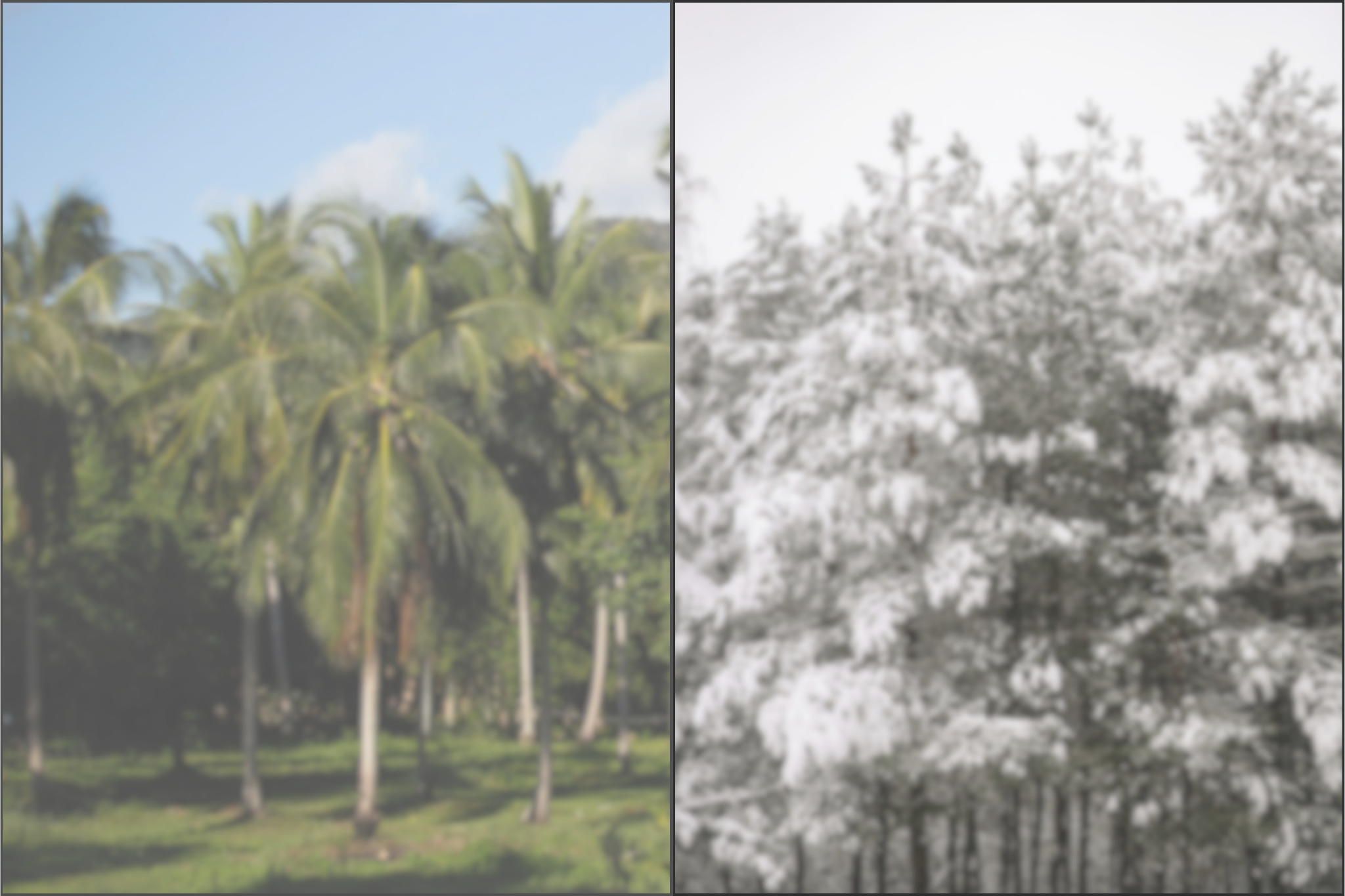
Grey bypasses, skyscrapers, concrete squares: all holding their breath. The switch flips to America.
A quilt of coconut palms, low white buildings, the switch flips to India. My head wobbles before the plane touches down.
Later, I learned there’s a word for this. I protested: I don’t do this. Not me. And the man I spoke to replied, “Oh, but I think you do.”
In India, I’m more reserved, yet I speak more. Slowly. Enunciating. I use words like: lift – boot – lorry – brinjal – petrol. I say Ruh-vi, not Raaah-vi. I roll my Rs and move na – nja – nna through my tongue and lips. I clench my fists in frustration when the word is right there, drifting, italicized, in my mind, tucked under my tongue when I try to speak.
And then in America, when I’m with people who knew me once, but not quite. When nostalgia rolls in as thick as the fleece blanket that keeps me warm in stark Pennsylvania winds, I’m more open, but speak less. I speak quickly, slurring my words: “Didja eat yet?” I smile hellos and how are yous to perfect strangers, but never pushing beneath: “Friend, how is your heart?” or “Is your father doing okay?”
“You kinda have an accent now,” so I flatten my As again. My voice shifts north into my nose and the words roll out: elevator – trunk – truck – eggplant – gas.
I don’t have to worry about chechis and chettans. Americans like first names, giving us a pretend closeness, like a handshake without eye contact.
Here’s the thing: neither one feels quite right. In India, I wear a mask. I smile when I don’t want to; swallow questions and bite back criticisms because my face marks me a visitor even though I’ve rooted my hands deep in the soil. In America, I wear a wool sweater two sizes too small. I tug at the sleeves, sweating, itchy, chafed but never take it off.
So, who am I? Am I the words spoken to others, what they see: a woman in love, a fool, a brave soul? Or am I something deeper? Or am I none of these?
Am I just a middle-aged woman afraid she will always be brushing the edges, never quite let inside? Am I just afraid that someday I’ll be a stranger in a strange land where I borrowed books from the library and licked ice cream as I walked to the park?
Now, the only home is my daughter’s voice when she tells me the song she and her friends made up; when my husband and I walk into the hovering emerald canopies.
If my skin were peeled away and my chest cracked open: The hush of the monsoon rain washing through the ghats, the whisper of the snow covering the evergreens—
Would you recognize the language of my pulse,
the accent of my blood,
forever stuttering switching tracks until I break the lever.
I don’t deserve the soft mattress I sprawl across each morning. Letting my 40-year joints stitch themselves back together. But most nights, it’s what I’ve said wrong that keeps me awake.
In fact, I would say none of us who have soft mattresses deserve them. We didn’t earn them. Just luck.
We are born lucky. A devoted family, a country not torn to shreds by war. Food in the kitchen; no bloated bellies except when we eat too much junk. So why does sorrow still creep in?
I find the wrong in small, small things, and they sour like curd left to set too long in the heat. They blister my nerves. I become a pulsing mass, pushing past the ammoomma parked sideways in the cereal aisle. Why didn’t I give her any grace?
Why am I so weary all the time? I doomscroll on my phone; cracked tempered glass like everything else I don’t take care of. Doomscroll, what a word. Cakes. Vacations. Drunk weddings. A mother holding her child.
But the child wears black plastic for a diaper. I wonder why I am so weary, weary. The child is all bones and angles, and the face— that same look the Somali children had in the ads on TV when I was small.
And there is nothing more in that moment that I want than to trade places or scream or sledgehammer a car or anything, but not nothing. I want to hold this mother.
Her child will soon die.
And who will comfort her in Gaza, where soft mattresses and full bellies write, “But October 7th, what about that?” “She doesn’t look as starved as her kid?” “Even so, come, Lord Jesus!”
Even so, mercy is a funny thing. We want it for ourselves but not others. I wish my chest didn’t feel like it can no longer cage my heart. Growing, stretching, pulling until it bursts, and I vanish into the rains that flow down the mountains.
But then I blink: back in my living room. My daughter dances, her belly full. Her wobbly arabesque cuts through the thickness in my throat. I don’t deserve this. Even so. I tell her it’s time for bed.
A Note
I’ve been having a love/hate relationship with social media. Mostly hate.
Yet I still find myself checking each app; the colonization of algorithms digging deeper in my brain.
Yesterday, I saw the photo that I believe will be looked at 50 years from now, and people will ask, “Why didn’t anyone do anything?”
And while there are many out there on the front lines doing the right things and the hard things, just as many, if not more, of us are just too comfortable.
Myself included.
Unfortunately, I made the universal mistake of checking the comments on the photo.
The absolute least I can do as a human being right now is not leave comments whatabouting a woman whose child is near death. Or questioning her appearance. Or praying for the end of the world.
When I saw the photo, I immediately thought of La Pietà.
A lamentation of an innocent. A mother mourning alone.
I don’t have any answers or advice other than to say this:
There is no justification for starving and bombing children.





 An American in Kerala