I moved to Calicut, India, in October 2012 to be with my husband. Moved to Trivandrum, India, in 2013 and have been here ever since. Ten years in, I feel like I'm still navigating my space in Malayalee culture. But one thing is certain - Kerala will always keep a piece of my heart.
Sometimes life’s smallest moments can carry the biggest lessons. On a routine evening walk a few years ago, a simple run-in with a scorpion taught me about restraint, mercy, and the power of choosing kindness over retaliation.
This poem reflects on that moment, and the ripple effect that can follow when we hold back our sharpest stings.
Dear Scorpion
Evening is the best time to walk, the sun retires from scorching; my shirt feels a little less sticky. My dog scuffs along, sniffing, his own form of social media. I scuff along in my well-worn chappals, not the wisest choice, scrolling through my phone.
The evening in question melted over the sky, hardening into oranges, purples, and blues. Scuff, scuff. Sniff sniff, scroll. When something cold and hard rolled over the soft, sensitive flesh of my foot.
My brain tried to place the feeling: A beetle? A plastic toy? A bottle? I looked down. My heart melted, warm liquid, draining to my toes.
A scorpion stood with its stinger raised. Ready to duel if it met my foot again, in the dead leaves covering our path. Do I run or stand my ground? Both felt wrong.
So we stood for hours, seconds, really. The harder I stared, the more it looked offended than armed.
I chose to back away, my eyes on the insulted creature, shrinking as I retreated until it vanished.
It had every right to strike me with its poison. I felt that path was my own.
But it chose not to sting me. The opportunity was easy. Maybe it was luck, or maybe it sensed my fear like its own. Or maybe it wasn’t in the mood.
Dear scorpion, I learned something on that evening walk. I can choose not to sting another. Swallow the bitterness that would rush through blue capillaries, red arteries, straight to another’s heart.
I can fade into the twilight, but still stand guard. Maybe their venom will return to where it began, softening the next hardened heart, one restrained sting at a time.
Dear scorpion, if mercy flows this way, through veins and capillaries, into oranges, purples, and blues, maybe this world needn’t sting so deep.
A Note: I hope this poem encourages you to pause and choose mercy in your own daily encounters, softening hardened hearts one restrained sting at a time.
Why do some Western travelers come to India seeking spiritual transformation, only to vanish, sometimes without a trace?
Some say these disappearances are the result of “India Syndrome.”
Don’t be mistaken. “India Syndrome” isn’t a medical diagnosis. The phrase was coined by French psychiatrist Régis Airault, who worked with embassy staff treating foreigners in India suffering sudden psychological breakdowns. Symptoms are said to include disorientation, delusion, spiritual obsession, and the urge to detach from society, often triggered, Airault suggested, by travel in the subcontinent.
The phrase raises all kinds of red flags for me. It feels too vague, even too condescending. Is it a genuine phenomenon, or just an Orientalist label slapped onto culture shock and untreated mental illness in an unfamiliar culture?
He was an American adventurer, young and smart, who had traveled widely and documented his spiritual journey with real thoughtfulness. In 2016, he vanished in the Parvati Valley after setting off on a pilgrimage with a sadhu. His final Instagram post read:
If I don’t come back, don’t look for me.
He had come to India seeking something: transcendence, transformation, detachment from the self. And then he disappeared, leaving behind a swirl of grief and speculation. Was it a tragic accident? A spiritual quest gone too far? Or was he consumed by the story of India he was already writing?
Stories like his collide with a country already carrying centuries of other people’s projections. To talk about India Syndrome without talking about that projection, about Orientalism, is to miss the bigger picture.
The Shadow Of Orientalism
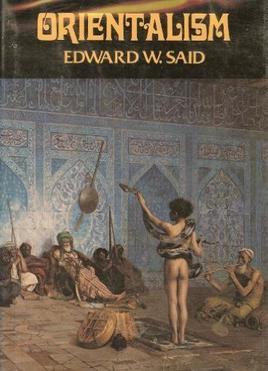
India Syndrome isn’t new. It’s the latest chapter in a story Edward Said called Orientalism: the West’s longstanding habit of casting “the East” as its mystical opposite. India, in this fantasy, is no longer a country; it’s a metaphor. A place to lose yourself, find yourself, or (in Shetler’s case) vanish trying.
And so the idea of India that travelers bring is often already mythic. It’s been passed down through yoga studios, self‑help books, and colonial literature: India as a spiritual testing ground, a mirror, a maze. But when reality refuses to match the fantasy, the fallout can be intense.
More often than not, it’s white, educated Westerners with the freedom and the resources to wander. The ones who can afford to drop out for a few months, go on retreat, or disappear into the mountains. Choosing India as the backdrop for personal transformation is, in many ways, a consumer decision.
Of course, not every traveler arrives clutching a copy of Eat, Pray, Love, but it’s rare to meet a foreigner completely free of those expectations. The “spiritual East” is so deeply embedded in Western imagination that even those who reject the clichés still bring crumbs of it with them.
There’s a certain privilege in being able to fall apart and then be found. When travelers go missing, embassies get involved. Families launch global searches. Articles are written.
It’s clear to see: When a Western traveler vanishes, it’s a mystery. When an Indian pilgrim goes missing, it’s a statistic. The heartbreak is equal, but the news coverage is not.
Meanwhile, most local voices, such as guides, sadhus, neighbors, police, and even Indian spiritual seekers, rarely appear in the narrative except as background figures. India becomes a stage, not a speaking role.
That raises uncomfortable questions: Where’s the line between spiritual curiosity and exoticism? Between seeking meaning and expecting a place to hand it to you? And what does it mean that so many of these stories treat Indian traditions as if they exist solely for foreigners?
I don’t have neat answers. But I have crossed paths with travelers who seemed to be drifting far from reality.
Not a Mirror, Not a Maze, Just a Country
One early morning, at the front gate of the Dhikala zone in Jim Corbett National Park, Uttarakhand, I noticed a white man leaning against a tree.
At first, I thought he might be a tourist from a nearby resort. But the closer I looked, the less sense that made. His cycle was old and battered. A plastic jug of murky liquid hung from one handlebar. A grimy plastic bag swung from the other. He wasn’t wearing a shirt or shoes.
He spoke to the guards for several minutes, then got his cycle and rode off toward town. “What’s that about?” I asked my husband. “That guy wants to ride his cycle through the park,” he said. “He’s riding it all the way to Rishikesh.”
The guards laughed. Not cruelly, but with the familiarity of people who had seen something like this before. I don’t know if he was a regular, a wanderer, or simply someone too deep in his own creation of India. The kind of figure whose story would be recounted as a quest, while a local doing the same might be dismissed as desperate or unwell.
But that’s the thing about India Syndrome: it’s never about the person who’s actually unwell. It’s about the stories we tell to explain them. A local man cycling barefoot through tiger territory would be called mad or poor. A white man doing the same becomes a seeker, a mystic, or a cautionary tale.
India itself doesn’t cause these breakdowns. But something else does: ages of Western fantasies that have whispered to generations of seekers:
Welcome to India: the cure for whatever you think is missing in your soul.
Up Next: Part 2 – Who wrote that mythical script, and why do we keep performing it?
Somewhere between arrival and departure, I’ve learned to speak in two voices and carry two selves. This is about what happens when neither feels entirely mine.
A Switch | സ്വിച്ച്
This plane window is a signaller. Ready to help me choose myself before we fall to the earth. I am sinking and floating at once, but I look out the window anyway to see which personality to wear after landing.
Grey bypasses, skyscrapers, concrete squares: all holding their breath. The switch flips to America.
A quilt of coconut palms, low white buildings, the switch flips to India. My head wobbles before the plane touches down.
Later, I learned there’s a word for this. I protested: I don’t do this. Not me. And the man I spoke to replied, “Oh, but I think you do.”
In India, I’m more reserved, yet I speak more. Slowly. Enunciating. I use words like: lift – boot – lorry – brinjal – petrol. I say Ruh-vi, not Raaah-vi. I roll my Rs and move na – nja – nna through my tongue and lips. I clench my fists in frustration when the word is right there, drifting, italicized, in my mind, tucked under my tongue when I try to speak.
And then in America, when I’m with people who knew me once, but not quite. When nostalgia rolls in as thick as the fleece blanket that keeps me warm in stark Pennsylvania winds, I’m more open, but speak less. I speak quickly, slurring my words: “Didja eat yet?” I smile hellos and how are yous to perfect strangers, but never pushing beneath: “Friend, how is your heart?” or “Is your father doing okay?”
“You kinda have an accent now,” so I flatten my As again. My voice shifts north into my nose and the words roll out: elevator – trunk – truck – eggplant – gas.
I don’t have to worry about chechis and chettans. Americans like first names, giving us a pretend closeness, like a handshake without eye contact.
Here’s the thing: neither one feels quite right. In India, I wear a mask. I smile when I don’t want to; swallow questions and bite back criticisms because my face marks me a visitor even though I’ve rooted my hands deep in the soil. In America, I wear a wool sweater two sizes too small. I tug at the sleeves, sweating, itchy, chafed but never take it off.
So, who am I? Am I the words spoken to others, what they see: a woman in love, a fool, a brave soul? Or am I something deeper? Or am I none of these?
Am I just a middle-aged woman afraid she will always be brushing the edges, never quite let inside? Am I just afraid that someday I’ll be a stranger in a strange land where I borrowed books from the library and licked ice cream as I walked to the park?
Now, the only home is my daughter’s voice when she tells me the song she and her friends made up; when my husband and I walk into the hovering emerald canopies.
If my skin were peeled away and my chest cracked open: The hush of the monsoon rain washing through the ghats, the whisper of the snow covering the evergreens—
Would you recognize the language of my pulse,
the accent of my blood,
forever stuttering switching tracks until I break the lever.
I don’t deserve the soft mattress I sprawl across each morning. Letting my 40-year joints stitch themselves back together. But most nights, it’s what I’ve said wrong that keeps me awake.
In fact, I would say none of us who have soft mattresses deserve them. We didn’t earn them. Just luck.
We are born lucky. A devoted family, a country not torn to shreds by war. Food in the kitchen; no bloated bellies except when we eat too much junk. So why does sorrow still creep in?
I find the wrong in small, small things, and they sour like curd left to set too long in the heat. They blister my nerves. I become a pulsing mass, pushing past the ammoomma parked sideways in the cereal aisle. Why didn’t I give her any grace?
Why am I so weary all the time? I doomscroll on my phone; cracked tempered glass like everything else I don’t take care of. Doomscroll, what a word. Cakes. Vacations. Drunk weddings. A mother holding her child.
But the child wears black plastic for a diaper. I wonder why I am so weary, weary. The child is all bones and angles, and the face— that same look the Somali children had in the ads on TV when I was small.
And there is nothing more in that moment that I want than to trade places or scream or sledgehammer a car or anything, but not nothing. I want to hold this mother.
Her child will soon die.
And who will comfort her in Gaza, where soft mattresses and full bellies write, “But October 7th, what about that?” “She doesn’t look as starved as her kid?” “Even so, come, Lord Jesus!”
Even so, mercy is a funny thing. We want it for ourselves but not others. I wish my chest didn’t feel like it can no longer cage my heart. Growing, stretching, pulling until it bursts, and I vanish into the rains that flow down the mountains.
But then I blink: back in my living room. My daughter dances, her belly full. Her wobbly arabesque cuts through the thickness in my throat. I don’t deserve this. Even so. I tell her it’s time for bed.
A Note
I’ve been having a love/hate relationship with social media. Mostly hate.
Yet I still find myself checking each app; the colonization of algorithms digging deeper in my brain.
Yesterday, I saw the photo that I believe will be looked at 50 years from now, and people will ask, “Why didn’t anyone do anything?”
And while there are many out there on the front lines doing the right things and the hard things, just as many, if not more, of us are just too comfortable.
Myself included.
Unfortunately, I made the universal mistake of checking the comments on the photo.
The absolute least I can do as a human being right now is not leave comments whatabouting a woman whose child is near death. Or questioning her appearance. Or praying for the end of the world.
When I saw the photo, I immediately thought of La Pietà.
A lamentation of an innocent. A mother mourning alone.
I don’t have any answers or advice other than to say this:
There is no justification for starving and bombing children.
Heart Lamp is a tender, unflinching collection of stories about Muslim women in Karnataka, mothers, brides, housekeepers, whose quiet lives burn with the fire of the sun.
The translation avoids italics and footnotes, letting readers step fully into these worlds without exoticizing them.
Read if you’re drawn to fiction that sits in your heart long after the final page.
Meet Banu Mushtaq
I ordered Banu Mushtaq’s Heart Lamp before I even knew what it was about. On my Facebook feed, I’d come across a post celebrating her Booker Prize win for this collection of short stories. What drew me in was that her stories had been translated from Kannada, a South Indian language rarely seen on global literary stages. And when I read her acceptance speech quote, “No story is ever small,” I was hooked, long before I cracked the spine of the paperback
But I soon learned that before turning to fiction, Mushtaq had worked as an activist and journalist, advocating for the rights of Muslim women in Karnataka and beyond. The stories in Heart Lamp reflect what she witnessed and heard during that time in her career.
Universal Threads
Stitching together the everyday lives of Muslim women, Mushtaq accomplishes her mission: she takes the personal and makes it political. Each selected tale reveals what it means to be a woman, not only within the homes and streets of her stories, but also within the larger currents of a global reality. Though several terms (“jama’at,” “kafan,” “seragu,” “mutawalli,” among others) were unfamiliar to me, Mushtaq writes with such intimacy that definitions feel unnecessary; the emotions of her characters go beyond language.
For example, in “Black Cobras,” much of the action unfolds within the walls of a mosque, with references to Quranic rules I know little about. Yet the desperation of Aashraf, a mother staging a sit-in protest, is visceral:
“The powdery rain falling relentlessly…had not cooled the fire in her gut… The hunger that was gnawing at her stomach with sharp nails had not weakened her…. hers was a dog’s belly that could be filled somehow or the other…. She was ready to fight for [her children’s] right to live their lives.”
This primal urge to protect her children is recognizable to so many mothers.
And in another story, “Be a Woman Once, Oh Lord!,” Mushtaq tackles arranged marriage and dowry harassment with equal force. Yet even for those of us untouched by these realities, she writes lines that pierce with familiarity:
“I was on the road to becoming a mother myself but I stood in a corner constantly looking back down the road to my maternal home.”
Who hasn’t, at some point, longed for the comfort of their mother?
A Big “No” to Italics
Beyond the book’s themes questioning patriarchy and traditions (cultural and religious), something I appreciate about it is translator Deepa Bhasthi’s decision not to italicize non-English words or use footnotes to define transliterated terms. After living in a South Indian state for nearly 13 years, I’m acutely aware of English’s chokehold on the world. A book like this, telling stories and struggles of women that feel universal, would have lost some of its immediacy if italics had pulled my mind out of the narrative. While reading, it didn’t matter whether I knew every Kannada or Islamic term; what I felt was the anguish, the numbness, the power in these tales.
I also agree completely with Bhasthi’s statement: “Italics… announce words as imported from another language, exoticising them and keeping them alien to English.” Now, as I reflect on the book, I can look up the words I didn’t know, gaining something new because of her choice.
Even without definitions and italics, Mushtaq’s prose flows with an intimacy that draws the reader inside the minds of these women, or into the homes of their families. Certain images recur across the collection—the heart as a lamp or a toy, hands pressed to walls, the relentless rain and heat—forming threads that stitch these tales into a mourning shroud.
Though her narratives are rooted in Kannada culture and the lives of Muslim women, they never exclude; instead, they open doors for readers to step into unfamiliar worlds. Much of this accessibility is thanks to Bhasthi’s translation, which preserves the original’s cadence and quirks while letting Mushtaq’s political and social undertones ripple outwards.
There’s a restraint to the storytelling, even in moments of despair or rage, that makes the emotional weight hit harder. Mushtaq never shies from truth or harsh reality either: the women who act on their “big-big” feelings in these stories often come from more privileged social and financial backgrounds. Those without such privilege are often forced to stay mute, for whatever repressive reason, but their silence feels no less powerful.
Kinship and Solidarity
Along with this silence, what lingers most after finishing Heart Lamp is not just the stories themselves but the sense of solidarity that flows from the narratives to the reader. Mushtaq gives voice to women who might never otherwise be heard.
Yaseen Bua, the long-suffering housekeeper in “The Shroud,” is a perfect example. Abandoned by her husband, she cleans and cooks for several families, quietly saving for her one dream: her son’s wedding. But as her body begins to fail, she is struck by the inevitability of her own death. With her meager savings, she makes a single request of her employer: to bring back a burial shroud soaked in ZamZam water from Hajj. By the end of this story, we should be pressing palms to our eyes in shame over the selfishness of the privileged and the self-erasure of the marginalized.
Reading these stories felt like both a revelation and a bridge. As someone far removed from these cultural specifics, I kept returning to the universality of Mushtaq’s characters: their pain, their perseverance, their subdued resistance. I was especially moved by a moment when a bride, after pressing her hennaed hands to the western wall of her new home, is suddenly assaulted by the weight of her new life:
“…her sisters-in-law, brothers-in-law, their expenses, food, clothing, a mother-in-law who was always sick… Her own dreams withered away.”
In these brief moments, Mushtaq delivers on her claim that “No story is ever small,” reminding us how even the quietest lives can burn with the fire of the sun.
The Weight of Womanhood
Mushtaq’s stories resist simplification. For as many unlikable men that are in this book, there are unlikable wives, mothers, and daughters-in-law. The stories are layered with the injustices, compromises, and overall oppression that women endure daily.
Even though many of these stories were written in the early 1990s, they remain painfully relevant today, as seen by the endlessstream of tragicheadlines. As the final story reminds us, the experience of womanhood cannot be understood from a distance. “Come to earth as a woman… Be a woman once, Oh Lord!”
In Kerala, mango season begins quietly. A lone vendor sets out a crate of glowing yellows and blushing oranges, sometimes tinted with stripes of green, by the roadside. Then another vendor appears. And another.
By May, mangoes seem to be everywhere: stacked in pyramids on rickety tables, carted down alleyways in woven baskets, filling the dining room with a pungent sweetness as they ripen.
We wait to buy from a vendor near our home, who snags the best variety, the best quality. He and his wife also make a mean mutton soup.
A non-exhaustive list of all the mangoes in India.
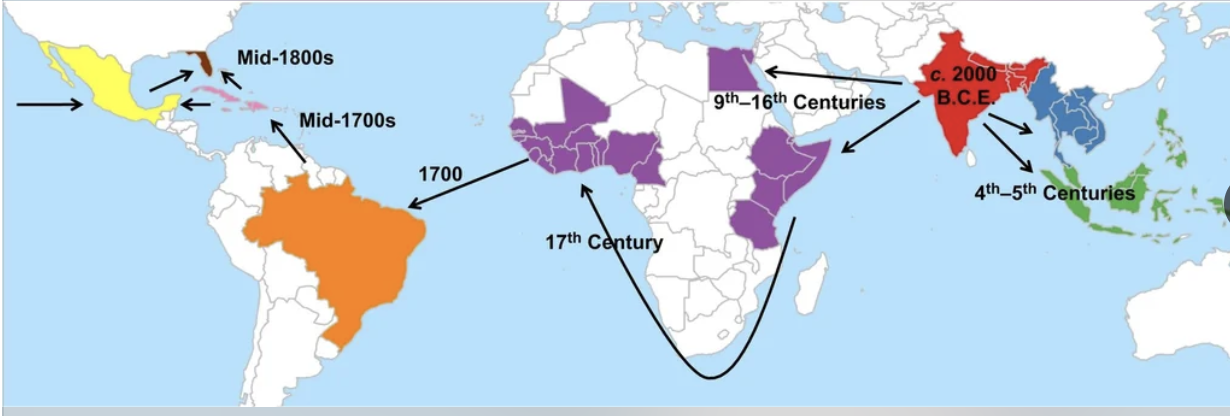
The journey of the mango through centuries.
It’s easy to take this fruit for granted. There’s mango season, and there’s the waiting season, like the steady ticking of a clock.
But too often, we separate ourselves from the journey our foods make, from the backbreaking farm labor and the heartbreak of a lost mango crop in a too-rainy summer season, to the post-workout smoothies of the privileged.
And if the fruit itself has such a fraught journey, then what about the word mango? Where did it come from? Which cultures first used it? How did it weave its way into English?
From Malayalam to the World
The English “mango” traces its roots to māṅṅa (മാങ്ങ) in Malayalam, the language of Kerala. But the journey of a word is rarely straightforward. Some scholars suggest the Portuguese first heard it from Malayalam speakers, while others argue it came from Tamil neighbors, who called the raw fruit māṅkāy (மாங்காய்) and the ripe fruit māmpaḻam (மாம்பழம்). Since Malayalam and Tamil are both part of the Dravidian language family, it’s difficult to pinpoint which word sailed west first.
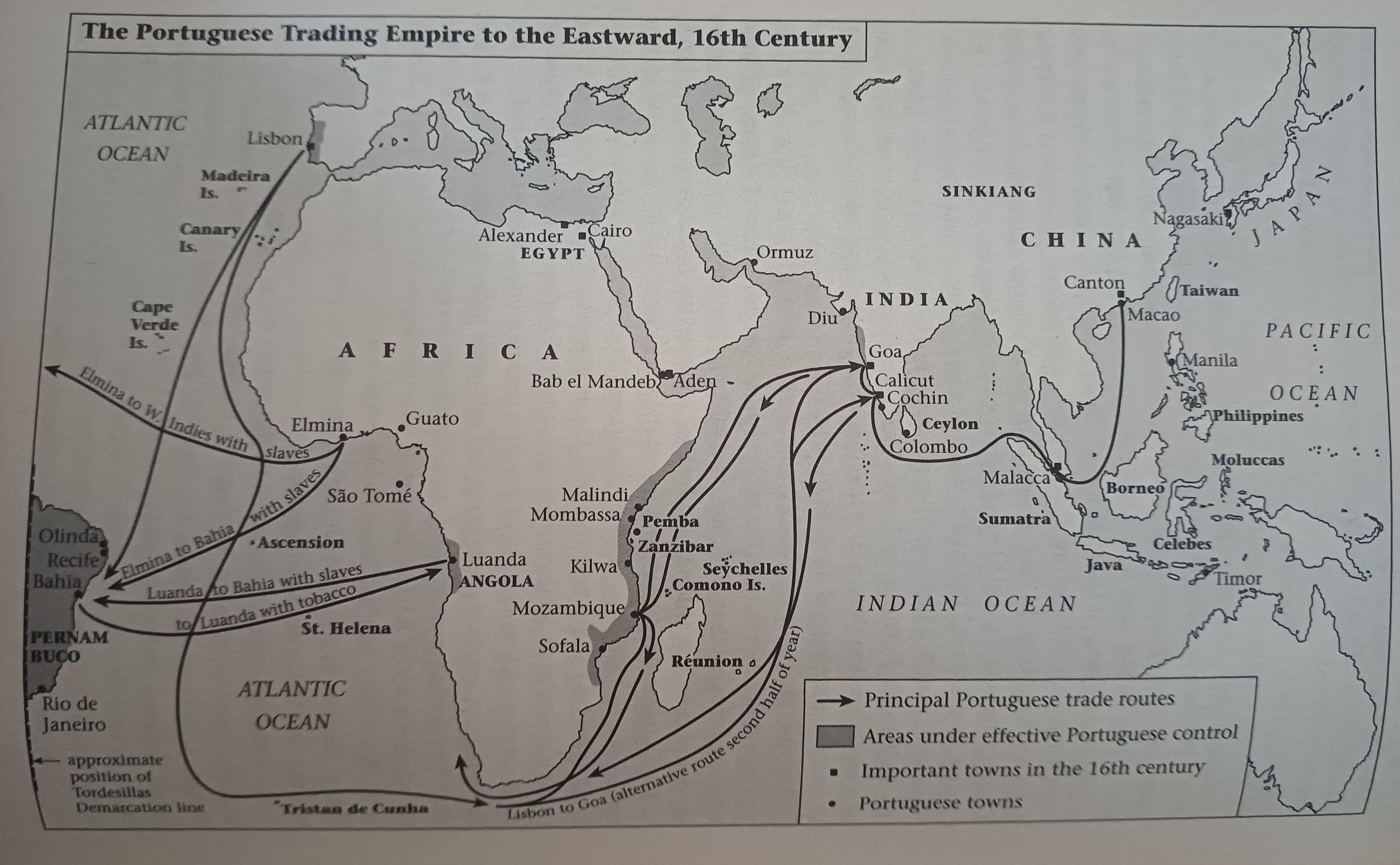
Portuguese traders adopted it as manga during their 15th-century spice voyages. By the time they established a sea route to Europe, Arab traders had already been exporting Kerala’s spices, and words like naranga (orange), for centuries.
From Ostler’s book mentioned below. The Portuguese trading empire.
In 1498, Vasco da Gama succeeded where Columbus had failed: charting a direct sea route to India and landing on the Malabar Coast. This was likely when māṅṅa first touched a Western tongue.
Found on Reddit. Maps the rough journey of the word “mango” from both Proto-Southern-Dravidian and Sanskrit.
Found in the same thread on Reddit as the previous map. I just thought it was interesting!
As with most colonial encounters, da Gama’s arrival brought more than trade. It brought upheaval; an attempt to claim, exploit, and remake a culture the Portuguese barely understood. Like every empire, they left behind a tangled legacy: trade routes that changed more than cuisines, and violence that uprooted lives.
From 1498 onwards, manga traveled into French and Italian, then into English, with the first recorded use of “mango” appearing in 1582.
For a time, “to mango” was even a verb in colonial America, meaning “to pickle” (which is why some places still call green bell peppers “mango peppers”).
Today, we’ve untangled mangoes from pickles and peppers. But the legacy of colonialism is not so easily resolved.
But there’s a truth here worth admiring: a tiny word like māṅṅa can travel across oceans and centuries, weaving itself into English. Every time someone says “mango” in London or Philadelphia, they’re unknowingly speaking a fragment of Kerala’s language.
Language as a Recipe Book
But it isn’t just mango. Our English-speaking homes and kitchens are stocked with Indian words carried along trade routes and colonial corridors:
Chutney (from Hindi chaṭnī)
Curry (from Tamil kari)
Bungalow (from Hindi banglā, meaning “Bengal-style house”)
Shampoo (from Hindi chāmpo, “to knead”)
Each word is an artifact, if only we take a moment to wonder. They are small testaments to hands that stirred, chopped, hammered, and kneaded across centuries, reminders of the histories and people behind them.
The Journey Hidden in a Word
Now, when I bite into a mango here, I taste more than its layered sweetness. I hear the word’s journey too, spoken first by a Malayali vendor in Trivandrum, sailing across seas and empires, and scrawled on a supermarket sign in Pennsylvania.
Language carries more than meanings. It carries fragments of history and home, especially for those caught between roots.
For Further Reading (if you crave more about erstwhile empires and their legacies):
Empires of the Word: A Language History of the World – Nicholas Ostler.
Inglorious Empire – Shashi Tharoor
The international swap trade in useful words, BBC Magazine (2014)
Arrival of Portuguese in India and its Role in Shaping India – Col. (Dr.) D. P. K. Pillay (2021)
Note: I am completely aware that I am coming from a privileged place as I write this. I have a hired housekeeper and cook here in Kerala (but even then, as a dear friend pointed out, the task gets passed from one woman to the next), and I have a supportive husband who encourages me in everything I do. He has grown just as much as I have since we’ve been married, and it’s been a privilege to see. I have written this for women who, for whatever reason, cannot speak up.
For this entry, I feel a bit like Frank Constanza in Seinfeld’s “Festivus” episode, where, during the airing of grievances, he shouts, “I got a lotta problems with you people, and now, you’re gonna hear about it!” But if you’ve known me for my whole life, you know when I get super bothered by something, I turn into an 85-year-old man who is basically shouting at kids to get off his lawn.
Don’t get me wrong. I love International Women’s Day. We need it. We desperately need it to acknowledge all the trailblazing that’s been done, and of course, all the work which still needs to be done. My discussion, or rant if you prefer, addresses the latter.
My husband came home at lunchtime yesterday and said he’d been asked to give a short speech for Women’s Day (along with several students and other faculty). He asked, “What do you want me to say?”
And I was like, “BOY, AM I GLAD YOU ASKED”:
1. Women’s advancement starts in the home. Women can make great strides in careers, science, high-level corporate positions etc., but if, when she goes home, her husband won’t do a load of laundry, then we’re really not getting anywhere at all, are we?
There are no “set roles” anymore. There is a household, usually with two working people. Hence, those who live within the house need to share those duties.
Even if a woman is a SAHM, she deserves support and a chance to develop a talent or hobby she loves because, chances are, she feels totally consumed in her roles as a wife and mother.
TL;DR: Men, don’t be lazy. Do a round of dishes. Fold laundry. Take your kids out to play for a while. Your wife deserves a chance to be a person outside of being your children’s mother and your wife.
Like, I can’t even believe, in the year of our Lord 2023, that I need to write this down?? And yet I see story after story, post after post, of men simply not pulling their weight within the household.
2. Men need to share the mental load. Women are not only tasked with doing almost all household duties by default, but we also are tasked with the mental load of remembering basically everything. Appointments, school assignments, shopping lists, meal planning, where things are kept in the house, everything falls into the woman’s lap.
This invisible mental labor adds more stress than anything else and can make women feel completely overwhelmed and paralyzed.
And it doesn’t help to follow your wife around and say, “Just let me know if you need help.” That ADDS to this burden. YOU look around and see what needs to be done. YOU take over helping the kids with projects and assignments. YOU take over half the shopping list or the meal planning.
Not only are women tasked with this mental load, but we also bear the brunt of criticism, especially when it involves kids. Every critical comment a person can dream up is passed through very freely to the mother, the partner usually tasked as the primary caregiver. Believe me, we are already our own worst critics – you don’t need to add to it.
3. Why bother getting your daughter into activities to develop her talents and academics if you’re just going to ship her off to be married in a relationship where she loses all of what she’s learned?
There’s a reason films like The Great Indian Kitchenhave been made, and that’s because it’s a reality for many women out there, not just in India, but throughout the world.
Let me take the unpopular opinion here – don’t invest in your daughter unless you plan on standing with her if her eventual marriage is mentally, emotionally, or physically abusive (or all of the above). Don’t invest in her education if you’re just going to tell her “log kya kahenge” or “what will people say” if she wants to escape that situation, and you’re only worried about the potential stigma of divorce. Don’t invest in her talents if you’re just going to tell her to “adjust, dear” when she says her new husband expects her to do all the housework with no help.
I will shout it from the rooftops – WOMEN’S ADVANCEMENT STARTS IN THE HOME. It starts with teaching your sons how to fend for themselves in the kitchen, how to do chores, how to pick up after themselves. It starts with letting your daughters take risks, letting them show their anger and shout and scream and express discomfort, letting them interrupt people who have tried to silence them. And, for the love of everything on this green Earth, stop glamorizing the martyrdom of motherhood. Just stop it. It helps absolutely no one, least of all, women.
Happy belated International Women’s Day. We can all do better and be better.
When I first moved to Kerala, the one question people asked most was, “Do you like the food?” I didn’t know the importance of food for Malayalees at the time, so I felt confused why people asked that so often. I guess they thought the taste would be super alien to me since I grew up in the States. White rice is too spicy for us, know what I mean?
Of course I loved the food. The aromatic spices, the heat, the tang – it was heaven for my tastebuds. But I was always the odd duck in my immediate family. I liked seafood; no one else did. I liked jalapeños and black olives; no one else did. So it didn’t surprise me that I started enjoying Kerala food right away.
Kerala cuisine is, in general, based around three staples – rice, fish, and coconut. All meals will use at least one of these, if not all. It makes sense these would be staples because Kerala is a tropical, coastal state with paddy fields as far as the eye can see.
But one thing I’ve noticed is that every time I Google “best Kerala foods,” “best South Indian foods,” or any variation of the sort, the lists contain the following: idli, dosa, payasam, appam and stew, parotta and beef, karimeen pollichathu, and pazham pori (banana fritters). And I am always irritated because I know there are superior dishes out there. I’ve eaten them! I’ve cooked them!
Good food is endless here. So I decided to make my own list, including some unsung heroes of Kerala cuisine.
My Top 10 Fave Kerala Foods
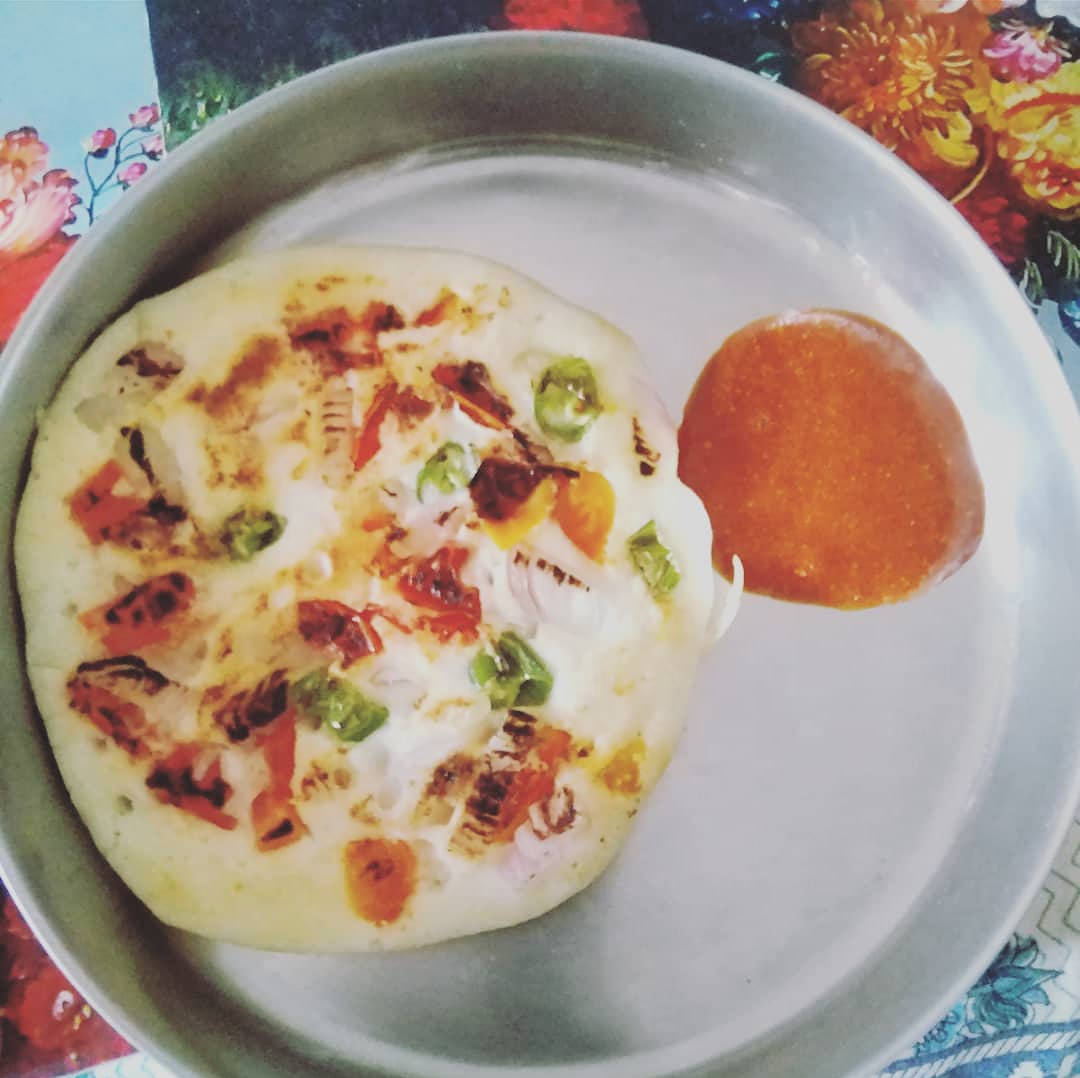
1. Uttapam
Known in Kerala as oothappam, uttapam is a close relative of the famous dosa. If you ask me (and since this is my list), I think uttapam is the superior rice-based breakfast food. Since I am the only person in this house that likes uttapam, I don’t get to eat it often.
I’ve jokingly referred to uttapam as Kerala-style pizza. It is basically a thick, soft, savory pancake topped with vegetables (mainly onion, tomato, and green chili). You can eat it with sambar and chutney, but I prefer to eat it plain. It’s delicious enough on its own.
This was my first try making it for myself.
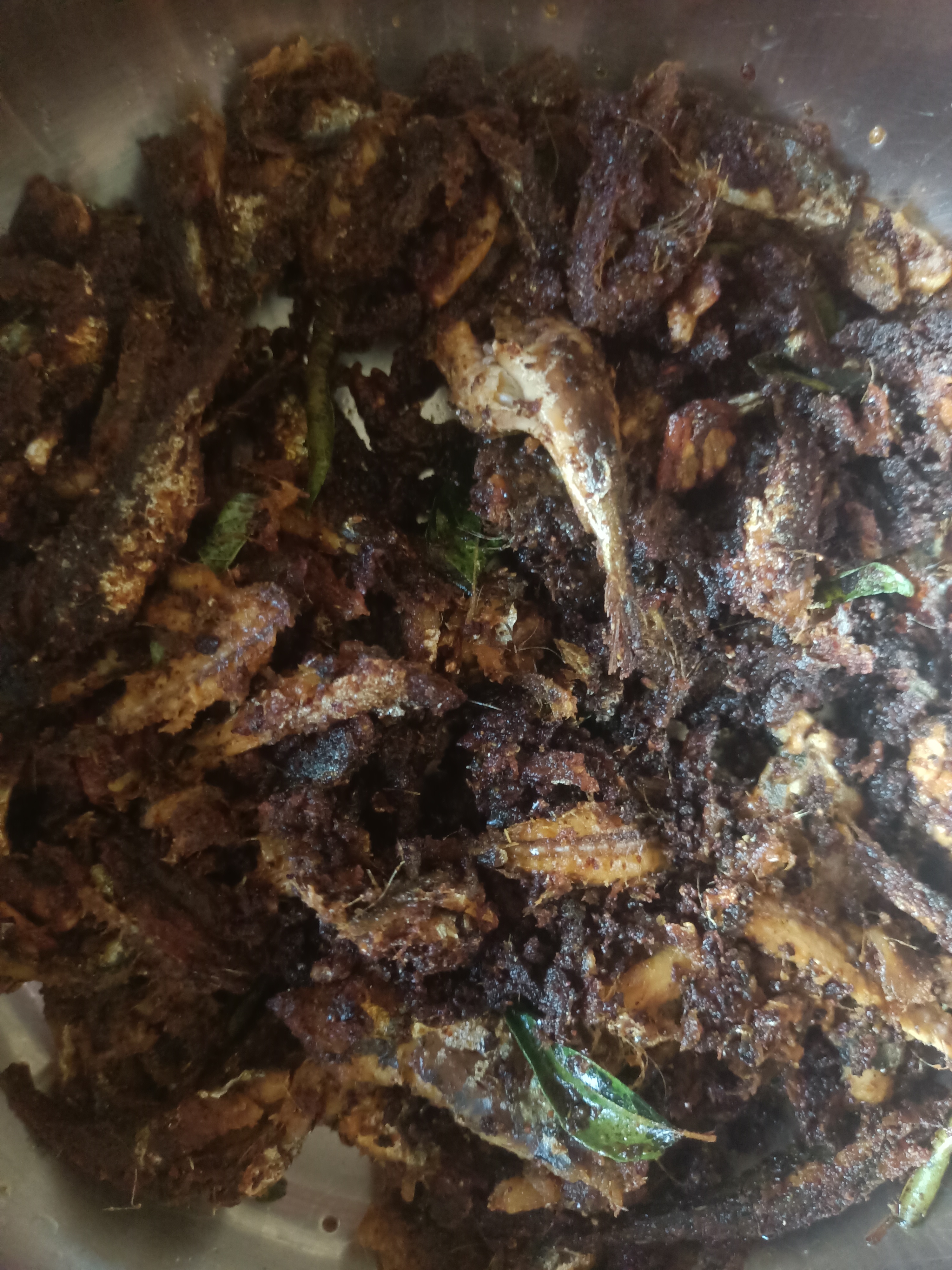
2. Anchovy and Sardine Fry
While uttapam is a rare treat for me, nettholi (anchovy) and mathi (sardine) fry are eaten at least twice per week. The fish are cleaned and marinated in a paste made from turmeric, black pepper, red chili, and salt. Then, they are fried until crisp, or if you’re me, until they are almost burnt.
I am not sure what makes these so delicious. But man oh man, couple fish fry with some Kerala red rice, pulissery, and mango pickle, and it is *chef’s kiss.* Man, I’m hungry already, and it’s not even lunchtime!
Nettholi/Anchovy fry
3. Thoran
Thoran is a savory dish made from any vegetable you can think of and coconut. The vegetable is diced up, the coconut is grated, and they are both stir-fried to perfection with turmeric, cumin seed, and salt.
I have several types of thoran that I love – cheera (red spinach), beetroot, green beans, banana flower, and chakkakuru (jackfruit seed). Thoran is a dish you will find during meal time at least every other day in many households.
As ubiquitous as this dish is, I had a hard time finding it on any “best Kerala foods” lists!
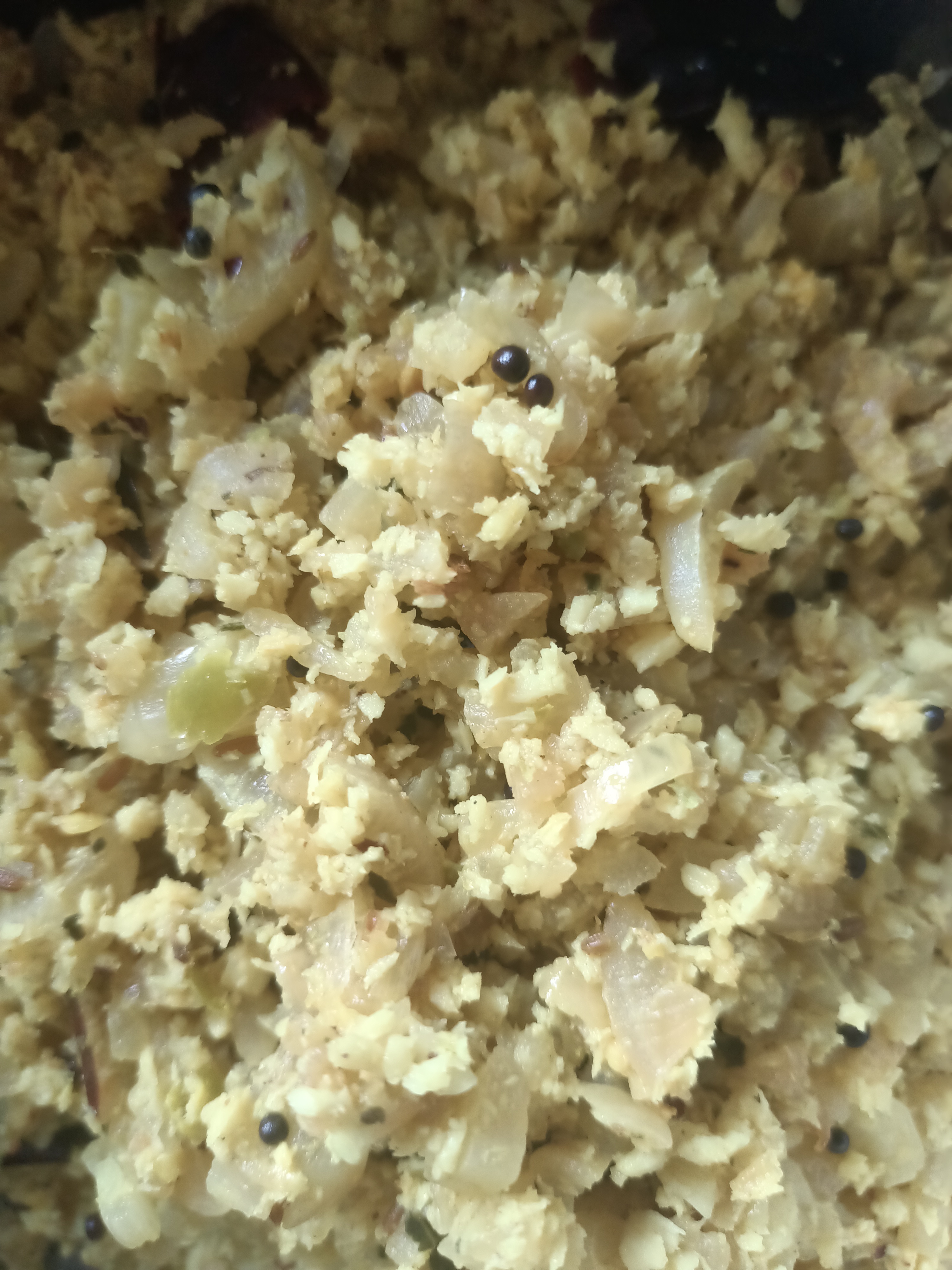
This is none of my favorites. It’s radish thoran. Still delicious.
4. Ghee Rice/Neychoru
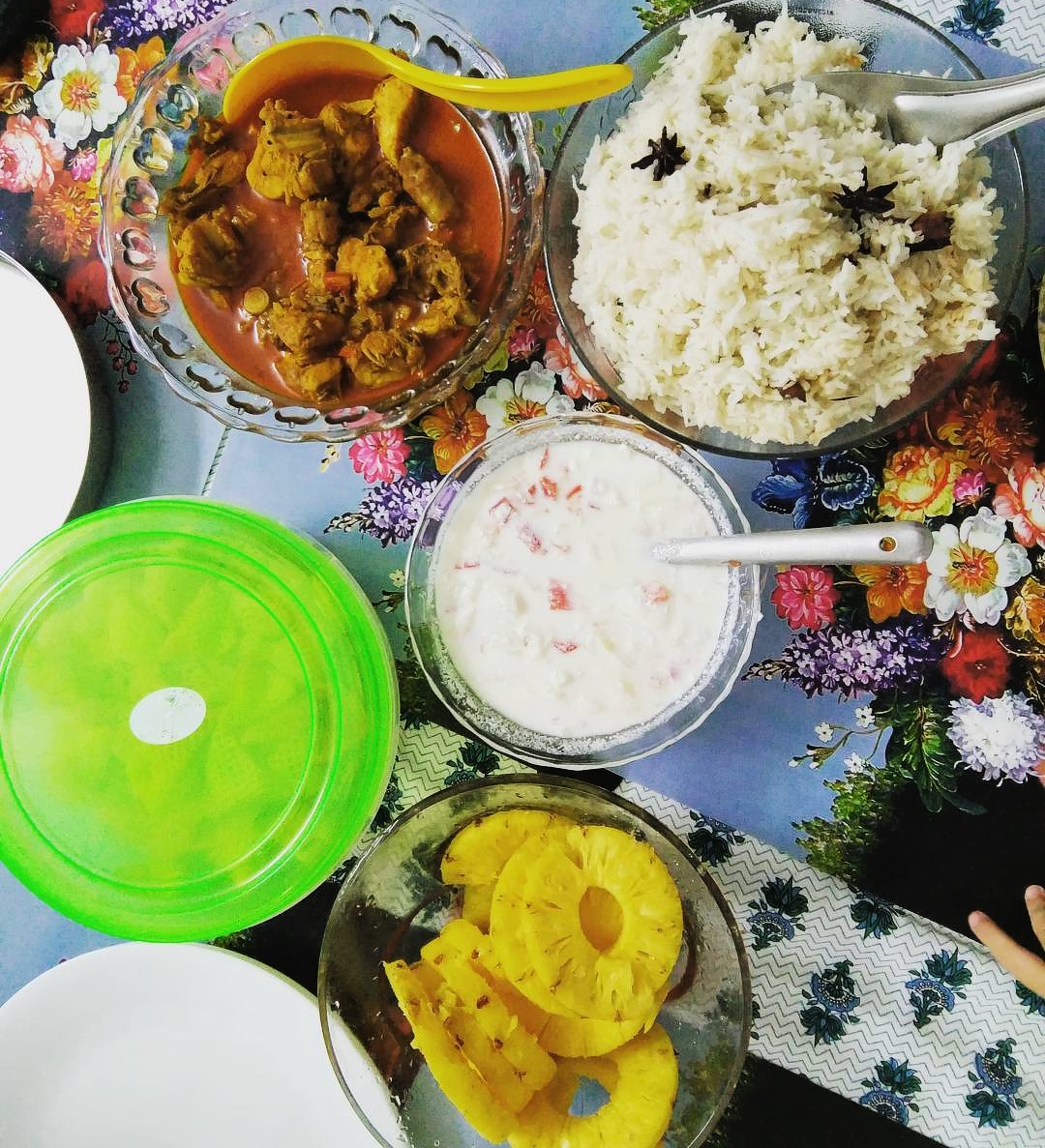
Ghee rice is self-explanatory. It’s made using a short-grained rice and ghee. However, whole spices like cinnamon, cardamom, cloves, and star anise are added for flavor, and the rice is topped with fried cashews, raisins, and onions. For me, the best part of this dish is the fried onions. Just hand me a plate of those please!
Let me pat myself on the back – I’ve perfected this dish. I received praise for my neychoru every time I make it. I serve it with chicken or mutton curry, raita, pickle, and papadum.
My famous ghee rice is in the top right corner.
5. Bitter Gourd/Pavakkai Fry
Way back when I was in my first trimester and sick as a dog, I didn’t want to eat anything within a hundred-kilometer radius of our Calicut home. Nothing sounded good, and everything smelled terrible. One day I worked up a small appetite and asked Zac to bring me a veg meal from a nearby restaurant. By some small miracle, they served pavakkai fry in my meal that day, and I ate every last bite.
Pavakka, or bitter gourd, is a contentious vegetable. People either love it or hate it. It does have a bitter taste even after it’s cooked. I can eat pavakka in any type of recipe, but this one is my favorite. Similar to the fish fry, it’s marinated in a masala paste after slicing. Then it’s fried until it’s crispy. It’s normally eaten along with rice.
My daughter, who hates most vegetables, loves this recipe.
6. Pulissery
Pulissery, also known as moru curry, is a curd-based curry. It can be made with only curd or with things like ash gourd, pineapple, cucumber or taro root. It’s usually tempered with mustard and fenugreek seeds, dry red chilis, shallots, curry leaves, and turmeric.
This is one of my favorite accompaniments for rice. But I could drink pulissery on its own. It’s that good.
7. Brinjal Fry, South Indian Style
I’m not entirely convinced this is a pure Kerala dish, but I’m including it. Brinjal, or eggplant, is much smaller here than in the US. I find it tastes better, but I’m unsure if it’s the vegetable itself that’s better or if it’s the preparations.
Anyway, this dish is made by slicing the brinjal, and then marinating it in a masala paste (see a theme yet?). It’s then fried until the edges are crisp, and the centers are soft. This is one dish I don’t make often because I eat them until they’re gone. Even if it’s in one meal. I have no shame.
8. Kappa and Meen Curry
Okay, THIS is a popular dish, and one you will see on the “popular Kerala foods” lists. Many years ago, kappa, also called cassava, was considered a poor man’s food, but you’ll now find it in almost every five-star buffet! The cassava is boiled, mashed, and cooked along with coconut, mustard seeds, dry red chilies, and curry leaves.
Kappa is served with all kinds of curries, but I think the best combo is with red fish curry. It’s another one of those tangy, sour, and spicy curries that I adore, and I go back for seconds, thirds, or fourths of this delicacy!
Kappa and meen curryKappa on its own
9. Rasam
For sure, this dish didn’t originate in Kerala, but it’s consumed so widely in the state that I consider it part of local cuisine. I remember drinking rasam for the first time in a dingy Calicut canteen. I watched the locals throw their heads back and down the liquid, so I thought, “Hey, why not?” I lifted my steel cup and chugged the rasam, and my body went into brief shock. How could a soup pack so much flavor?
Like many recipes here, there are a few variations of rasam, but it almost always includes tamarind, black pepper, cumin seed, garlic, and coriander leaves.
Even though it’s more of a winter dish, I’ll down glasses of rasam on a hot summer day. I power through the sweating that comes post-drinking. I can’t get enough of the spicy, sour curries!
10. Thalassery Biryani
I love all kinds of biryani, so I had to put this on the list. Thalassery biryani is a special type of rice dish from Thalassery town in north Kerala.
Unlike most biryanis, which are made using basmati rice or another fragrant long-grained rice, Thalassery biryani is made with a short-grained rice called Jeerakasala.
Similar to neychoru, this biryani is cooked with lots of ghee, but then the rice is layered with cooked meat (chicken, fish, mutton, beef, etc.) and masala, and sealed so the flavors of the rice, meat, and masala blend together. It’s then topped with my faves – fried onions, cashews, and raisins.
One of the best biryanis I’ve ever had was from a little Thalassery biryani shack in Trivandrum. I tried a fish biryani that time. Everything aligned for that meal – the spices were just right, the amount of ghee was perfect, and the rice was neither too dry nor greasy.
One Dish That I Hate:
1. Puttu
I never felt more validated than when I read a story in March 2022 about a boy who wrote an essay on how much he hates puttu. Same, buddy, same. While the boy says it “breaks relationships” (I can only imagine!), I won’t go quite that far.
Puttu is always found on those “must try Kerala foods” lists, and I don’t get it. I have tried it in every possible way, and it’s not for me. It’s dry. The texture is gritty. And it tastes like paper. Sorry, Malayalees, please don’t kick me out (I also hate jackfruit)!
What are your favorite foods, whether they are from Kerala or elsewhere? What foods do you hate so much you want to toss them out the window when you see them? Let me know!
Lately, I’ve been thinking about our Calicut days. We owned nothing but a bed in the beginning. Tucked away on the Centre for Water Resources Development and Management (CWRDM) campus in Kunnamangalam, we made our first home in a large bungalow surrounded by coconut and jackfruit trees.
Our Calicut home
But I’ve been confusing myself. Why am I looking back so fondly on the days when we didn’t have much? We didn’t own a refrigerator for the first two months we lived there. We cooked only what we would eat in one meal. Whatever food waste we had, we fed to the campus strays.
We didn’t have internet. So every afternoon, I’d trek from our house to Zac’s office on the Kerala School of Mathematics (KSOM) campus where I could video chat with family.
There was no washing machine either. So I washed clothing by hand in a bucket and rinsed everything under a tap.
Multiple times per day, our power would go off. And I’d lay on the bed and listen to the sounds outside. More often than not, I’d hear the adhan from nearby mosques and doze off in the heat.
We lived like this for a reason. Our KSOM campus housing kept getting delayed (our first experience with the urgency of Malayalee culture). We didn’t want to buy anything large that would need to be stored after moving into our campus flat.
But I wrote a lot then. Read a lot too. I hardly do any of those things now. My brain feels like it’s constantly firing on all levels. Even writing this, I’m struggling to concentrate and type the words on the screen.
I didn’t clench my jaw and grind my teeth back then. Didn’t chew down my nails as often. I don’t recall having as many headaches either. So what the hell is happening?
Social media is a huge contributor to these problems for me. I’ve become dependent on those hits of dopamine while checking my Instagram and Facebook feeds. As I write, my hands are itching to grab my phone and scroll my day away.
I don’t believe social media is evil. It is a fantastic learning resource for languages, crafts, recipes, you name it. I love seeing so many creative people out there. But I need a break.
And then I stumbled on (of all places – Instagram) a post by Hannah Brencher, who basically reached inside my brain and put my exact feelings in her own words. She talked about feeling a “holy, sure nudge” to turn off her phone. In her next paragraph, she wrote, “I was surprised to find my device had turned into a mini savior— I would go to it hungry, tired, and in need of affirmation.”
Oh my gosh, I thought. This is me. I even cried a little. It was what I needed to read in that very moment. I was not alone in feeling helplessly dependent on my phone and social media.
But Brencher created a solution for herself: the 1000 Unplugged Hours Challenge. The goal was simple: 1000 hours without her phone in one year. And she completed it. It’s not a Herculean task either – she calculated 1000 hours in a year to be either three hours per day or 20 hours in a weekend.
She wrote that life “surged back” in this past year, and that it was “a year of books, and quiet time, and laughter, and presence.”
Man, I want that. No, I need that.
It’s dawned on me in the last few weeks that Evelyn is at the perfect combo age where she is young enough to still love us beyond reason but old enough to hold deep conversations. If I keep scrolling, I’ll miss it all and regret it for the rest of my life.
So I’m joining Hannah Brencher’s 1000 Unplugged Hours Challenge. She even has a handy dandy tracker sheet you can download and print. This is great for people like me who need sheets, calendars, and planners to tell them what comes next.
I’m not sure what the fruits of this endeavor will be. For now, I’m aiming to be more present in Evelyn’s life, and I’ll take it from there. Here’s to my unplugged future!
The sambar deer belted out its alarm call, staring into the treeline across the dried-up river bed. Safely perched atop the cliff in our gypsy, we watched the tensed animal as it decided how to avoid a terrible fate.
“There’s a tiger in there,” both our driver and guide agreed. But it wasn’t coming out.
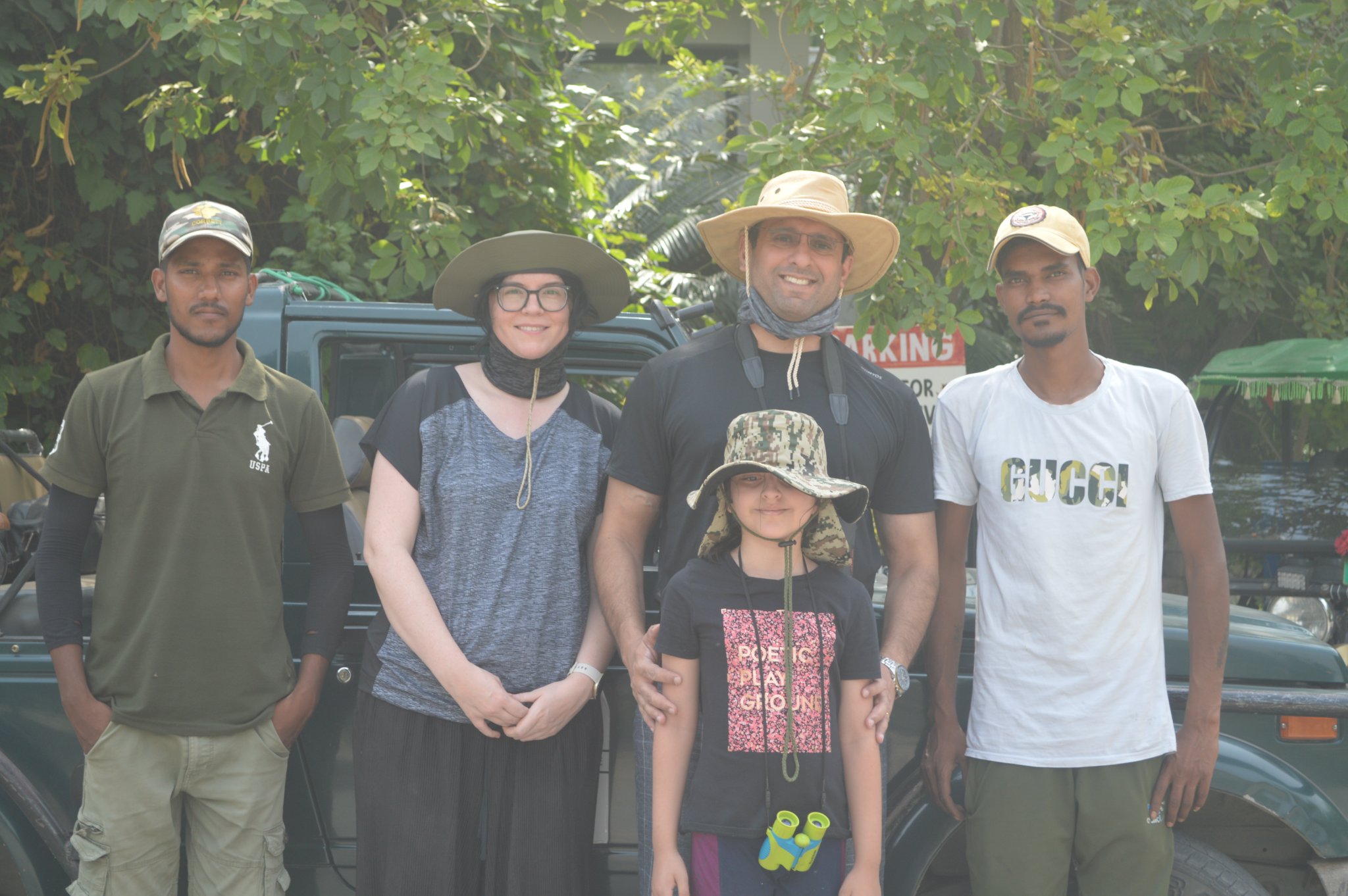
Five trips into the Dhela and Jhirna zones at Jim Corbett National Park, we had seen so many other amazing animals, but the tiger remained elusive. Our gypsy driver, Ravi Kashyap, and park guide, Chandan Singh Negi, told us that our best option was to wait on the cliff and see what happened. They were certain a tiger was resting just beyond our line of sight. Whether it would decide to come out was another thing.
Our fifth safari seemed to be on the hottest afternoon. As we waited in sweltering heat, my clothing soaked through with sweat, and my scalped itched under my broad-rimmed hat. Even though I had layered on sunscreen, I could feel the sun burning the skin on my arms.
I looked at my watch. Hardly fifteen minutes had passed. “Shouldn’t be much longer,” I thought. “That tiger must be thirsty in this heat.”
An hour later, the deer still milled about in its corner of the river bed, not moving beyond a perceived imaginary line. No further signs of the tiger. I was losing hope. The safari timing would be over soon.
A rhesus macaque in a nearby tree suddenly screeched in alarm. We watched as it stared in the same area as the deer had looked, and it hissed, screeched, and shook the branches. Other macaques soon followed. But after a few minutes, the excitement died down and things went back to normal.
I watched the treeline. Still no tiger. I started watching the birds in the trees surrounding our vehicle. How long would we sit here? At what point do you give up? Is it worth-
“Tiger, tiger!!!” our guide hissed, pointing at the riverbed. I stood up, turned on my camera, and started snapping photos before I even saw her. And there she was.
Pretty sure I kept muttering, “What a beautiful animal. Gorgeous. Stunning.”
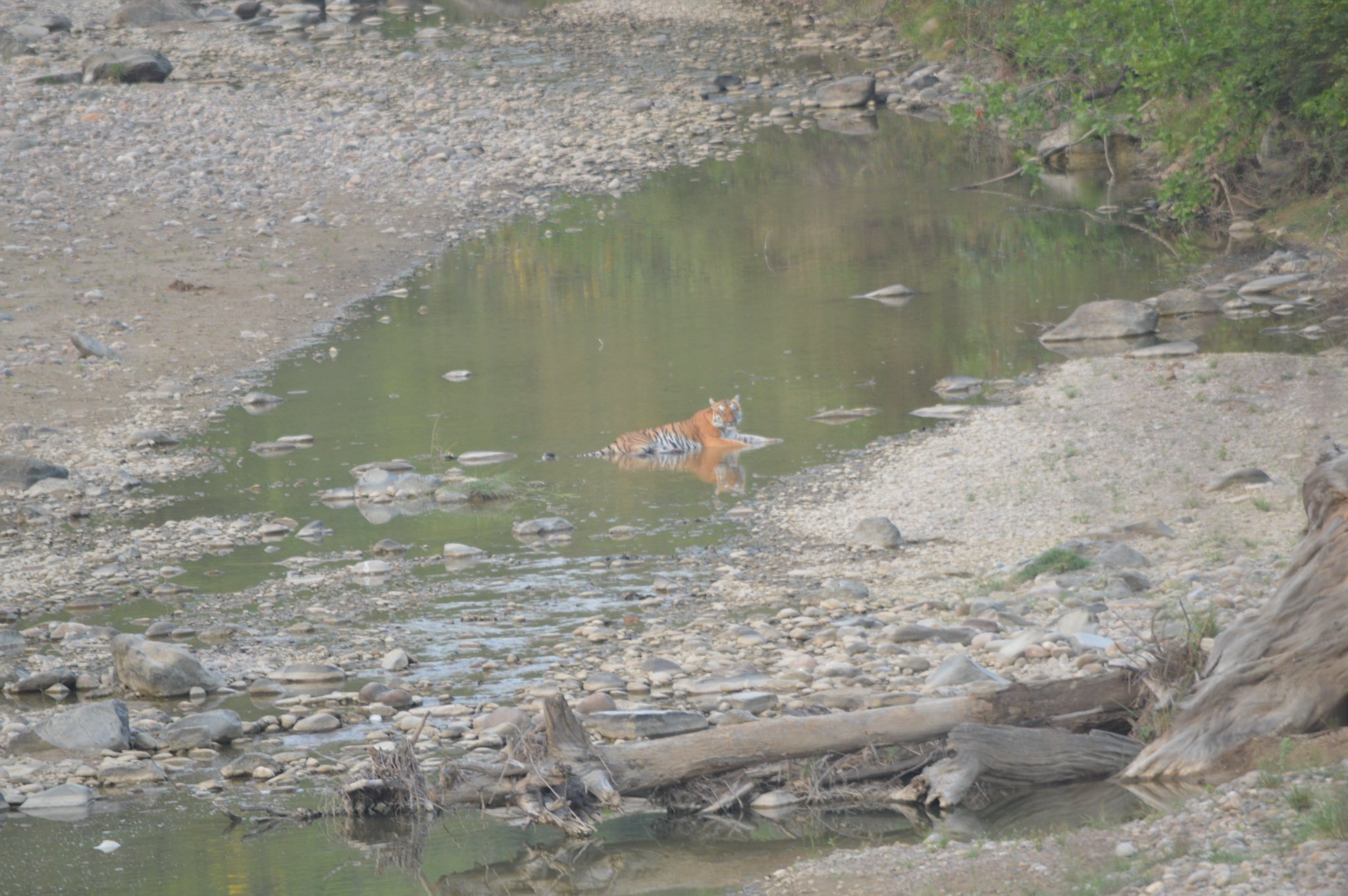
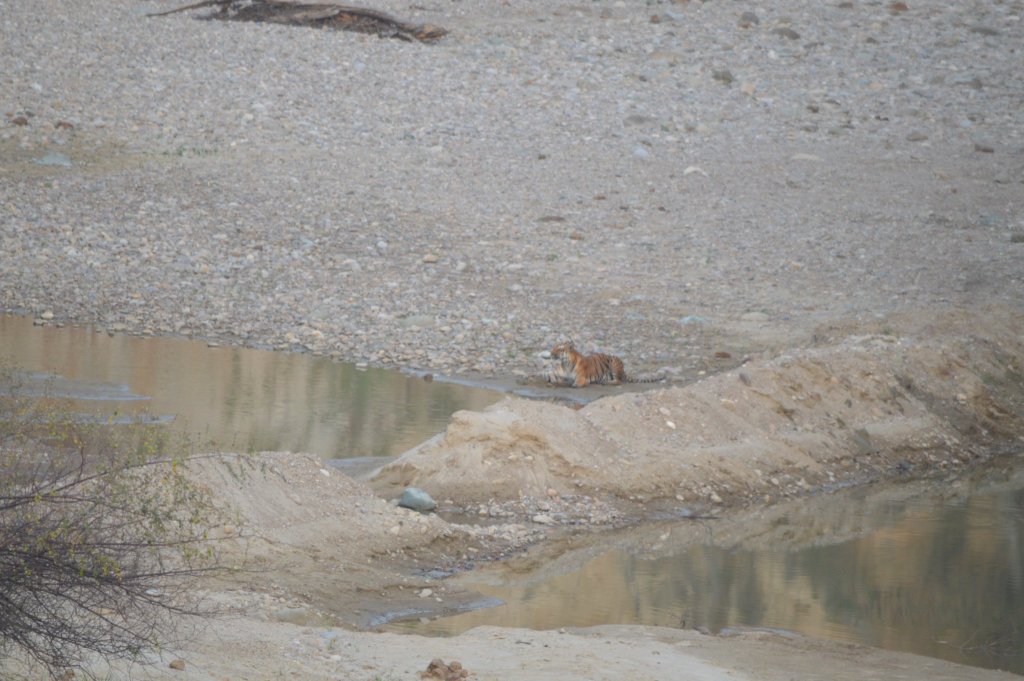
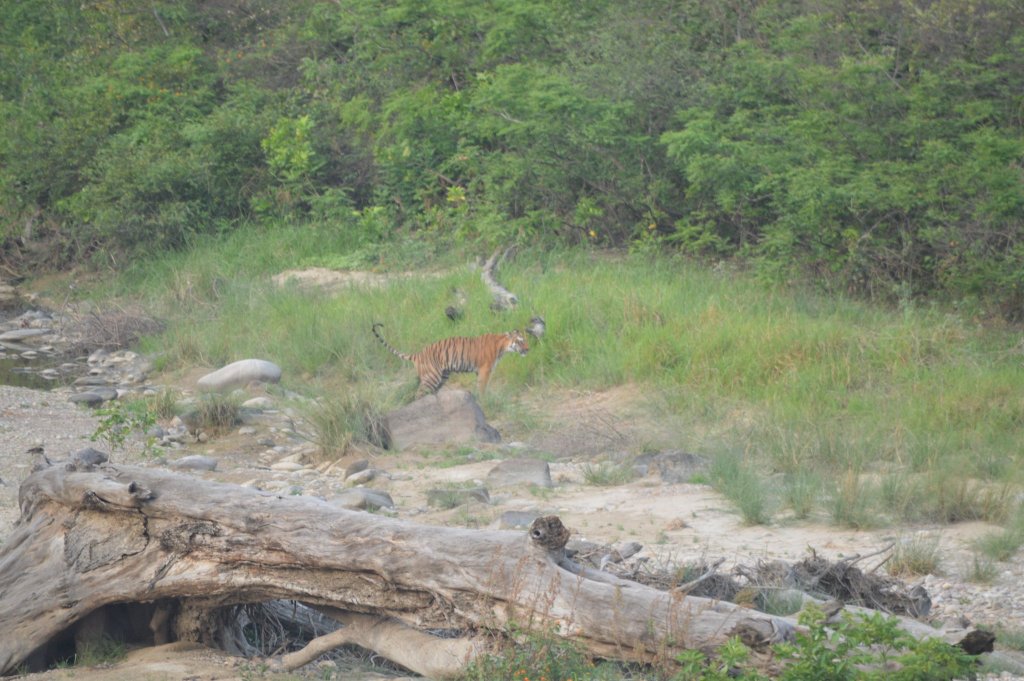
The tiger strode out of the treeline with what I can only describe as pure confidence and majesty. I know I’m personifying, but cut me a break. She glanced at the deer that cowered a short distance from her, but she didn’t want a meal at the moment. She needed a cool-down.
“If I fits, I sits.”
Since moving to India, I’ve had a handful of experiences that have felt surreal. I feel like I’m watching myself go through the moment. I get gooseflesh, and a warmth blooms in my chest. Like, who am I to see these things? Who am I to stand in front of the Taj Mahal? Or to touch the bullet-ridden walls at Jallianwala Bagh? Or to watch a Bengal tigress enjoy the cool water on a hot afternoon?
You know what? I’ll share a few more photos before I keep writing. She’s so magnificent and terrifying.
“What’s that noise?”
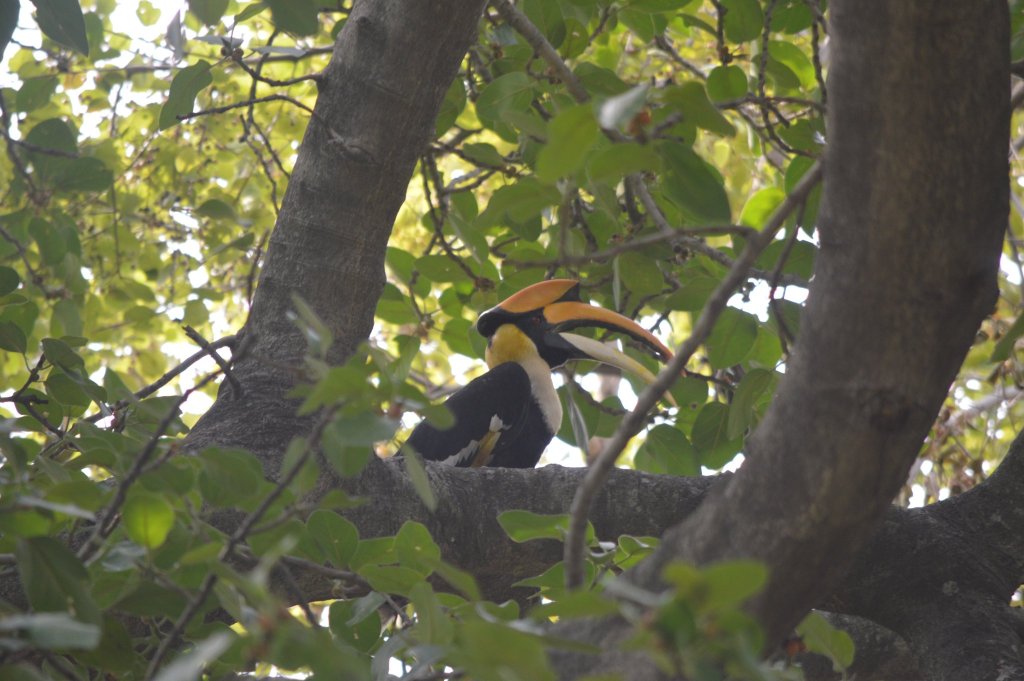
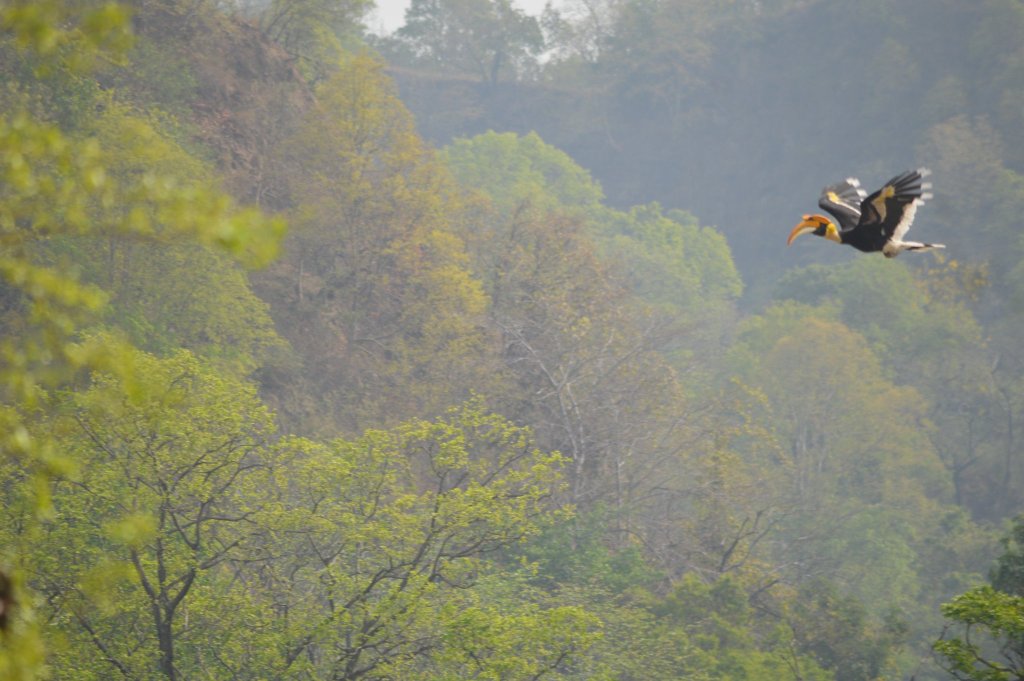
While I took video of the tiger, a great hornbill soared overhead, and by pure luck, I got them both in the same video. We didn’t see another tiger full-on during our remaining safari, but we were as excited to see “the tiger of the skies” twice. The great hornbill looks like it’s straight out of prehistoric times.
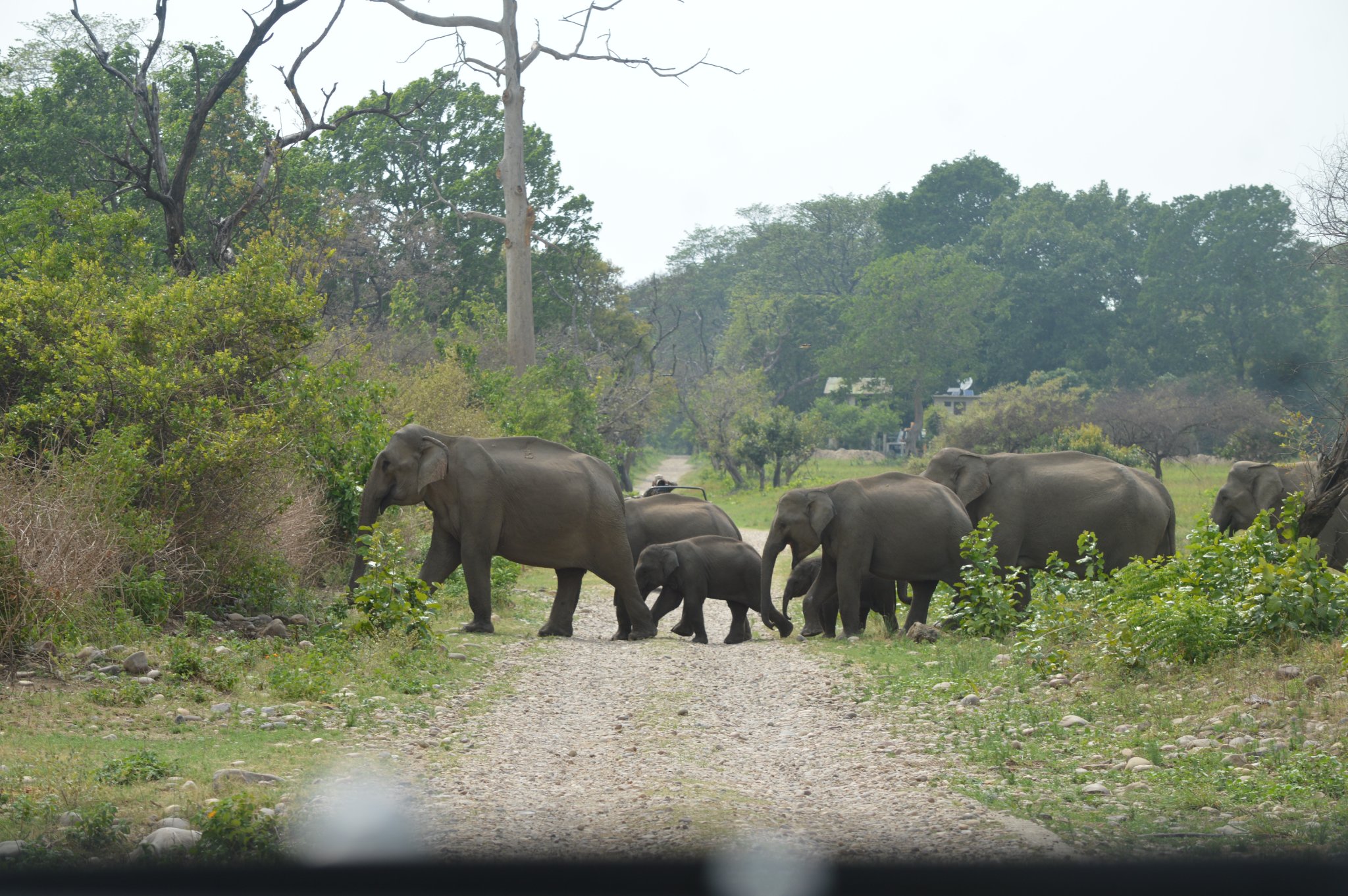
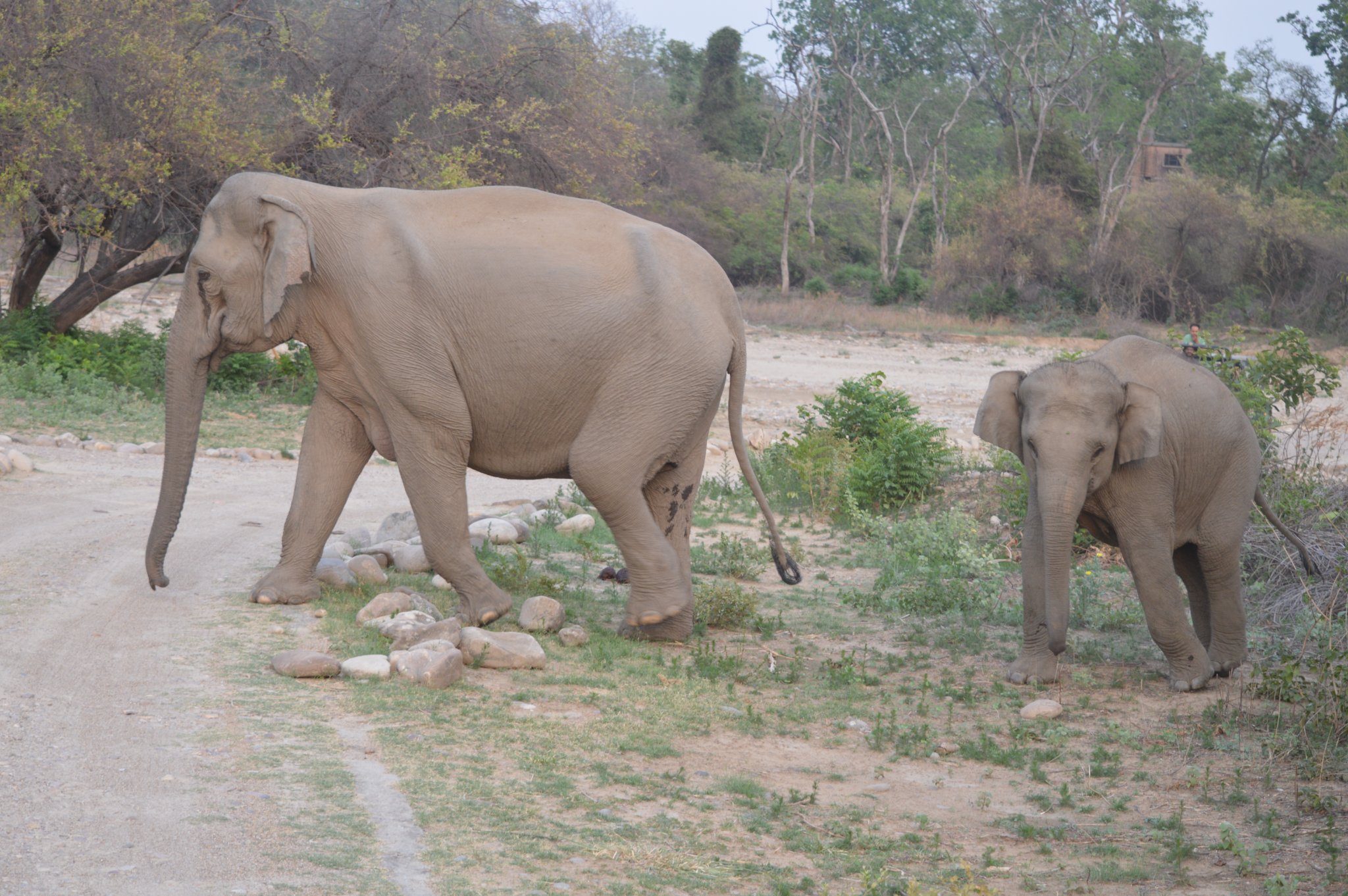
Each animal we saw at Jim Corbett National Park was given equal importance. From tigers and elephants to the smallest birds, our driver and guide showcased them all. In fact, our driver, Ravi, had eagle-eyes and spotted most animals and birds well before we could.
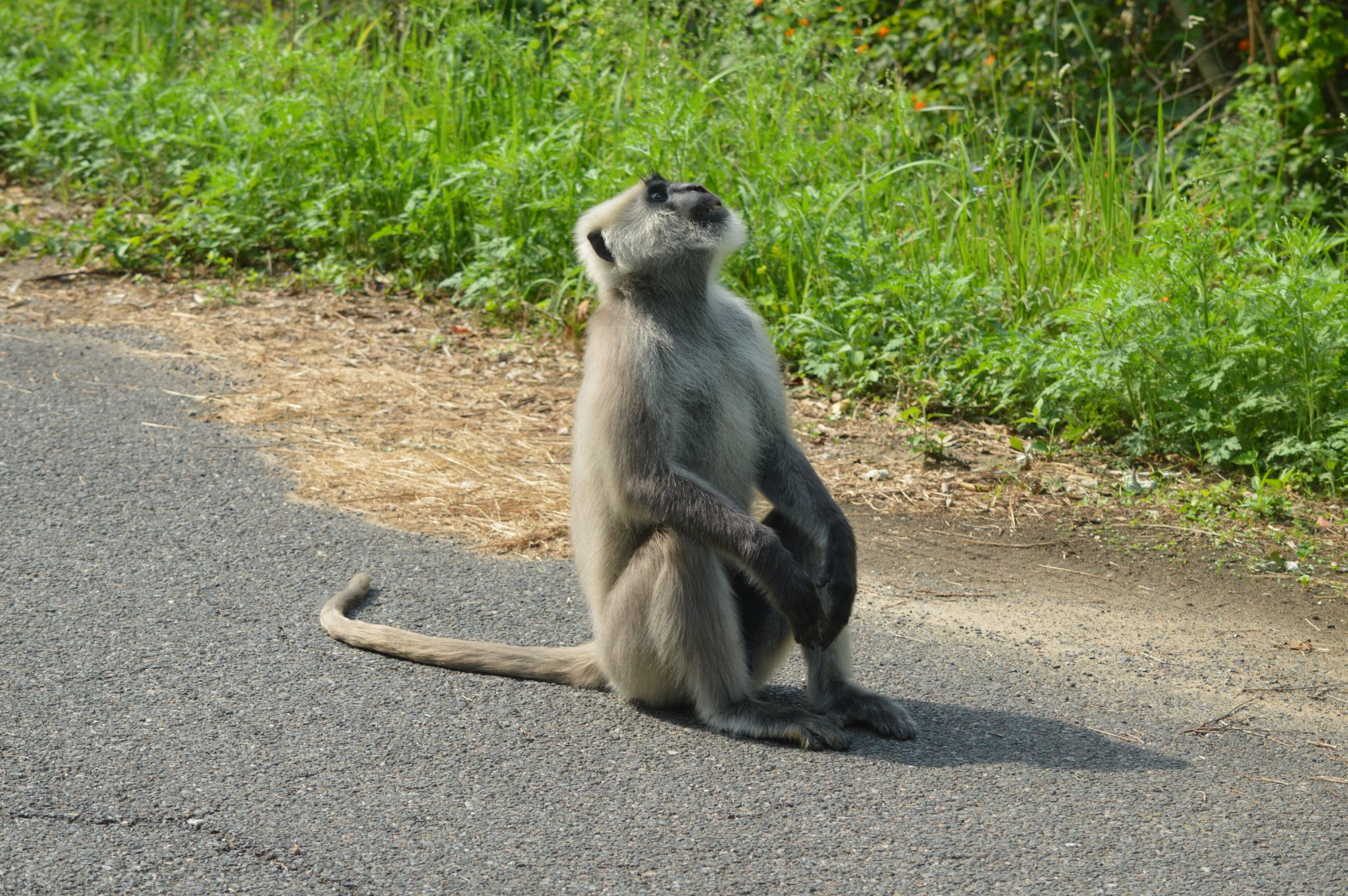
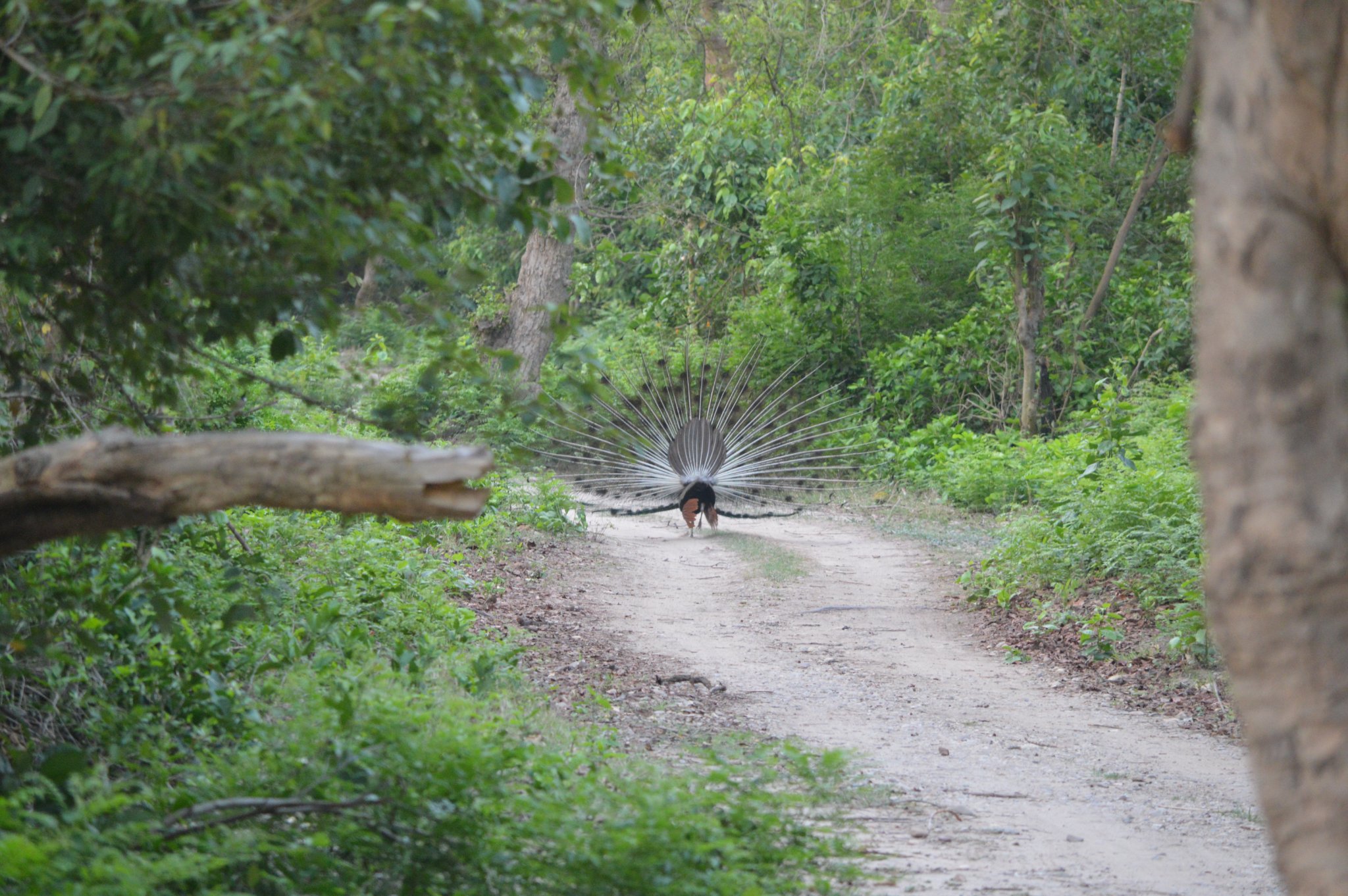
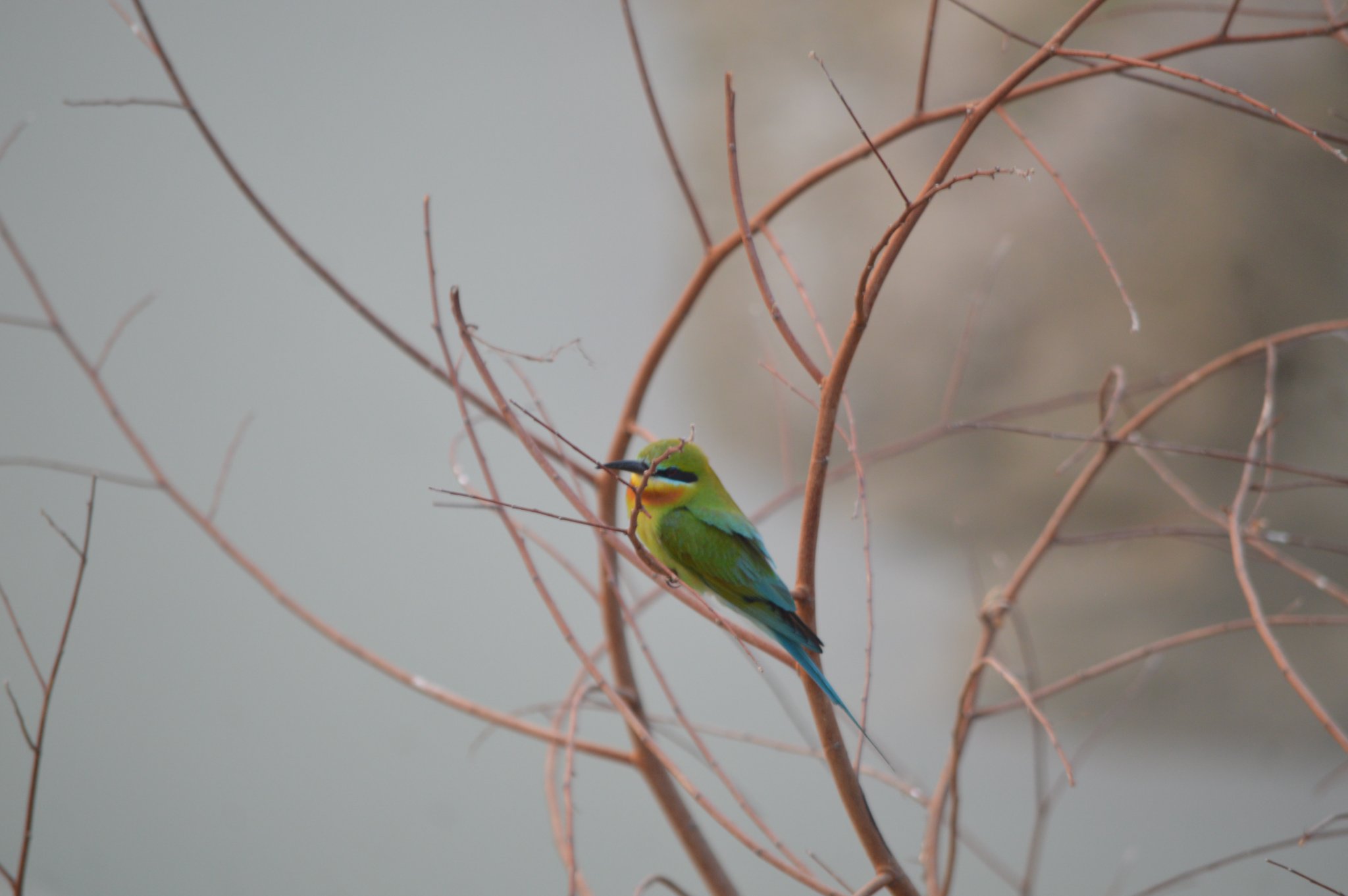
A langurJackalDancing peacockIndian pittaBlue-tailed bee eaterHerd of mothers and babiesA mama and her babyChangeable hawk eagle
During our stay, I stumbled on a negative comment on social media about Jim Corbett National Park. The person complained the visit was a waste of time for her and her young son. They didn’t see any animals. Zoos are so much better. I told Zac when I read the comment to him that I wanted to share it here and use it as a teachable moment.
First, what the comment said is patently untrue. There are animals everywhere in Jim Corbett National Park. The forest teems with life. You can see it, hear it, and even smell it.
The reserve forest is thriving. We saw huge termite mounds up and down the dirt roads we traveled on. We heard sloth bears, barking deer, and birds in surround sound. And more than once, we smelled the putrid scent of death – nature returning an animal back to the earth.
Second, the above being said, if you go on only one safari, your chances of seeing the big guys (elephants, tigers, sloth bear) are small. Heck, we went on six and didn’t see a tiger until the fifth!
Jim Corbett National Park is a thick, deciduous reserve, and it is difficult to spot animals. The more often you go, the more likely an animal will cross your path. Remember, these are wild animals. They don’t exist for our entertainment. You need to be willing to put in the work and patience to appreciate these animals in their habitats.
And third, don’t take small children on these long safaris. I saw people with infants and toddlers in the hot sun, driving around on bumpy, forest roads. Please, don’t do it. Wait until they’re older, and they can appreciate what they’re experiencing.
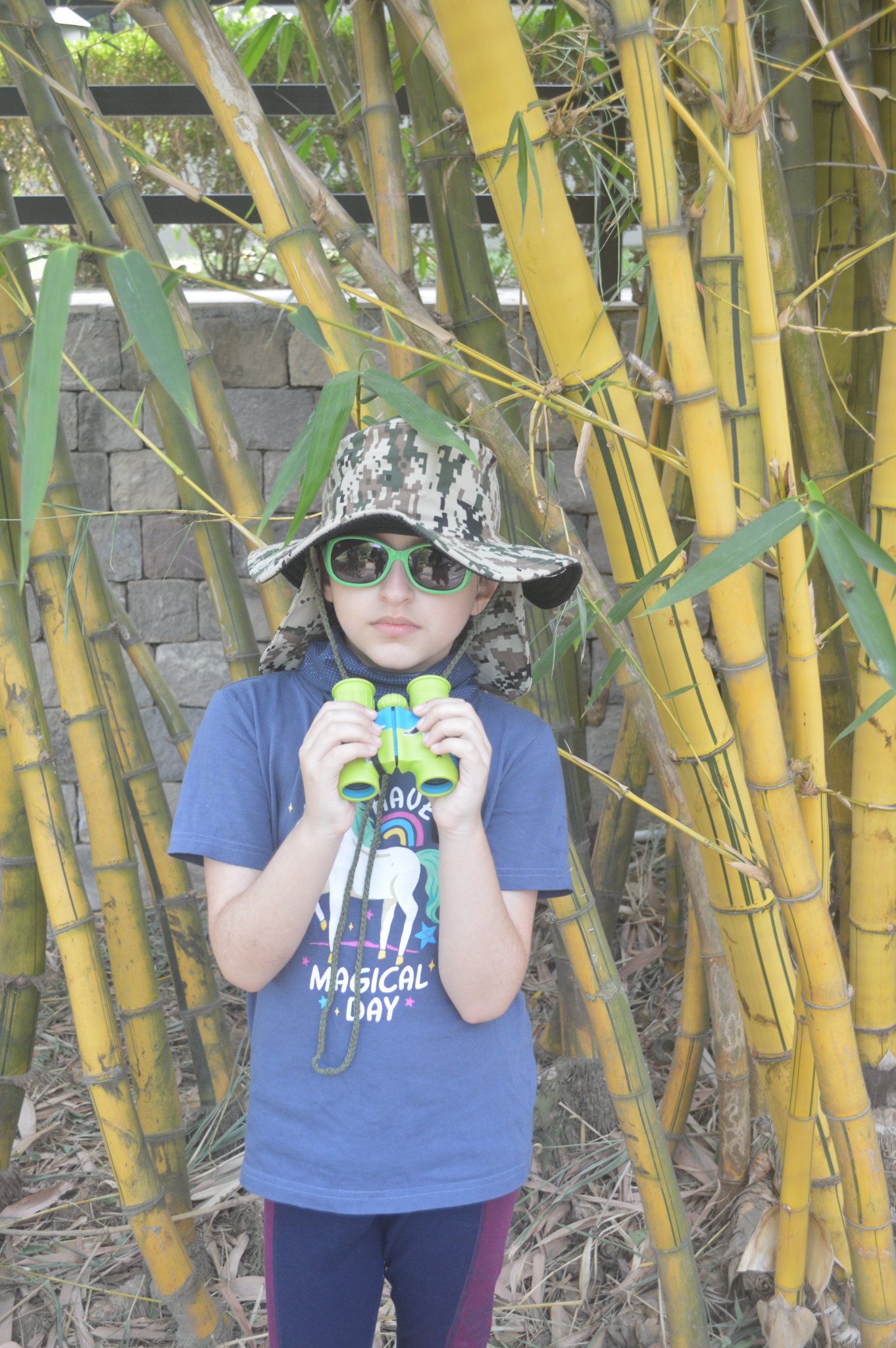
We wanted to take Evelyn on safari for years. We are so glad we waited until she was older.
The morning rides were my favorite, even though it was too early for coffee. With the fresh cold air whipping through my hair, watching the open fields and expanse of trees, I forgot I was in India.
Instead, I was seven years old, riding with my dad in his pick-up truck through the dirt roads of Sullivan County, Pennsylvania, searching for white-tailed deer and black bear.
I’m not sure if it was even a real memory. But for a few seconds, my two homes, different in so many ways, were tied together in my heart. And that’s something precious I will always remember.
So, if you love and appreciate wildlife, visiting the oldest tiger reserve in India is worth every rupee. But you need to put in the work. Book a few safaris. Absorb everything you see. Breathe it in. Listen to your surroundings. Life is everywhere.
If you’re interested in visiting Jim Corbett National Park and staying for a few days, check out my review of The Golden Tusk, the resort where we stayed.
















 An American in Kerala